
Oyster symbolism often represents hidden value, protection, resilience, patience, and personal growth because an oyster transforms a small irritant into a valuable pearl while surviving inside a strong protective shell. This natural process has made oyster symbolism a reminder of how challenges can create beauty, strength, and personal transformation over time. From coastal traditions to modern jewelry, tattoos, and interior design, oysters have become symbols of endurance, self-discovery, and the beauty found beneath the surface.
The oyster may appear simple and ordinary from the outside, but its natural life cycle has inspired meaningful interpretations across many cultures. Its hard shell represents safety, emotional boundaries, and protection, while the pearl inside symbolizes hidden potential, inner worth, and something valuable created through patience and persistence.
In the United States, oyster symbolism is connected with coastal heritage, seafood traditions, luxury, environmental awareness, and personal identity. Many people view the oyster as a symbol of quiet strength and a reminder that meaningful results often develop slowly. Like the pearl hidden inside the shell, personal qualities, achievements, and growth are not always visible at first glance.
Quick Answer
Oyster symbolism commonly represents hidden potential, resilience, protection, and personal transformation in modern American culture, especially through ideas connected with pearls, patience, and inner value. Historically, oysters have also been associated with prosperity, fertility, coastal traditions, and the rewards of endurance.
This meaning comes from the oyster’s natural life cycle, where a simple shell can contain something rare and valuable. The pearl’s formation process has encouraged people to view oysters as symbols of growth, patience, and the ability to create beauty from challenges. In modern interpretations, oysters also represent emotional strength, self-protection, and the idea that important qualities may remain hidden until the right time.
TL;DR
- Oysters symbolize hidden value and personal growth.
- Pearls represent patience, transformation, and beauty.
- Shells reflect protection and emotional boundaries.
- American culture connects oysters with coastal identity.
- Tattoos and jewelry use oysters for resilience themes.
Beyond these meanings, oysters also represent a connection between nature and human experiences. Their association with the ocean, sustainability, and coastal communities adds modern environmental importance to their symbolism. Many people choose oyster imagery because it reflects quiet strength, personal development, and appreciation for the valuable things that are not immediately visible.
The Physical Meaning Behind the Oyster Symbol
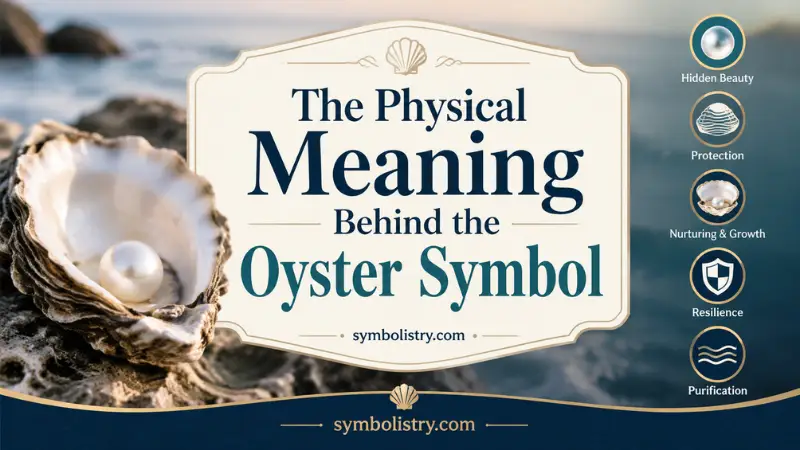
An oyster is a marine mollusk that lives inside a hard, rough shell found in coastal waters. The shell protects the soft creature inside, creating a natural connection with ideas of defense, privacy, resilience, and survival. Because of this protective outer layer, oyster symbolism often reflects the importance of boundaries and the hidden qualities that exist beneath the surface.
The most recognizable feature connected with oysters is the pearl. Although pearls form through a natural defense process against an irritant, people have often interpreted this transformation as a symbol of turning challenges into something valuable. This process is one of the main reasons oyster symbolism is associated with patience, personal growth, and the ability to create beauty from difficult experiences.
This contrast between the ordinary exterior and the precious interior is central to oyster symbolism. The oyster suggests that important qualities, talents, and strengths may exist beneath a surface that appears simple or unremarkable. It represents the idea that true value is not always immediately visible and often develops over time.
What Oysters Commonly Represent in Modern Culture
Today, oysters are most commonly associated with:
| Symbolic Context | Meaning in the USA | Common Associations | Notes |
|---|---|---|---|
| Pearl formation | Growth through challenges | Patience, transformation | Turning difficulty into value |
| Shell protection | Emotional boundaries | Safety, privacy | Represents guarding what matters |
| Coastal traditions | Connection to nature | Ocean life, community | Strong link to American shorelines |
| Luxury and beauty | Rare achievements | Elegance, refinement | Inspired by pearls |
| Survival | Adaptability | Strength, endurance | Reflects ocean resilience |
The oyster’s meaning depends heavily on context. A pearl necklace may suggest elegance and achievement, while an oyster tattoo may focus more on resilience and personal change.
Why the Pearl Became a Symbol of Transformation
The pearl is the strongest reason oysters gained symbolic importance. A pearl begins when an irritant enters the oyster’s shell. The oyster protects itself by covering the irritant with layers of nacre, eventually creating a smooth and valuable object admired for its beauty. This natural process is one of the main foundations of oyster symbolism, especially the idea that something meaningful can develop from an unexpected challenge.
Many people interpret this process as a metaphor for personal development and emotional growth. Difficult experiences, setbacks, or moments of struggle can become part of someone’s journey rather than simply being obstacles. In this way, oyster symbolism reflects the ability to adapt, heal, and create something positive from challenging circumstances.
In modern American culture, the pearl often represents:
- Learning from hardship
- Developing inner strength
- Creating beauty from difficult experiences
- Discovering hidden abilities
- Building confidence through personal growth
The oyster does not remove the problem instantly; it gradually transforms it into something valuable. This slow process connects the oyster and its pearl with patience, resilience, and the belief that personal growth often happens over time.s slow process is what gives the pearl its connection with patience.
Ancient Roots and Early Symbolism of Oysters
Oysters have been valued by human societies for thousands of years because they provided food, trade goods, and decorative materials. Coastal communities around the world depended on oysters as an important natural resource, which helped shape early connections between oysters, survival, and the relationship between humans and the ocean. These historical connections became an important foundation for oyster symbolism across different cultures.
In ancient cultures, pearls were especially admired because they were rare, valuable, and difficult to obtain. Their unique appearance led many societies to associate pearls with wealth, purity, beauty, and social status. Because pearls developed inside oysters, the oyster itself became connected with ideas of hidden treasures and valuable discoveries.
Ancient writers and collectors often viewed pearls as objects of exceptional beauty and importance. Since pearls came from living creatures hidden beneath the ocean surface, they gained associations with rarity, mystery, and the idea that something precious could exist beneath an ordinary exterior. These beliefs continue to influence how oyster symbolism is understood today.
However, the symbolic meanings of oysters developed differently across regions and traditions. Some cultures focused mainly on the pearl as a representation of beauty and prosperity, while others emphasized the oyster’s connection to the sea, natural resources, endurance, and survival.
Oyster Symbolism in the United States
In the United States, oyster symbolism has a strong connection with coastal history, community life, and the relationship between people and the ocean. Cities along the Atlantic and Gulf coasts developed oyster industries that shaped local economies, fishing traditions, and regional food cultures. Over time, oysters became more than a seafood resource; they became symbols of coastal identity, heritage, and shared experiences.
For many Americans, oysters represent:
- Connection to the ocean
- Regional identity and local traditions
- Traditional craftsmanship and harvesting skills
- Environmental awareness
- Shared social experiences
Oyster roasts, raw bars, and seafood celebrations remain important parts of coastal culture. In these settings, oysters symbolize gathering, hospitality, and appreciation for natural resources. Modern oyster symbolism also connects with marine conservation because healthy oyster reefs support coastal ecosystems, improve water quality, and provide habitats for marine life. This has expanded the meaning of oysters from cultural traditions to environmental responsibility and respect for nature. ern environmental meanings to the symbol, including restoration and balance with nature.
The Shell as a Symbol of Protection and Boundaries
Before people think about pearls, they often notice the oyster’s shell. The shell protects a vulnerable creature from waves, predators, and changing ocean conditions, making it an important part of oyster symbolism connected with safety, defense, and survival. Its strong outer layer represents the idea of creating protection around something valuable and allowing growth to happen in a secure environment.
Because of this protective quality, the oyster shell can represent emotional boundaries and personal privacy. Some people view it as a symbol of keeping personal thoughts, feelings, dreams, or goals safe until they are ready to be shared with others.
This interpretation connects with a common human experience: not everything valuable needs to be displayed immediately. Like an oyster hiding a pearl inside its shell, people may carry hidden strengths, talents, experiences, or ideas that others cannot see at first. In this way, oyster symbolism reflects patience, self-protection, and the importance of allowing personal growth to develop naturally over time.
Emotional and Psychological Meaning of the Oyster
The oyster can represent several personal qualities:
Patience: Pearls develop gradually, making oysters a reminder that meaningful progress takes time.
Resilience: The oyster survives in a challenging marine environment and adapts to external pressures.
Self-protection: The shell represents healthy limits and the ability to protect personal well-being.
Inner worth: The pearl reflects the idea that value may exist beneath an ordinary appearance.
For people who choose oyster imagery personally, the symbol often reflects a private journey rather than a universal meaning. One person may see it as overcoming hardship, while another may connect it with calmness, nature, or personal identity.
Oyster Symbolism in Jewelry, Tattoos, and Design
Oyster imagery appears in jewelry, tattoos, home decoration, and fashion because it combines natural beauty with personal meaning.
An oyster tattoo may symbolize:
- Surviving difficult experiences
- Protecting personal growth
- Finding value within yourself
- Connection with the ocean
Pearl and oyster designs are also common in jewelry because pearls have long been associated with elegance and refinement. Modern designs often combine the oyster with waves, shells, flowers, or marine elements to create more personalized meanings.
In interior design, oyster shells can represent coastal style, simplicity, and appreciation for natural materials.
Cross-Cultural Interpretations of Oyster Meaning
Different cultures have developed their own relationships with oysters and pearls.
In many Asian traditions, pearls have been associated with wisdom, purity, and prosperity. They have often appeared in art, jewelry, and ceremonial objects.
In European traditions, pearls became linked with wealth and social status because of their rarity and beauty.
Indigenous coastal communities in various regions have also recognized oysters as important sources of food, materials, and connection to marine environments. These meanings often focus less on luxury and more on sustainability, community, and respect for nature.
The oyster’s symbolism changes depending on whether the focus is the animal itself, the shell, or the pearl inside.
Oyster Meaning in Weddings and Celebrations
Because pearls are associated with elegance and lasting beauty, oyster imagery sometimes appears in wedding themes and celebrations.
Pearls may symbolize:
- Commitment
- Grace
- Emotional maturity
- Long-lasting relationships
Oyster-inspired events, especially coastal weddings, may use shells and pearls as decorative elements because they connect celebration with the ocean.
However, the meaning is usually symbolic rather than traditional. Many modern couples choose oyster and pearl designs because they represent uniqueness, natural beauty, and memories connected with meaningful places.
Modern Environmental Meaning of Oysters
Today, oysters also carry environmental symbolism because they represent balance, restoration, and the connection between humans and marine ecosystems. Scientists and conservation groups recognize oyster reefs as important marine habitats that support coastal environments, protect shorelines, and provide shelter for many other species.
Because oysters filter water and create habitats for marine life, they have become associated with ecological responsibility, sustainability, and the restoration of damaged coastal areas. This modern perspective has expanded the meaning of oyster symbolism beyond pearls and beauty, connecting oysters with environmental protection and respect for nature.
This interpretation adds another layer to oyster symbolism. The oyster is not only considered valuable because of its pearl; it is also meaningful because of its role in maintaining healthy ocean systems and supporting biodiversity.
Common Misunderstandings About Oyster Symbolism
One common misunderstanding is that every oyster symbol represents wealth, luxury, or social status. While pearls have strong connections with elegance and beauty, the oyster itself often represents endurance, protection, adaptability, and natural resilience.
Another misconception is that oyster symbolism always has a spiritual meaning. In many cases, people use oyster imagery simply because they appreciate the ocean, coastal traditions, marine life, or the natural beauty of shells and pearls.
The meaning also depends on the person using the symbol and the context behind it. A marine artist, jewelry designer, environmental supporter, and tattoo enthusiast may all choose oyster imagery for completely different reasons, from creativity and identity to personal growth and appreciation for nature.
How Oyster Symbolism Has Evolved Over Time
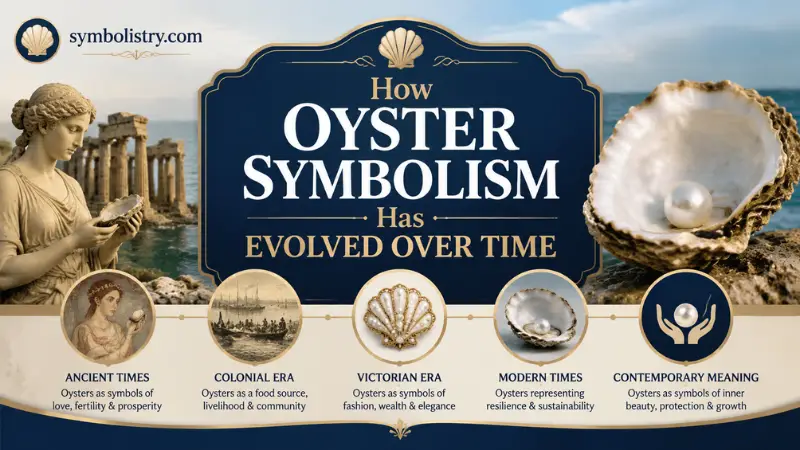
The meaning of oysters has changed as human relationships with nature and culture have developed. Earlier societies often focused on pearls as rare treasures connected with wealth, beauty, and social importance.
Modern interpretations of oyster symbolism have expanded beyond luxury and status. Today, oysters can represent environmental care, personal development, emotional protection, patience, resilience, and appreciation for natural processes.
This evolution reflects a wider cultural interest in finding meaning in everyday elements of nature. The oyster is no longer valued only for what it produces but also for what its life cycle represents, including transformation, survival, and the hidden value that develops over time.
FAQ About Oyster Symbolism
Are oysters a symbol of good luck?
In some cultures, oysters and pearls have been connected with prosperity, abundance, and good fortune. While oyster symbolism in modern America is more commonly linked with beauty, opportunity, and personal growth, pearls may still carry associations with success and positive outcomes.
What does a pearl inside an oyster symbolize?
A pearl inside an oyster commonly represents something valuable that develops over time. Within oyster symbolism, the pearl is often viewed as a sign of patience, maturity, resilience, and the ability to transform difficult experiences into positive growth.
Do oysters have religious symbolism?
Oysters are not a major religious symbol in most traditions, but pearls have appeared in some religious and philosophical writings as symbols of purity, wisdom, enlightenment, and valuable discoveries. Oyster symbolism in these contexts usually focuses more on the pearl than the oyster itself.
What does an oyster symbolize spiritually?
Oyster symbolism in spiritual interpretations often represents inner growth, patience, protection, and transformation. These meanings usually come from the pearl-making process and the idea that something valuable can be created through challenges, reflection, and personal development.
What does an oyster tattoo mean?
An oyster tattoo often represents resilience, hidden potential, and personal transformation. Many people choose oyster symbolism in tattoos to represent overcoming struggles, protecting their inner self, or recognizing the valuable qualities that develop through life experiences.
Conclusion
Oyster symbolism represents the idea that true value can develop beneath the surface. The oyster’s hard shell reflects protection, emotional boundaries, resilience, and the ability to remain strong during difficult conditions, while the pearl represents personal growth, patience, transformation, and the creation of something meaningful over time. This connection between the oyster and the pearl is why oyster symbolism is often linked with hidden potential, inner strength, and the ability to turn challenges into something valuable.
In modern American culture, oysters connect natural beauty with personal meaning, coastal traditions, environmental awareness, and appreciation for the hidden value found in nature. Whether used in jewelry, tattoos, artwork, home decor, or personal designs, oyster symbolism reminds people that important qualities, strengths, and achievements are not always visible at first glance. Like a pearl forming inside an oyster, meaningful growth often requires time, patience, resilience, and perseverance. The oyster continues to represent quiet transformation, reminding people that valuable changes often happen slowly before they become visible.


[…] gives ostrich symbolism an important historical meaning that is often missing from modern […]