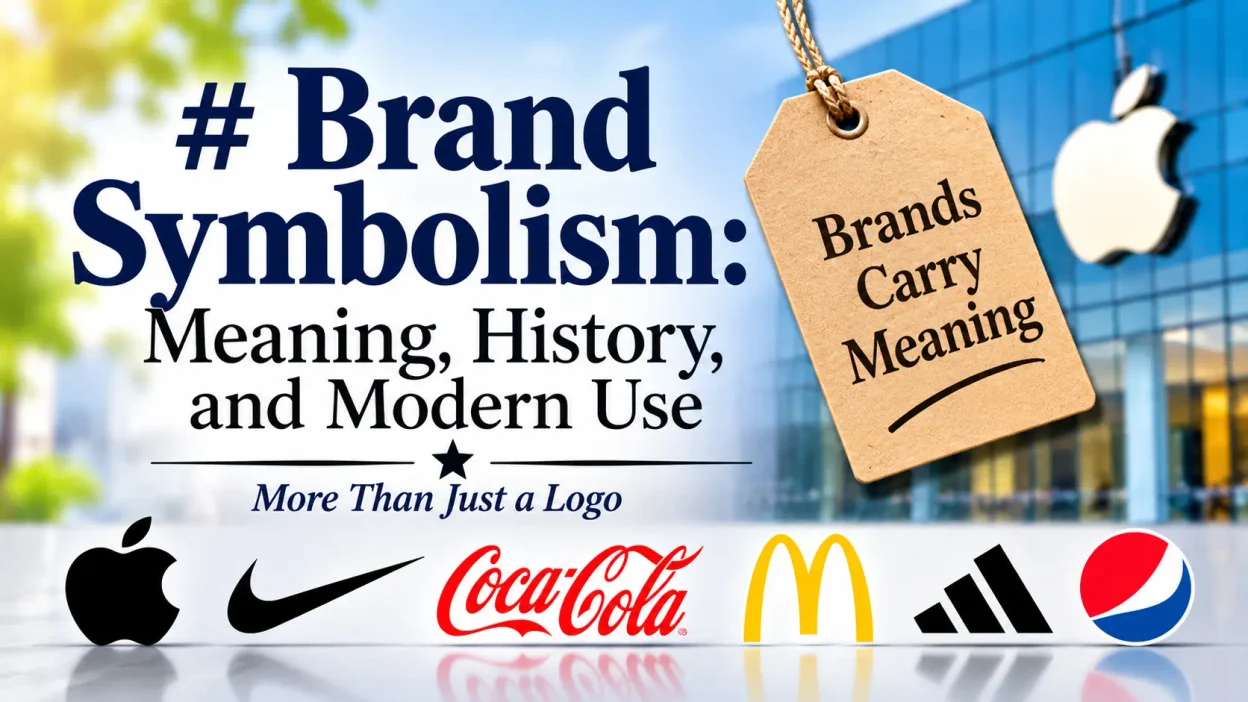
Brands are more than company names, products, and recognizable logos. They communicate ideas about identity, quality, belonging, ambition, and personal values. Brand symbolism describes the meanings people associate with a brand beyond the practical purpose of what it sells. In the United States, a familiar logo or brand name can represent everything from professional success and individual freedom to nostalgia and cultural identity.
People often choose brands for reasons that extend beyond price or product quality. A particular pair of sneakers might represent athletic achievement, while a luxury handbag can communicate status or personal taste. A familiar coffee shop logo might remind someone of daily routines, friendships, or a particular stage of life.
Understanding brand symbolism reveals how businesses become part of everyday culture. It also explains why certain logos, colors, slogans, and products can create strong emotional reactions even when people are not actively shopping.
Quick Answer
Brand symbolism commonly represents identity, personal values, social status, trust, and belonging in modern American culture. Historically, brands developed from marks of ownership and identification into recognizable symbols that communicate reputation, cultural associations, lifestyle, and consumer identity.
TL;DR
- Brands communicate identity beyond the practical function of their products.
- Early branding developed from ownership marks and product identification.
- American consumers use brands to express lifestyle and social belonging.
- Logos, colors, and typography communicate recognizable brand personalities.
- Brand loyalty often develops through emotional connections and shared experiences.
- Social media has made brand symbolism part of digital identity.
What Brand Symbolism Actually Means
Brand symbolism refers to the ideas, feelings, values, and social messages people connect with a business or its products. These associations can develop through advertising, product design, customer experiences, cultural traditions, and personal memories.
A brand’s visible identity usually includes several elements:
- Logo: A recognizable graphic or written mark.
- Name: The word or phrase that identifies the business.
- Colors: Visual choices that help establish recognition and personality.
- Typography: Lettering styles that contribute to the brand’s character.
- Slogan: A short message that communicates a promise or central idea.
- Products: Physical objects that carry associations with the brand.
These elements work together to create an impression. For example, a company using simple typography, neutral colors, and understated packaging might communicate restraint and sophistication. Another business using bright colors, playful illustrations, and informal language may suggest creativity and accessibility.
However, symbolism does not come entirely from the company’s intentions. Consumers also shape what a brand represents. A business might advertise itself as environmentally responsible, but customers may interpret its practices differently.
The meaning of a brand therefore develops through an ongoing relationship between the company, its customers, and the surrounding culture.
The Historical Origins of Branding and Brand Symbols
The history of branding begins long before modern advertising agencies and corporate logos.
The word brand has roots in the idea of burning or marking. Historically, people used identifying marks to establish ownership of livestock, tools, and other property. These marks helped distinguish one owner’s possessions from another’s.
As trade expanded, makers and merchants increasingly used identifying signs to communicate the origin of their goods. A recognizable mark could help buyers distinguish one craftsperson’s work from another’s.
During the Middle Ages, guilds and trading communities developed systems of marks that helped identify manufacturers and establish standards. These markings were not identical to modern branding, but they introduced an important principle: a recognizable sign could communicate information about the person or organization behind a product.
Industrialization transformed this practice.
During the nineteenth century, factories began producing goods on a much larger scale. Manufacturers needed ways to distinguish their products in increasingly competitive markets. Names, packaging, labels, and distinctive designs became important tools for establishing recognition.
By the twentieth century, advertising had expanded brand identity beyond product identification. Companies increasingly associated their names with particular lifestyles, personalities, and aspirations.
Brands were no longer simply telling customers who made something. They were communicating what choosing that product might say about the customer.
What Brand Symbols Represent in American Culture
In the United States, brands often function as cultural shorthand. A recognizable symbol can immediately suggest a particular lifestyle, generation, community, or set of values.
Consider the difference between an outdoor clothing company and a luxury fashion house. Their logos may identify the businesses, but they can also communicate very different ideas.
An outdoor brand might represent adventure, environmental awareness, independence, and an appreciation for nature. A luxury fashion label may communicate exclusivity, craftsmanship, wealth, or an interest in design.
These interpretations are not universal. Someone who grew up wearing a particular clothing brand might associate it with childhood memories rather than social status.
American culture also places considerable importance on personal choice and self-expression. Consumers often use clothing, technology, vehicles, and everyday products to communicate aspects of their personalities.
For example:
- Athletic brands can represent discipline, health, and an active lifestyle.
- Technology brands can suggest innovation, creativity, or professional interests.
- American heritage brands may communicate tradition and familiarity.
- Luxury brands can signal financial achievement or appreciation for craftsmanship.
- Sustainable brands can represent environmental responsibility.
These meanings make branding part of everyday social communication. A product can become recognizable not only because of its design but also because of the cultural associations surrounding it.
The Symbolic Meaning of Brand Logos
A logo is often the most immediately recognizable part of a brand’s identity. It condenses a company’s visual personality into a mark that people can recognize on packaging, clothing, advertisements, websites, and storefronts.
Different logo styles can suggest different qualities.
Wordmarks use distinctive lettering to make a company name recognizable. They can communicate professionalism, familiarity, simplicity, or confidence.
Abstract symbols use shapes that do not necessarily depict recognizable objects. Their meaning often develops through repeated exposure and the associations consumers build with the company.
Pictorial logos use recognizable images, such as animals, objects, or natural forms. These can make a brand’s identity easier to understand visually.
Emblems combine lettering and imagery into a unified design. They often communicate tradition, institutional identity, or heritage.
The meaning of a logo also depends on context. A circular emblem might suggest community or continuity to one audience, while another might simply recognize it as a familiar company mark.
Over time, repeated use gives logos cultural significance. People may recognize a symbol even when the company name is absent.
This is why some corporate logos become recognizable features of popular culture rather than remaining ordinary business identifiers.
What Brand Colors Symbolize
Color is one of the most noticeable parts of visual branding. It can influence how people initially perceive a company and help distinguish one business from another.
Different colors commonly carry associations in American advertising and design.
| Color | Common Brand Associations | Typical Applications | Important Consideration |
|---|---|---|---|
| Red | Energy, excitement, urgency | Food, entertainment, retail | Can also suggest danger |
| Blue | Trust, stability, reliability | Finance, technology, healthcare | May appear conservative |
| Green | Nature, growth, sustainability | Food, wellness, environmental products | Does not automatically prove sustainability |
| Black | Luxury, authority, sophistication | Fashion, cosmetics, premium products | Can also suggest seriousness |
| Yellow | Optimism, friendliness, attention | Retail, entertainment, consumer goods | Excessive use can feel overwhelming |
| White | Simplicity, cleanliness, openness | Technology, healthcare, lifestyle | Meaning depends on surrounding design |
These associations are useful starting points, not universal rules.
A cross-cultural study of color preferences and meanings found that consumers from different countries can interpret colors and combinations differently. The same color may communicate different ideas depending on cultural expectations and the product being marketed.
In the United States, blue is frequently associated with reliability in financial and corporate branding, while green often appears in businesses that want to emphasize nature or environmental responsibility.
Still, a brand’s reputation, customer experience, and visual surroundings matter more than color alone.
Brand Symbolism and Personal Identity
One of the most important aspects of brand symbolism is its relationship with personal identity.
People make choices about the products they use, the clothes they wear, and the businesses they support. These decisions can communicate something about how they see themselves or how they want others to perceive them.
A person who regularly wears athletic clothing may want to express an interest in fitness. Someone who chooses traditional American clothing labels may appreciate heritage, familiarity, or classic design.
The relationship can become particularly meaningful when a brand reflects an individual’s existing values.
For example, a consumer who cares about environmental protection might prefer businesses that emphasize responsible manufacturing. Another person may support a local company because buying from it reflects a commitment to the surrounding community.
Psychological research on brands recognizes that people can incorporate brand associations into their self-concepts. In other words, a brand can become part of the way someone describes their own personality and lifestyle.
However, not every purchase represents a deliberate identity statement. Sometimes people choose products because they are affordable, convenient, familiar, or simply useful.
Brand symbolism becomes most visible when the product’s social or emotional meaning matters as much as its practical function.
The Emotional and Psychological Meaning of Brands
Brands can create emotional associations through repeated experiences.
A familiar restaurant might remind someone of family gatherings. A particular clothing label might bring back memories of school or an important achievement. A childhood toy company might represent comfort and nostalgia.
These associations develop because people connect products with events, relationships, and personal experiences.
Several emotional ideas frequently appear in brand symbolism.
Trust: Consumers may associate a familiar brand with reliability because they have repeatedly received satisfactory products or services.
Nostalgia: Older logos, packaging, and advertisements can remind people of earlier periods in their lives.
Confidence: Wearing a brand associated with professional or athletic achievement may help someone feel prepared or self-assured.
Belonging: Shared brand preferences can create connections between people who have similar interests or lifestyles.
Aspiration: Some brands represent goals that consumers hope to achieve, including financial success, creativity, or personal independence.
These feelings can influence consumer behavior, but their effects differ from person to person.
A brand that represents confidence to one customer might seem uninteresting or unnecessarily expensive to another.
This emotional variation explains why businesses cannot completely control what their symbols mean.
Brand Symbolism and Social Status
Brands have long played a role in communicating social position.
In modern American culture, visible products can signal wealth, professional success, taste, or access to exclusive communities. Luxury watches, designer clothing, premium automobiles, and expensive accessories are common examples.
The symbolism comes from more than the objects themselves. It develops through perceptions of price, craftsmanship, scarcity, reputation, and social recognition.
For some consumers, purchasing a luxury brand represents reaching a personal milestone. For others, it demonstrates membership in a particular social group.
However, expensive products do not always indicate wealth. Some people purchase luxury items secondhand, save for a particular product, or simply appreciate its design.
Likewise, inexpensive brands can carry strong cultural meaning. A familiar everyday product may represent practicality, family tradition, or a preference for simplicity.
Social status is therefore only one part of brand symbolism.
In the United States, where personal achievement and economic success frequently appear in advertising, brands can become visible expressions of aspiration. Yet consumers also use brands to communicate values that have little to do with money.
How American History and Popular Culture Shape Brand Meanings
American brand symbolism has developed alongside changes in advertising, entertainment, transportation, technology, and popular culture.
During the twentieth century, national advertising helped transform businesses into familiar cultural names. Radio, magazines, television, and later the internet exposed consumers to the same brands across different regions.
Automobile companies, food manufacturers, department stores, and entertainment businesses became part of everyday American life.
Some brands became associated with particular historical periods. Vintage packaging and advertising can now communicate nostalgia for earlier American design styles, even among people who never experienced those periods themselves.
Sports culture also plays an important role.
Team merchandise, athletic footwear, and recognizable sports brands can communicate loyalty, regional identity, and participation in a community. Wearing a team’s colors may represent family tradition or a connection to a particular city.
American holidays also influence brand meaning.
During Christmas, seasonal packaging and familiar retail imagery can become connected with family traditions and gift-giving. Around Independence Day, businesses may use red, white, and blue designs to associate their products with American national identity.
These associations demonstrate that brand symbols are not separate from culture. They develop within the historical and social environments where people encounter them.
Cross-Cultural Interpretations of Brand Symbols
Although this article focuses on the United States, brand symbolism is not limited to American culture.
A company operating internationally may carry different meanings in different countries. Its reputation, visual identity, product associations, and cultural references can change depending on local traditions.
In some cultures, brands associated with craftsmanship and heritage may receive particular appreciation. In others, innovation, affordability, or international recognition may be more important.
Colors and visual forms can also produce different reactions.
A color that suggests celebration in one cultural setting might be connected with mourning in another. Religious imagery, animals, traditional patterns, and historical references can also carry meanings that are unfamiliar to international audiences.
Global businesses therefore need to understand the cultural environments in which their symbols appear.
A successful American brand may not automatically communicate the same values when introduced to consumers elsewhere.
The reverse is equally true. International brands entering the United States may develop new meanings through American advertising, celebrity partnerships, and consumer communities.
Brand symbolism is consequently a conversation between commercial identity and local cultural interpretation.
Brand Symbolism in Fashion, Jewelry, and Everyday Products
Fashion is one of the clearest places to observe brand symbolism because clothing and accessories are visible parts of personal presentation.
A recognizable logo on a sweatshirt, handbag, sneaker, or watch can communicate preferences without requiring an explanation.
Streetwear, for example, often combines clothing with music, sports, art, and youth culture. Certain brands become associated with particular communities because of the people who wear them and the cultural movements connected to their products.
Jewelry and watches can communicate different ideas. A luxury watch may suggest achievement or an appreciation for precision, while a sentimental piece from a familiar retailer may represent a personal relationship.
Everyday household products also carry symbolic associations.
A familiar kitchen appliance brand might represent reliability because it has been used in a family home for decades. A particular furniture company may symbolize practical design or modern living.
These meanings are not always intentional. People frequently develop attachments to products through repeated use.
The object becomes familiar, and the brand name becomes associated with the experiences surrounding it.
Brand Symbolism in Digital Culture and Social Media
The internet has changed how people encounter and communicate brand meanings.
In earlier decades, consumers mainly encountered corporate symbols through advertisements, stores, packaging, and television. Today, they also interact with brands through social media profiles, online communities, influencer content, and digital entertainment.
A brand logo may appear in a person’s profile photograph, video background, clothing, or everyday posts. These appearances can become part of the person’s online presentation.
Social media also allows consumers to participate in brand culture rather than simply receiving advertising messages.
People share product reviews, create fan communities, discuss company controversies, and produce their own content featuring recognizable brands.
This participation can strengthen brand identity, but it can also change the original meaning of a symbol.
For example, a product associated with one lifestyle might become popular among a completely different audience through online trends.
Memes can also alter the meaning of familiar logos. A company symbol originally designed to communicate professionalism might become part of an internet joke.
Digital culture has therefore made brand symbolism more interactive and less predictable.
Brand Tattoos, Collectibles, and Personal Expression
Some people take their relationship with brands beyond purchasing products. They collect branded objects, preserve vintage packaging, decorate personal spaces with familiar logos, or even incorporate corporate symbols into tattoos.
Brand tattoos are particularly interesting because they turn a commercial symbol into a permanent personal statement.
A person might choose a brand logo because it reminds them of childhood, represents an important achievement, or connects them with a particular cultural community.
For another person, a corporate symbol might represent a favorite entertainment franchise, a sports team, or a meaningful period in their life.
Collectibles also demonstrate how commercial symbols can acquire personal value.
Vintage advertising signs, branded clothing, original packaging, and discontinued products can become desirable because of their historical associations and nostalgic appeal.
However, a brand tattoo can have a different meaning from the company’s intended message. It may represent an individual’s personal history rather than an endorsement of the business.
That distinction is important when understanding how brand symbols become part of individual identity.
Controversies and Misuse of Brand Symbols
Brand symbolism can become controversial when a company’s public image conflicts with its actual behavior.
A business might promote sustainability while facing criticism over wasteful production practices. Another may advertise social responsibility while customers question its treatment of employees.
These situations create a gap between intended symbolism and public interpretation.
There are also concerns about cultural appropriation. Companies sometimes use traditional patterns, religious imagery, Indigenous designs, or culturally significant symbols without understanding their original meanings or respecting the communities connected to them.
Another problem involves misleading brand associations.
Some companies use green colors, natural imagery, or environmental language to suggest sustainability without providing convincing evidence of responsible practices. This type of misleading environmental presentation is commonly called greenwashing.
Brand symbols can also become connected with political or social controversies. When businesses publicly support causes or take positions on controversial issues, consumers may interpret their logos as representing those positions.
It is important to distinguish between a company’s official identity, its public behavior, and meanings that consumers attach to it.
A symbol does not automatically prove that a company follows the values it advertises.
How Brand Symbolism Has Changed in the Modern World
Brand symbolism has evolved from a system of identification into a broader form of cultural communication.
Early marks primarily helped people recognize ownership and the origins of products. Industrialization expanded their role by making brands essential for distinguishing goods in competitive markets.
Advertising later connected brands with lifestyles, emotions, and aspirations.
In the twenty-first century, social media and digital communities have made brand meanings even more flexible. Consumers can publicly support, reinterpret, criticize, or reject the values associated with a company.
Several developments have influenced this change:
- Digital visibility: Logos now appear across websites, apps, and social platforms.
- Consumer participation: Customers contribute to brand meaning through reviews and online communities.
- Cultural awareness: Businesses face greater scrutiny over how they represent different communities.
- Personal values: Consumers increasingly discuss how company practices align with their expectations.
- Nostalgia: Older brand identities can gain renewed popularity through retro fashion and collectibles.
The result is a more complicated relationship between companies and their audiences.
A business may create its logo, choose its colors, and develop its advertising message, but consumers ultimately participate in deciding what those elements represent.
Why Some Brands Become Cultural Icons
Not every recognizable company becomes a cultural icon.
Some brands develop associations that extend far beyond their original products. Their names and symbols become connected with generations, shared experiences, popular entertainment, and historical moments.
This process usually involves several factors.
First, a brand needs consistent recognition. People must encounter its identity often enough to remember it.
Second, the brand becomes associated with experiences that matter to consumers. These might include family traditions, sporting events, childhood memories, or major cultural developments.
Third, its meaning becomes shared across communities. People begin recognizing the brand as part of a broader cultural story.
A familiar American soft drink brand, for example, might represent more than a beverage. Its advertisements, packaging, and presence at social gatherings can connect it with celebrations and family experiences.
A well-known athletic brand might become associated with sporting achievement, popular music, or streetwear.
Cultural recognition develops over time. It cannot be created simply by designing an attractive logo or purchasing advertising space.
The strongest brand symbols become meaningful because people repeatedly connect them with experiences, relationships, and shared cultural references.
Frequently Asked Questions
What does brand symbolism mean?
Brand symbolism refers to the meanings, values, emotions, and identities people associate with a company or its products. These associations extend beyond practical features and can include trust, lifestyle, status, nostalgia, and belonging.
Why are brand logos considered symbols?
Logos are visual identifiers that communicate a company’s identity and help people recognize its products or services. Through repeated exposure, they can also acquire emotional, cultural, and social associations.
What does a brand represent in American culture?
In the United States, brands can represent personal freedom, individual taste, professional success, community membership, and lifestyle preferences. Their meanings often depend on advertising, popular culture, and personal experiences.
Why do people feel emotionally attached to brands?
Emotional attachment often develops through positive experiences, familiarity, memories, and shared activities. A brand may remind someone of childhood, family traditions, or an important personal achievement.
Can brand colors have symbolic meanings?
Yes. Colors commonly communicate associations such as trust, energy, nature, luxury, or simplicity in branding. However, their interpretation varies according to culture, industry, design, and individual experience.
Are luxury brands always symbols of wealth?
No. Luxury brands can communicate financial status, but they may also represent craftsmanship, personal taste, design appreciation, or cultural heritage. Consumers do not necessarily purchase expensive products for the same reasons.
How has social media changed brand symbolism?
Social media allows consumers to shape brand meanings through online communities, reviews, memes, and personal content. As a result, companies have less control over how their symbols are interpreted and discussed.
Conclusion
Brand symbolism explains why companies and their products can represent much more than the goods or services they provide. Logos, colors, names, and familiar designs communicate ideas about identity, social status, trust, belonging, and personal values. In American culture, these associations often develop through advertising, fashion, sports, entertainment, family traditions, and everyday experiences.
From early ownership marks to modern digital identities, brands have evolved into recognizable parts of cultural life. Their meanings continue to change as consumers develop new relationships with businesses and reconsider the values those businesses represent.
Ultimately, brand symbolism is not determined by a logo or advertising campaign alone. It develops through the experiences, memories, beliefs, and cultural connections that people attach to the brands they encounter every day.