
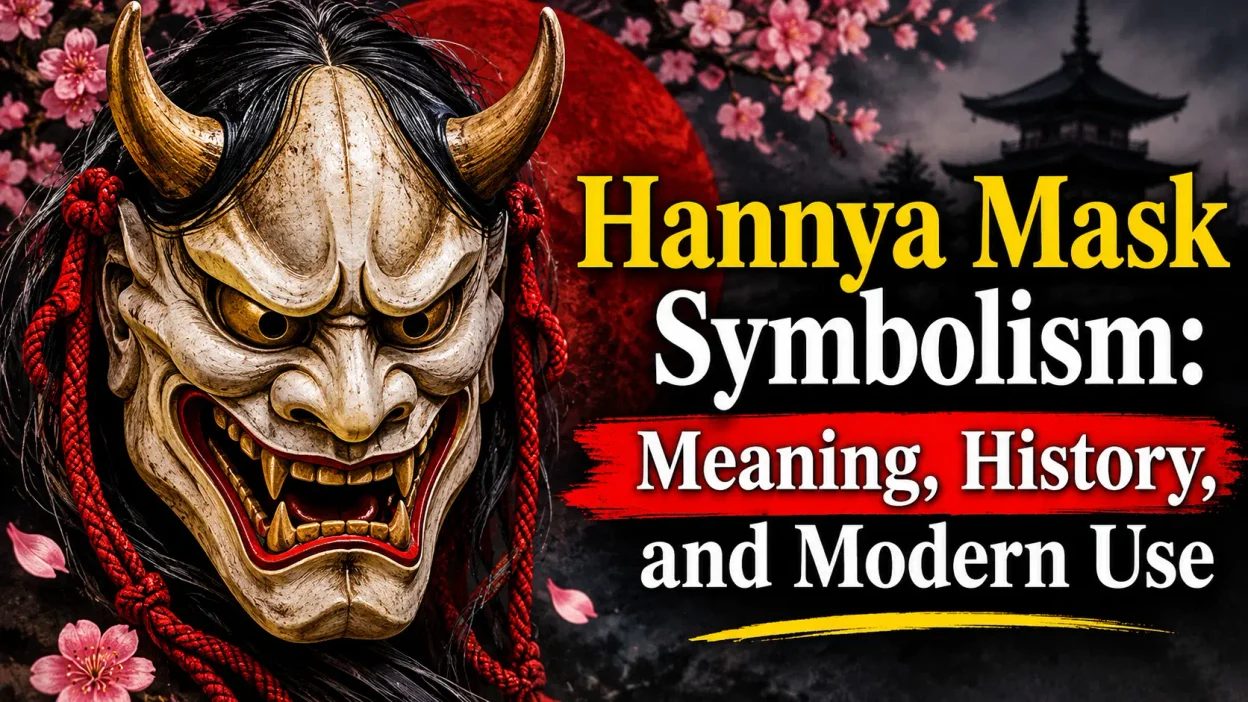
The Hannya mask is one of the most recognizable images in Japanese art, featuring two pointed horns, metallic eyes, sharp teeth, and an expression that seems to combine rage with suffering. In traditional Japanese theater, the mask represents a woman whose jealousy, heartbreak, resentment, or obsession has transformed her into a demon. Today, hannya mask symbolism has expanded beyond the stage, appearing in tattoos, streetwear, artwork, martial arts imagery, and popular culture.
Although the mask looks frightening, its expression is not simply about evil. It represents the complicated emotions that can develop when love turns into jealousy, grief becomes resentment, or emotional pain overwhelms a person’s ability to control their feelings. The face contains both anger and sorrow, making it an image of human suffering as much as supernatural danger.
For American audiences, the Hannya mask is often associated with Japanese folklore, strength, protection, emotional intensity, and the darker side of human nature. Understanding its original theatrical role provides a more meaningful interpretation than treating it as merely a scary demon face.
Quick Answer
The Hannya mask commonly symbolizes jealousy, anger, heartbreak, obsession, and emotional suffering, especially the transformation of a woman into a demon through overwhelming resentment. In traditional Japanese Noh theater, it also represents the coexistence of rage and sorrow, while modern interpretations associate it with inner struggles, protection, resilience, and confronting one’s darker emotions.
TL;DR
- Hannya represents jealousy, resentment, heartbreak, and emotional transformation.
- It originated as a mask used in Japanese Noh theater.
- Its expression combines anger, grief, suffering, and supernatural menace.
- Modern tattoos often represent emotional struggles, strength, protection, or personal transformation.
- Different mask colors can communicate different characters and emotional intensities.
- The mask is not simply a symbol of evil; it also reflects human vulnerability.
What Is a Hannya Mask?
Masque No | Masque théâtre japonais – Shogun Japon
Noh mask | Japanese theater Mask – KimuraKami
Hannya Noh Mask by Nomura Ran · Signed with Tomobako & Mask Bag – Japonista
8
A Hannya mask is a carved theatrical mask used in traditional Japanese Noh performances. It depicts a female demon or supernatural spirit whose emotions have transformed her appearance.
The mask typically features:
- Two curved horns extending from the forehead
- Golden or metallic-looking eyes
- A wide-open mouth with sharp teeth
- An exaggerated expression of rage
- Disheveled hair
- A deeply furrowed brow
The combination of these features creates a face that appears frightening, furious, and tormented. Unlike a mask that expresses only one emotion, Hannya can appear angry when viewed directly and sorrowful when the actor tilts it downward.
This changing expression is an essential part of its theatrical design. The actor’s movements reveal different emotional dimensions of the character without changing the mask itself.
The Historical Origins of the Hannya Mask
The Hannya mask developed within the Japanese theatrical tradition of Noh, a performance art that combines music, dance, poetry, ritual, and dramatic storytelling. Noh became established as a major theatrical form during the 14th century, and masks became central to portraying supernatural beings, spirits, women, elderly figures, and other characters.
The Hannya mask evolved from earlier representations of female supernatural beings, including serpent-like demons. Over time, mask makers developed a distinctive design that could communicate jealousy, fury, sorrow, and spiritual transformation through subtle changes in angle and lighting.
The mask is particularly associated with plays involving women whose emotional suffering develops into supernatural vengeance. In these performances, the mask represents the moment when a character’s inner turmoil becomes visible as a demonic form.
The mask’s name is also connected to the Japanese Buddhist term hannya, which refers to wisdom or insight, derived from the Sanskrit concept of prajñā. The theatrical mask’s name has a separate historical explanation associated with mask-making traditions, and the relationship between the Buddhist term and the demon mask has been discussed through different interpretations.
What Jealousy and Resentment Mean in Hannya Symbolism
Jealousy is the mask’s most widely recognized symbolic meaning. In traditional stories, a woman may become a demon after experiencing betrayal, rejection, humiliation, or unfulfilled love.
The mask represents what happens when these feelings become destructive. Jealousy is no longer an ordinary emotion but an overwhelming force that consumes the character’s identity.
Resentment is another central meaning. The Hannya character often carries unresolved emotional pain, and that pain becomes anger directed toward another person. The mask suggests that emotional wounds can grow when they are ignored, nurtured, or allowed to dominate someone’s life.
In modern interpretations, the Hannya can symbolize:
- Jealousy that becomes uncontrollable
- Anger caused by betrayal
- Emotional obsession
- Revenge
- Unresolved heartbreak
- The destructive side of attachment
The mask does not necessarily represent a person who is naturally evil. Its symbolism often begins with a human experience that becomes distorted through suffering.
The Dual Meaning of Anger and Sorrow
One of the most important features of the Hannya mask is its emotional duality. Its face appears aggressive, but its design also communicates sadness and despair.
When viewed straight on, the horns, glaring eyes, and open mouth create an impression of fury. When the mask is tilted downward, its brow and eye shape can appear sorrowful, almost as if the character is crying.
This visual contrast represents a familiar human experience: anger can sometimes hide pain.
A person who feels betrayed may become furious because they are hurt. Someone who experiences rejection may express resentment instead of admitting sadness. The Hannya mask captures this relationship between emotional vulnerability and aggression.
Its symbolism therefore extends beyond anger. It represents the struggle between the desire to hurt others and the desire to be understood.
Hannya Mask Symbolism in Japanese Noh Theater
In Noh theater, the Hannya mask is used to portray specific female characters who have transformed into supernatural beings. The mask is not simply a decorative prop; it is part of the character’s identity and emotional expression.
Several famous Noh plays feature Hannya or related demon masks.
Aoi no Ue
In Aoi no Ue, a supernatural manifestation of Lady Rokujō’s jealousy and resentment torments Lady Aoi. Her emotions are associated with a demonic transformation, and the Hannya mask reveals the frightening form of her spirit.
Dōjōji
In Dōjōji, a woman becomes consumed by desire and anger connected to a monk. Her transformation into a serpent-like supernatural being is central to the story.
Kurozuka
In Kurozuka, a woman living in the mountains reveals a terrifying supernatural identity. The story explores deception, fear, and the danger hidden beneath an apparently ordinary human appearance.
These theatrical roles demonstrate that the Hannya mask is connected to stories of emotional intensity, spiritual transformation, and the consequences of uncontrolled feelings.
What Different Hannya Mask Colors Symbolize
The color of a Hannya mask can affect its interpretation, particularly in traditional theatrical settings. Different colors have been associated with the social status, emotional intensity, or nature of the character being portrayed.
White Hannya
Often associated with aristocratic or refined female characters. The pale appearance may suggest elegance, dignity, and sorrow beneath the demonic transformation.
Red Hannya
Often represents a more intense, aggressive, or emotionally overwhelming demonic character. Red can emphasize rage and a more frightening supernatural presence.
Black Hannya
Frequently conveys a darker or more frightening character, with an emphasis on supernatural menace and the destructive aspects of emotional obsession.
These color distinctions are not universal rules for every modern mask, tattoo, or artwork. Contemporary artists often use colors for aesthetic reasons or personal interpretations rather than following traditional theatrical conventions.
Hannya Mask Symbolism in the United States
In the United States, the Hannya mask has become widely recognized through tattoo culture, Japanese-inspired artwork, martial arts imagery, anime, gaming, and decorative objects.
American interpretations often focus on the mask’s visual intensity. Its horns, sharp teeth, and dramatic expression make it an appealing image for people interested in dark aesthetics, mythology, or symbols that communicate emotional strength.
Common American interpretations include:
| Context | Meaning in the USA | Common Associations | Notes |
|---|---|---|---|
| Tattoos | Strength through emotional pain | Resilience, heartbreak, survival | Often personalized |
| Japanese art | Cultural and theatrical heritage | Noh, folklore, tradition | Connected to its original context |
| Decorative masks | Mystery and dramatic design | Darkness, intensity, protection | Interpretations vary |
| Martial arts imagery | Discipline and confronting fear | Courage, aggression, self-control | Not a universal traditional meaning |
| Pop culture | Supernatural power or villainy | Demons, transformation, horror | Often simplified |
American audiences may interpret the mask as an image of someone who has experienced betrayal but refuses to appear weak. Others use it to represent the darker parts of their personality or their willingness to confront difficult emotions.
These interpretations are modern adaptations rather than direct equivalents of the mask’s traditional theatrical meaning.
Hannya Symbolism in Tattoos
Hannya tattoos are especially popular among people who appreciate Japanese tattoo art and imagery associated with emotional intensity.
A Hannya tattoo may symbolize:
- Surviving heartbreak or betrayal
- Acknowledging anger without being controlled by it
- Protection against negative influences
- Strength after emotional hardship
- A reminder of the consequences of jealousy
- Acceptance of one’s darker emotions
Some people choose a Hannya tattoo to represent an experience that changed their life. Others appreciate its dramatic appearance without assigning it a specific personal meaning.
The mask may also be combined with cherry blossoms, koi fish, samurai imagery, snakes, waves, or traditional Japanese backgrounds. Each combination changes the tattoo’s meaning.
For example, cherry blossoms can introduce themes of impermanence, while a koi may represent perseverance. A Hannya surrounded by flames may emphasize rage, transformation, or a difficult emotional period.
The meaning of a tattoo ultimately depends on the person wearing it.
Emotional and Psychological Symbolism
The Hannya mask offers a visual representation of emotions that people often struggle to express openly.
It can symbolize the psychological experience of feeling two opposing things at once. Someone may love a person and resent them, feel grief and anger simultaneously, or want to forgive while still remembering the harm they experienced.
The mask’s expression captures this emotional conflict.
Its symbolism may be especially meaningful for people who have experienced:
- A painful breakup
- Betrayal by a friend
- Family conflict
- Rejection
- Loss
- Emotional manipulation
- Difficult personal transformation
The Hannya can also serve as a reminder that intense emotions are part of human experience. Anger does not always begin with cruelty; sometimes it begins with fear, sadness, humiliation, or disappointment.
The mask encourages viewers to look beyond an aggressive appearance and consider the pain underneath.
Protection and Strength in Modern Interpretations
Although the Hannya mask traditionally represents a dangerous supernatural character, modern interpretations sometimes treat it as a protective symbol.
In tattoo culture and decorative art, the mask may be used as a warning against harmful people, negative influences, or emotional vulnerability. Its frightening appearance can communicate that the wearer is not easily intimidated.
Some people view it as a symbol of strength because it acknowledges difficult emotions rather than pretending they do not exist.
This protective interpretation is particularly common in contemporary tattoo designs, where the mask may represent the ability to survive adversity and defend personal boundaries.
However, the Hannya mask was not originally created as a universal protective amulet. Its protective meaning in modern art and personal symbolism should be distinguished from its historical role in Noh theater.
Hannya Mask Symbolism in Japanese Folklore and Spiritual Traditions
The Hannya mask is closely connected to Japanese supernatural storytelling, particularly traditions involving spirits, demons, and emotional transformation.
Japanese folklore contains many supernatural beings, including oni, yōkai, and onryō. These categories are not interchangeable, but they share associations with supernatural forces that can influence or threaten the human world.
The Hannya figure is especially connected to the idea that intense human emotions can transform a person into something frightening. In stories, jealousy and resentment may become supernatural forces rather than remaining ordinary feelings.
This connection reflects traditional storytelling themes in which emotional imbalance can have spiritual consequences. A woman who experiences intense suffering may become a vengeful spirit, illustrating the danger of unresolved attachment and anger.
The mask also connects with Buddhist themes of attachment, suffering, and the difficulty of overcoming destructive emotions. However, the Hannya mask itself is not a Buddhist religious symbol in the same way as a Buddha image or sacred mandala. Its theatrical meaning is more specific.
The Meaning of Hannya in Art and Home Decor
Hannya masks appear in American homes, art studios, tattoo shops, restaurants, martial arts spaces, and collections of Japanese-inspired objects.
Their striking appearance makes them popular decorative pieces. The mask can create a dramatic visual atmosphere, particularly when displayed alongside Japanese prints, dark wood, traditional textiles, or other theatrical objects.
In modern decor, a Hannya mask may represent:
- Appreciation for Japanese art
- Interest in mythology and folklore
- A dramatic or gothic aesthetic
- Emotional intensity
- A reminder of personal resilience
- A fascination with supernatural imagery
Some collectors are interested in the craftsmanship of traditional masks, including carved wood, lacquer, pigments, gilded details, and the ability to communicate emotion through subtle facial angles.
For those interested in Japanese culture, learning about the mask’s theatrical history can make it more meaningful than viewing it simply as a frightening decoration.
Hannya Mask Symbolism in Anime, Movies, and Video Games
The Hannya mask has become a familiar visual motif in modern entertainment. Its dramatic appearance makes it useful for portraying villains, warriors, supernatural beings, mysterious characters, and individuals with hidden identities.
In anime, movies, video games, and graphic art, the mask may represent:
- A concealed identity
- A dangerous personality
- Revenge
- Supernatural transformation
- Emotional conflict
- A character’s hidden anger
- A connection to Japanese culture
Modern entertainment sometimes removes the original story about jealousy and emotional transformation. Instead, the mask becomes a general symbol of a demon, assassin, villain, or powerful warrior.
This adaptation has helped the Hannya image become internationally recognizable, particularly among younger audiences who encounter it through gaming, animation, street fashion, and online art.
The visual design remains recognizable even when its traditional meaning is no longer central to the story.
What the Hannya Mask Represents in Personal Identity
Some people use Hannya imagery to communicate something about their personality or life experiences.
The mask can represent the belief that a person has a complicated emotional history. It may communicate that someone has experienced pain, anger, or betrayal and has learned to protect themselves.
For others, it represents the acceptance of flaws. Rather than presenting a perfectly calm or pleasant identity, the Hannya image acknowledges that people can experience jealousy, rage, sadness, and resentment.
This interpretation does not mean that the wearer identifies with being a demon. It may instead represent a willingness to acknowledge difficult emotions honestly.
In personal symbolism, the Hannya can serve as a reminder that emotional strength involves recognizing anger and grief without allowing those feelings to control one’s decisions.
Common Misunderstandings About Hannya Symbolism
The Hannya mask is often misunderstood because its appearance is more immediately recognizable than its history.
The Hannya mask does not simply mean evil
The mask represents a specific emotional transformation. Its character may be frightening, but the story often begins with heartbreak, jealousy, humiliation, or suffering.
It is not simply a male demon
Traditional Hannya masks portray female supernatural characters. Their distinctive features communicate a woman transformed by intense emotions.
It does not always represent anger
The mask can communicate sadness, despair, grief, and emotional vulnerability. Its changing expression is part of its theatrical significance.
It is not automatically a protection symbol
Modern tattoo and decorative interpretations sometimes use it as protection against negativity. This is a contemporary symbolic association rather than the mask’s primary historical theatrical function.
It is not a universal Japanese symbol
The Hannya mask is an important theatrical and artistic image, but its meaning is specific. It should not be treated as a general representation of all Japanese spiritual beliefs, demons, or cultural traditions.
How Hannya Symbolism Has Changed Over Time
The Hannya mask’s meaning has developed through several cultural stages.
| Period or Context | Symbolic Interpretation |
|---|---|
| Traditional Noh theater | A woman transformed by jealousy, grief, and resentment |
| Japanese folklore | A supernatural being connected to emotional suffering and vengeance |
| Traditional mask craftsmanship | A dramatic expression of anger, sorrow, and transformation |
| Modern Japanese art | A recognizable image of supernatural power and emotional intensity |
| American tattoo culture | Resilience, heartbreak, protection, personal struggles, or darker emotions |
| Global pop culture | Demons, mystery, danger, hidden identity, and Japanese-inspired aesthetics |
Its modern popularity has introduced the image to people who may never have watched a Noh performance. This has expanded its symbolic range but also created interpretations that are less connected to its traditional context.
Today, the Hannya mask can represent both the destructive consequences of emotional obsession and the personal strength that comes from confronting painful experiences.
The most meaningful interpretations preserve an awareness of both sides.
Frequently Asked Questions
What does a Hannya mask symbolize?
A Hannya mask symbolizes jealousy, anger, heartbreak, resentment, and emotional suffering. In Japanese Noh theater, it represents a woman whose intense emotions have transformed her into a supernatural demon.
Is a Hannya mask good or bad luck?
The Hannya mask is not universally considered good or bad luck. Its traditional meaning is connected to destructive emotions, while modern interpretations sometimes use it as a symbol of protection, strength, and awareness of personal struggles.
What does a Hannya mask tattoo mean?
A Hannya tattoo may represent heartbreak, betrayal, emotional strength, anger, protection, or overcoming difficult experiences. The meaning often depends on the wearer’s personal history, the colors used, and other imagery in the tattoo.
What is the difference between a Hannya mask and an Oni mask?
A Hannya mask represents a woman transformed into a demon through jealousy, resentment, or emotional suffering. An Oni mask generally represents a Japanese demon or ogre, often associated with supernatural power, danger, punishment, or protection. Although their appearances can overlap, their traditional characters and meanings differ.
Why does the Hannya mask look angry and sad at the same time?
The mask is intentionally designed to communicate multiple emotions. Its horns, teeth, and glaring eyes convey rage, while its brow and facial angles can reveal sadness and despair when the actor tilts the mask.
What do red, white, and black Hannya masks mean?
Traditional theatrical interpretations often associate white masks with refined or aristocratic characters, red masks with more intense or aggressive supernatural roles, and black masks with darker or more frightening characters. Modern designs may use these colors for artistic purposes rather than following traditional conventions.
Is the Hannya mask a religious symbol?
The Hannya mask is primarily a theatrical mask associated with Japanese Noh theater and folklore. Its name is connected to a Buddhist term for wisdom, but the mask itself represents a specific supernatural character rather than functioning as a general Buddhist religious symbol.
Conclusion
The Hannya mask symbolizes jealousy, resentment, heartbreak, emotional transformation, and the complicated relationship between anger and sorrow. Its original role in Japanese Noh theater portrays a woman whose emotional suffering becomes a supernatural force, making the mask a representation of both human vulnerability and destructive passion.
In modern American culture, Hannya mask symbolism has expanded into tattoos, decorative art, fashion, and popular entertainment. People may use it to represent personal struggles, emotional resilience, protection, or an acknowledgment of their darker emotions.
Its most meaningful interpretation lies in recognizing that the frightening face is not simply a representation of evil. Beneath its horns and sharp teeth is a story about pain, attachment, and what can happen when emotions become overwhelming.

[…] Together, these elements create several common symbolic meanings. […]