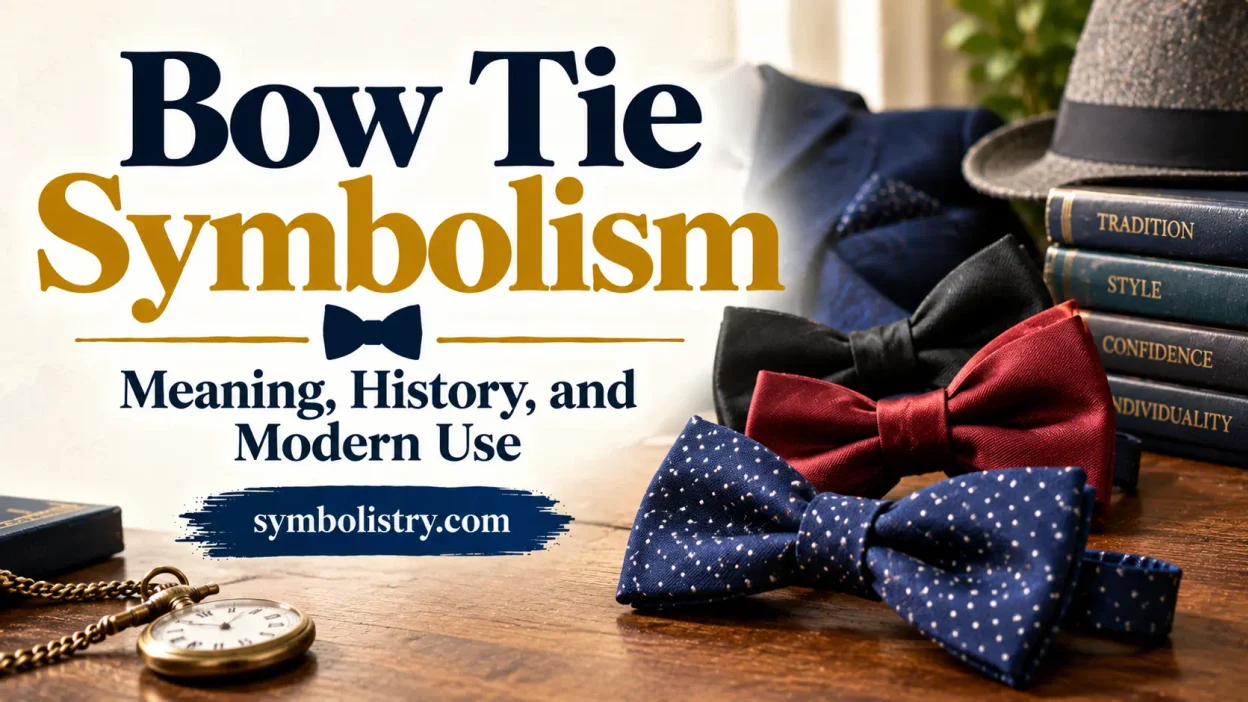
A bow tie is a small piece of clothing, but it can communicate more than simple formality. Bow tie symbolism is often connected with elegance, self-expression, intellectual style, celebration, and a willingness to stand apart from conventional neckwear. Unlike a long necktie, a bow tie creates a compact visual shape around the collar, making it immediately noticeable.
In the United States, bow ties appear in settings ranging from weddings and black-tie events to classrooms, political ceremonies, entertainment, and everyday personal style. Their meaning changes with context. A black bow tie at a formal event may signal strict adherence to dress codes, while a colorful bow tie at a wedding can suggest personality and playfulness.
Understanding the symbol requires looking beyond the accessory itself. Its associations developed through changes in European and American clothing, formal dress traditions, professional identities, popular culture, and changing ideas about individuality.
Quick Answer
Bow tie symbolism commonly represents elegance, formality, confidence, and distinctive personal style in modern American culture. Historically associated with formal and professional dress, the bow tie has also come to suggest individuality, intellectualism, celebration, and a deliberate departure from the ordinary necktie.
TL;DR
- Bow ties commonly symbolize formality and polished personal style.
- Their origins are connected to earlier neckwear traditions in Europe.
- American culture often associates bow ties with individuality and confidence.
- Black bow ties remain closely linked with formal evening dress.
- Colorful bow ties can communicate humor, personality, or celebration.
- Modern wearers use them to challenge conventional ideas about menswear.
What a Bow Tie Looks Like and Why Its Shape Matters
A bow tie consists of a central knot with fabric extending outward on both sides, creating a shape that resembles a small bow. It is normally worn around the collar rather than hanging vertically down the chest.
That shape has an important effect on how people perceive it. A conventional necktie directs the eye downward, visually extending the wearer’s torso. A bow tie concentrates attention near the face. As a result, it can make facial expression, hairstyle, glasses, and collar design more visually prominent.
The bow-like form also contributes to associations with decoration and ceremony. Unlike an accessory that is designed to disappear into an outfit, a bow tie announces itself. Even a simple black version creates a recognizable focal point.
Different shapes produce different impressions. Traditional butterfly styles look formal and theatrical, while slimmer batwing styles can appear more contemporary. Novelty bow ties may use unusual colors, patterns, or materials, shifting the message from strict formality toward humor and self-expression.
The Historical Roots of Bow Tie Symbolism
The modern bow tie developed from a longer history of neckwear rather than appearing suddenly as an independent fashion item.
European soldiers and civilians used various forms of neck cloth and cravat during the seventeenth and eighteenth centuries. Over time, neckwear became increasingly structured and decorative. The cravat, in particular, became an important element of fashionable dress among European men.
Later forms of tied neckwear gradually became smaller and more standardized. By the nineteenth century, styles resembling the modern bow tie were increasingly recognizable.
This history helps explain why the bow tie became associated with refinement. Neckwear was not merely functional. It was part of a broader system through which men communicated social position, profession, occasion, and attention to appearance.
The bow tie therefore inherited meanings from formal neckwear while developing its own identity.
How Formal Dress Turned the Bow Tie Into a Symbol
The strongest modern association is probably formality.
Black bow ties became closely associated with evening dress, particularly black-tie attire. In this setting, the accessory is not simply decorative. It is part of a recognized dress code.
That distinction matters. A bow tie worn with a tuxedo communicates something different from the same accessory worn with a cardigan and button-down shirt.
In formal American settings, the black bow tie can therefore represent:
- ceremony
- respect for the occasion
- traditional etiquette
- sophistication
- attention to dress
- participation in an established social custom
The bow tie’s formal reputation also explains why people sometimes perceive it as more deliberate than an ordinary necktie. Wearing one can suggest that the wearer intentionally chose a particular style rather than simply following everyday office conventions.
What Bow Ties Symbolize in the United States
American interpretations are especially diverse because the bow tie has crossed several cultural boundaries.
It remains a formal accessory, but Americans also associate it with professions, education, entertainment, weddings, political ceremonies, and distinctive personal style.
In some professional environments, a bow tie can suggest expertise or traditional authority. In academic settings, it may evoke professors, scholars, or an old-fashioned intellectual aesthetic. In entertainment, it can become part of a recognizable character or stage persona.
American fashion has also made room for humorous and colorful versions. A patterned bow tie at a wedding or holiday gathering may have little connection to strict formalwear. Instead, it can communicate enthusiasm and personality.
This flexibility is one reason the bow tie has remained culturally recognizable even as everyday dress has become more casual.
Bow Ties and Individuality
One of the most interesting modern meanings is individuality.
Because neckties are common in many formal and professional environments, choosing a bow tie can make someone visually distinct. The wearer remains appropriately dressed while introducing an element of personal choice.
This can be especially noticeable when the bow tie features:
- bright colors
- unusual patterns
- seasonal designs
- regional references
- humorous motifs
- handmade materials
- vintage styling
The message is not necessarily rebellion. More often, it is controlled difference: following the basic expectations of an occasion while refusing to look completely conventional.
For some Americans, that distinction is precisely what makes the accessory appealing.
Intellectual and Professional Associations
The bow tie has accumulated associations with intellectual and professional identities in American popular culture.
Professors, writers, scientists, commentators, and other public figures have sometimes adopted bow ties as part of their recognizable appearance. Over time, this has contributed to an image of the bow tie as scholarly, eccentric, or intellectually confident.
These associations should not be treated as inherent qualities of the garment. A bow tie does not indicate intelligence or profession. Rather, repeated representation in particular social roles has helped create the cultural association.
The same principle applies to other clothing symbols. A garment acquires meaning partly through the people, institutions, and situations in which audiences repeatedly encounter it.
Bow Tie Symbolism in Weddings and Celebrations
Weddings provide one of the clearest modern settings for bow tie symbolism.
For grooms, groomsmen, and wedding guests, a bow tie can communicate ceremony without necessarily appearing overly conservative. Matching bow ties can also create visual unity among members of a wedding party.
Color becomes particularly important in this context. Navy, burgundy, green, ivory, pastel, and patterned bow ties can coordinate with flowers, suits, bridesmaid dresses, or the overall wedding palette.
Here the symbolism tends to center on:
- celebration
- togetherness
- elegance
- occasion-specific dressing
- coordinated identity
A wedding bow tie may also become a keepsake. Because it is small and distinctive, it can retain sentimental value after the event, especially when connected with a particular color, fabric, or family tradition.
The Emotional and Psychological Meaning of Wearing One
Clothing can influence both how others perceive a person and how the wearer experiences themselves. A bow tie can contribute to a feeling of being especially dressed for an occasion.
Its unusual shape may create a sense of deliberate presentation. Someone wearing one might feel more polished, theatrical, playful, or confident simply because the garment differs from everyday clothing.
There is also an element of self-awareness. Bow ties are generally more visually noticeable than standard ties, so wearing one often involves accepting that people may comment on it.
That can make the accessory useful for people who enjoy expressing personality through clothing. The psychological message is less about an objective personality trait and more about intentional presentation: this is how I have chosen to appear today.
Black, White, and Colored Bow Ties Have Different Associations
Color can substantially alter the message of a bow tie.
| Context | Common U.S. Association | Typical Setting | Notes |
|---|---|---|---|
| Black bow tie | Formality and traditional elegance | Black-tie events | Closely associated with tuxedos |
| White bow tie | High ceremonial formality | White-tie occasions | Used in stricter formal dress |
| Burgundy or navy | Sophisticated personal style | Weddings and events | Formal but less rigid |
| Bright colors | Personality and playfulness | Parties and celebrations | Often chosen for visual impact |
| Novelty patterns | Humor and individuality | Holidays, gatherings, casual events | Meaning depends heavily on design |
Color does not have a universal symbolic meaning. A red bow tie, for example, can communicate celebration in one setting and simply coordinate with an outfit in another.
The surrounding clothing and occasion usually matter more than color alone.
Bow Ties in American Holidays and Public Life
Bow ties periodically appear in American holiday fashion because their compact shape works well with themed colors and patterns.
Christmas prints, autumn colors, patriotic motifs, school colors, and seasonal designs can turn the accessory into a temporary expression of participation in an event or community.
They also appear at public ceremonies, charitable events, award presentations, and formal dinners. In those environments, the bow tie can combine respect for tradition with recognizable personal style.
This dual function explains its durability. It can belong to a formal dress code while still leaving room for individuality.
Bow Ties in Popular Culture
Popular culture has played a major role in making the bow tie recognizable beyond formalwear.
Film, television, comedy, children’s programming, and public personalities have used bow ties to establish visual identity. A particular character may wear one so consistently that the garment becomes part of the character’s recognizable appearance.
This creates a feedback loop between clothing and personality. Viewers begin to associate the accessory with qualities portrayed by recurring characters, even though those qualities do not inherently belong to the garment.
In some cases, bow ties have been used to create an old-fashioned, eccentric, scholarly, sophisticated, or humorous appearance. The exact message depends on the character and the surrounding costume.
Bow Ties in Tattoos, Art, and Personal Design
Bow ties are less common as standalone tattoo symbols than animals, flowers, religious imagery, or traditional motifs, but they can still appear in personal artwork.
When used as an image, a bow tie may represent:
- a connection to formal occasions
- a particular profession or identity
- a love of vintage fashion
- theatrical personality
- a memorable person who frequently wore bow ties
- humor or playful elegance
A tattoo featuring a bow tie usually requires personal context to understand properly. Unlike symbols with widely established religious or historical meanings, a bow tie often derives much of its significance from the wearer’s own experiences.
The same applies to logos, illustrations, stationery, and decorative objects.
Cross-Cultural Meanings and Related Traditions
The bow tie is strongly connected with Western clothing traditions, but formal neckwear developed across different European fashion systems.
Its ancestors and related forms of neckwear reflect periods when clothing communicated social position, profession, wealth, and adherence to etiquette. The modern bow tie inherited some of these associations.
Today, however, its interpretation varies considerably between countries and social groups. In some places it remains closely connected with formal occasions. In others, it can be an intentionally unconventional fashion choice.
It is therefore misleading to assign one universal symbolic meaning to the bow tie. Cultural setting and dress conventions determine much of its message.
Common Misunderstandings About Bow Tie Symbolism
One misconception is that wearing a bow tie automatically means a person is trying to appear intellectual or eccentric. Those associations exist in popular culture, but they are not universal.
Another misunderstanding is that every bow tie represents extreme formality. A black bow tie with a tuxedo certainly does, but a colorful cotton bow tie worn with jeans communicates something quite different.
It is also inaccurate to assume that bow ties have a fixed personality meaning. Clothing can suggest an identity without proving anything about the person wearing it.
The safest interpretation is contextual: look at the garment, color, setting, accompanying clothes, and occasion before assigning meaning.
How Bow Tie Meaning Has Changed Over Time
The bow tie has moved through several overlapping identities.
It began within a broader history of European neckwear, became increasingly associated with structured dress, and eventually developed a strong connection with formal evening clothing. In the United States, it later became connected with professions, public figures, entertainment, weddings, and personal branding.
Modern casual fashion has expanded its range even further.
A bow tie can now be formal, vintage-inspired, humorous, colorful, handmade, minimalist, or deliberately unconventional. The basic shape has remained recognizable while its social meaning has become more flexible.
That evolution is important. Symbols do not always have one permanent definition. Their meanings develop through repeated use.
Why People Still Choose Bow Ties Today
The bow tie survives partly because it solves a modern fashion problem: how to look dressed up without looking exactly like everyone else.
Someone can wear a conventional suit and still create a distinct appearance simply by replacing the long tie with a bow tie. A patterned version can make the outfit more personal, while a traditional black version can satisfy a formal dress requirement.
It also offers a connection with earlier styles without requiring an entirely vintage wardrobe.
For many Americans, that balance is the appeal. The bow tie is recognizable as traditional, yet flexible enough to become personal.
Bow Tie Symbolism in Everyday American Style
Outside formal events, bow ties can communicate a more relaxed form of individuality.
A person wearing one with a blazer may be signaling an interest in classic style. A brightly patterned bow tie may work as a conversation starter. A wooden or fabric bow tie may emphasize craftsmanship or an eco-conscious design aesthetic, depending on the product and the wearer’s reasons for choosing it.
Social media has also made distinctive accessories easier to use as part of personal branding. A recurring bow tie can become part of someone’s recognizable visual identity.
In these settings, the accessory is less about etiquette and more about intentional self-presentation.
Frequently Asked Questions
What does a bow tie symbolize?
A bow tie commonly symbolizes formality, elegance, individuality, and deliberate personal style. In the United States, its meaning can range from strict evening dress to playful self-expression depending on the setting.
What does wearing a bow tie say about someone?
It may suggest that the wearer enjoys distinctive or traditional clothing, but it does not establish a particular personality. The meaning depends on the occasion, design, and the person’s reason for choosing it.
What does a black bow tie symbolize?
A black bow tie is most strongly associated with formal evening dress and black-tie events. When paired with a tuxedo, it generally communicates adherence to a recognized formal dress tradition.
Are bow ties associated with intelligence?
American popular culture has sometimes linked bow ties with professors, scholars, scientists, and other intellectual figures. That is a cultural association rather than evidence that wearing a bow tie indicates intelligence.
What does a bow tie symbolize at a wedding?
At weddings, a bow tie can represent celebration, ceremony, coordinated style, and attention to the special nature of the occasion. Its color and pattern may also connect it with the wedding’s overall visual theme.
Is a bow tie considered old-fashioned?
Bow ties have clear historical associations with traditional menswear, but they are not limited to vintage fashion. Contemporary designs allow them to function as formal, modern, humorous, or highly individual accessories.
Can a bow tie have a negative meaning?
The bow tie itself generally does not carry a fixed negative meaning in American culture. Negative or mocking interpretations usually come from a specific context, costume, character portrayal, or social stereotype rather than from the accessory itself.
Conclusion
A bow tie combines tradition with personal expression. In American culture, it can represent formal etiquette when worn with evening dress, but it can also suggest individuality, celebration, vintage style, humor, or a desire to stand apart from conventional neckwear.
Ultimately, bow tie symbolism depends less on the fabric or shape alone than on the setting in which it appears. A tuxedo and black bow tie communicate one message, while a colorful bow tie at a wedding or a novelty design at a holiday gathering communicates another. Its lasting appeal comes from that flexibility: a small accessory can respect tradition while still giving the wearer room to make the look their own.
[…] See also Bow Tie Symbolism: Meaning, History, and Modern Use […]