
Introduction
Pink flowers are among the most versatile flowers in American floral culture. They can express affection without the intensity of red, offer comfort without the formality sometimes associated with white, and bring warmth to weddings, gifts, gardens, and personal spaces. Pink flower symbolism is therefore best understood as a collection of related meanings rather than one fixed definition.
The meaning of a pink rose is not necessarily the same as the meaning of a pink carnation, cherry blossom, peony, or tulip. Each flower has its own cultural history, while the color adds another emotional layer. The occasion, relationship, flower type, and shade can all change what a pink bloom communicates.
Modern flower meanings are also influenced by older traditions. The Victorian language of flowers helped establish many familiar associations, but nineteenth-century flower dictionaries did not always agree with one another. Understanding that history makes it easier to separate traditional meanings from the way Americans use pink flowers today.
Quick Answer
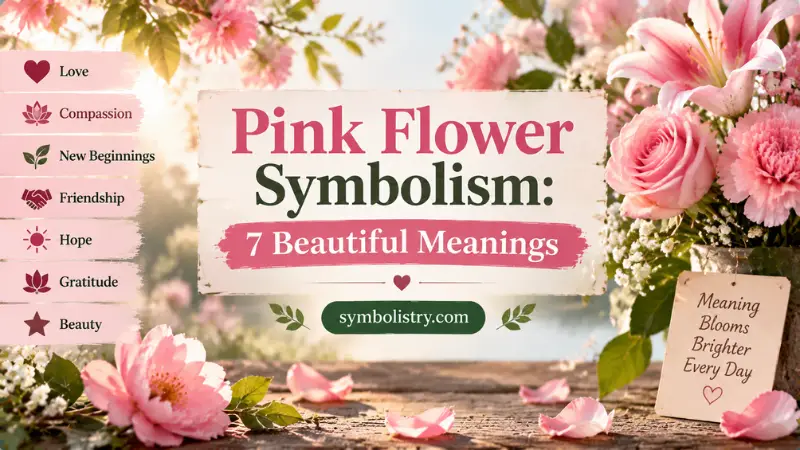
Pink flower symbolism commonly represents affection, admiration, tenderness, gratitude, appreciation, joy, and gentle love. The exact message depends on the type of flower, shade of pink, relationship between the people involved, and occasion.
Pink roses often suggest admiration and gratitude, while pink carnations can represent affection. Cherry blossoms are more closely connected with spring, renewal, beauty, and the temporary nature of life. Pink peonies often suggest romance and celebration, while tulips can communicate warmth and affection.
TL;DR
- Pink flowers commonly represent affection, admiration, tenderness, and gratitude.
- Pink flower symbolism changes according to flower type and cultural context.
- Pink roses are strongly associated with admiration and appreciation.
- Pink carnations can represent love and affection.
- Pink cherry blossoms often suggest renewal, beauty, and impermanence.
- Pink peonies are popular symbols of romance and celebration.
- Pink flowers are widely used in American weddings, gifts, holidays, gardens, and decor.
- Victorian flower language influenced many modern floral meanings.
- Pink does not always mean romance.
- Personal experience can be more important than a traditional flower dictionary.
What Do Pink Flowers Look Like and Why Does Color Matter?
Pink is a broad color family rather than one specific shade. Pale blush, dusty rose, salmon, medium pink, hot pink, and deep rose can all create different visual impressions.
This range matters when considering pink flower symbolism. A very pale pink blossom may appear delicate, calm, gentle, or comforting. A bright pink flower can feel energetic, cheerful, playful, or festive. A deeper pink may appear more romantic and expressive.
Color alone, however, does not determine a flower’s meaning.
A pink rose has a different history from a pink cherry blossom. A pink carnation has its own traditions, while a pink peony has developed strong associations with weddings and decorative floral design.
The setting matters just as much. Pink flowers given to a partner on an anniversary may suggest romantic affection. The same flowers given to a friend may communicate appreciation. A pink arrangement at a memorial may express tenderness and remembrance.
A useful way to understand pink flower symbolism is to consider four elements together:
Color + flower + occasion + relationship
This approach is more accurate than treating pink as a universal symbolic code.
What Does Pink Flower Symbolism Mean?
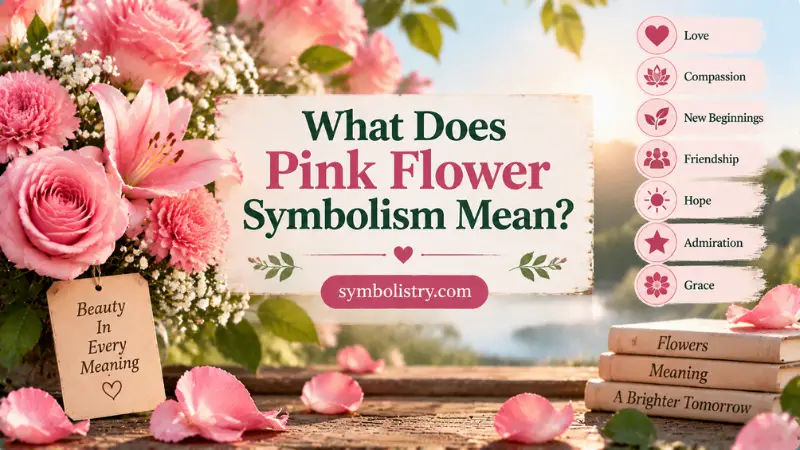
The most common meanings associated with pink flowers include affection, tenderness, admiration, gratitude, joy, gentle love, beauty, and appreciation.
1. Affection
Affection is one of the clearest meanings associated with pink flowers. Pink can communicate care without making the strong romantic statement often associated with red roses.
This makes pink flowers suitable for friendships, family relationships, early romance, and everyday appreciation. In pink flower symbolism, affection is broad enough to include many kinds of emotional connection.
2. Tenderness
Soft pink shades often create an impression of gentleness and care. Because of this, pink flowers can work well when someone wants to offer comfort or express a quiet emotional connection.
Tenderness is especially noticeable in pale pink roses, carnations, lilies, and other soft-colored blooms.
3. Admiration
Pink flowers can communicate admiration for someone’s beauty, character, achievements, or presence.
Pink roses are especially connected with this meaning. Giving someone pink roses can be a way of saying that you value and appreciate them without creating the intense message that a traditional red rose may convey.
4. Gratitude
Gratitude is another important part of pink flower symbolism. Pink roses are often used to express appreciation and thankfulness.
A pink bouquet can therefore be appropriate for a mentor, parent, friend, coworker, partner, or anyone who has made a positive difference in someone’s life.
5. Joy
Bright pink flowers often feel cheerful and celebratory. Their color can add energy to birthdays, baby showers, graduations, parties, and other happy occasions.
The stronger and brighter the pink, the more energetic the arrangement may appear.
6. Gentle Love
Pink often occupies a visual middle ground between passionate red and neutral white. This makes it useful for expressing love in a softer way.
In pink flower symbolism, gentle love does not necessarily mean weak love. Instead, it can suggest affection that feels warm, caring, graceful, and emotionally approachable.
7. Beauty and Appreciation
Pink flowers are also widely associated with beauty. Their soft or vivid colors can make them natural choices for decorative arrangements, photography, weddings, gardens, and gifts.
This meaning often overlaps with admiration and appreciation, showing how different aspects of pink flower symbolism can work together.
Pink Roses and the Meaning of Admiration
Pink roses have one of the strongest symbolic traditions among pink flowers in the United States.
Roses have long been connected with love, beauty, and emotional expression. Within the broader tradition of floral symbolism, pink roses became associated with admiration, appreciation, joy, gratitude, and affection.
This makes the pink rose especially versatile.
A red rose usually creates a stronger romantic impression. A pink rose can express warmth while leaving more room for interpretation. That makes it appropriate for both romantic and non-romantic relationships.
Pink roses may be given to:
- A close friend
- A parent
- A partner
- A mentor
- Someone being congratulated
- Someone who deserves appreciation
Shade can also influence the impression. Pale pink roses often appear gentle and graceful, while medium pink roses can feel warmer and more expressive. Deep pink roses may look more dramatic while retaining associations with admiration and affection.
For many Americans, pink roses are therefore one of the clearest examples of pink flower symbolism in everyday floral culture.
Pink Carnations and Affection
Pink carnations show why flower type matters when interpreting pink flower symbolism.
Historical flower-language traditions connected pink carnations with love and affection. Carnations also have a long history in European art, where they appeared in religious and secular imagery and were sometimes associated with love, marriage, and relationships.
Modern Americans may not consciously know these historical associations. A person receiving a pink carnation may simply see a beautiful flower representing care, appreciation, celebration, or warmth.
That difference between historical and modern meaning is important.
A flower can preserve traces of an older symbolic tradition while gaining additional meanings through modern use. The meaning of a pink carnation today may therefore depend more on the occasion and relationship than on a nineteenth-century flower dictionary.
Pink Cherry Blossoms and Renewal
Cherry blossoms create a different form of pink flower symbolism.
In Japanese cultural traditions, cherry blossoms have been associated with seasonal beauty and the temporary nature of life. Their short flowering period makes them meaningful images of impermanence, change, and the passing of time.
In the United States, cherry blossoms have developed additional associations with spring, renewal, public festivals, and cultural exchange. Washington, D.C., is particularly associated with cherry blossom displays that have become a major part of American spring culture.
Pink cherry blossoms may therefore suggest:
- Spring
- Renewal
- Fresh beginnings
- Beauty
- Impermanence
- Hope
- Cultural connection
The meaning differs from that of a pink rose. A rose is often strongly relational, while a cherry blossom can encourage reflection on nature, time, and seasonal change.
Pink Peonies and Romantic Celebration
Pink peonies are popular in American weddings, bouquets, gardens, and decorative arrangements.
Their large, layered blooms create a full and luxurious appearance. This has encouraged modern associations with romance, beauty, affection, abundance, and celebration.
Unlike the red rose, whose romantic symbolism is widely recognized, peony symbolism is more flexible. A pink peony bouquet can suggest romantic love, but it can also simply represent happiness and elegance.
This flexibility makes pink peonies especially useful for wedding arrangements.
In modern pink flower symbolism, the peony often works as a visual expression of celebration rather than as a strict coded message. Its shape, color, and setting can all contribute to the emotional impression.
Pink Flowers in the United States
Pink flowers appear throughout American everyday and ceremonial life.
They are commonly used for:
- Valentine’s Day
- Mother’s Day
- Baby showers
- Weddings
- Birthdays
- Graduations
- Sympathy arrangements
- Home gardens
- Floral artwork
- Fashion
- Interior design
The popularity of pink flowers partly comes from their emotional flexibility.
Pink can communicate affection without requiring a romantic relationship. A pink bouquet for a mother can express gratitude. Pink roses for a partner may communicate admiration. Pink flowers at a baby shower may represent celebration and family.
This broad use is one of the most important features of pink flower symbolism in modern America.
Pink Flowers and American Holidays
Pink flowers are not officially tied to one specific American holiday, but they appear frequently in several seasonal celebrations.
Valentine’s Day
Pink flowers offer a softer alternative to traditional red roses. They can communicate affection, admiration, and romantic interest without making the arrangement feel overwhelmingly passionate.
Mother’s Day
Pink flowers are commonly given to mothers and caregivers as expressions of appreciation, affection, and gratitude.
The message here is usually about family love rather than romantic love.
Easter and Spring Celebrations
Pink naturally fits spring arrangements because it can suggest new growth, freshness, and seasonal change.
Pink tulips, lilies, roses, hyacinths, and other flowers can appear in spring decorations and gifts.
Weddings
Pink is one of the most adaptable wedding colors. Pale blush can create a soft garden atmosphere, while brighter pink can create a lively celebration.
The modern use of pink flower symbolism in weddings usually combines traditional associations with personal taste rather than following one strict symbolic system.
Pink Flowers in Weddings and Romantic Relationships
Pink flowers occupy an interesting place in romantic symbolism.
Red generally communicates the strongest romantic passion. White often creates associations with purity, sincerity, peace, or formality. Pink sits between these visual and emotional extremes.
That makes pink useful when someone wants to express love without creating an overly dramatic statement.
Pink flowers can be used for:
- Anniversaries
- Engagements
- Bridal showers
- Weddings
- Early romance
- Romantic celebrations
- Relationship milestones
A pink bouquet can communicate, “I care about you,” “I appreciate you,” or “I admire you.”
This flexibility explains why pink flower symbolism remains common in American romantic relationships.
Pink Flowers and Motherhood
Pink has a strong association with femininity in modern American culture, although that association is historically newer and less universal than many people assume.
Pink flowers are frequently given to mothers because their soft colors fit modern ideas of affection, nurturing, gratitude, and tenderness.
However, pink flowers do not inherently mean motherhood.
Context creates that interpretation.
A pink bouquet given to a mother may represent appreciation because of the relationship between giver and recipient. The same flowers given to a friend may represent admiration, friendship, or affection.
This flexibility keeps pink flower symbolism from becoming overly rigid.
Today, pink flowers can be given by anyone to anyone. Their meaning does not have to follow traditional gender expectations.
Emotional and Psychological Associations of Pink Flowers
Pink is often perceived as a softer version of red because it has less visual intensity. This can make pink flowers feel approachable, gentle, and emotionally warm.
Pale pink may create impressions of calmness and tenderness. Stronger pinks can appear energetic, playful, and expressive.
However, color psychology should not be treated as a universal scientific formula.
People develop color associations through culture, family, advertising, fashion, personal memories, and social environments. Someone who associates pink with childhood may interpret a pink flower differently from someone who connects pink with romance.
The flower itself also changes the emotional effect.
A pink rose may feel romantic. A pink daisy may feel cheerful. A pink cherry blossom may feel reflective. A pink carnation may feel traditional.
This is why pink flower symbolism should be interpreted through the entire visual and cultural context rather than color alone.
Pink Flowers in Grief, Sympathy, and Remembrance
Pink is not usually the first color Americans associate with mourning. White, blue, and subdued shades often have stronger connections with formal sympathy arrangements.
Even so, pink flowers can be appropriate for grief and remembrance.
In these settings, pink can communicate affection, tenderness, appreciation, and personal remembrance. This is especially meaningful when the person being remembered had a strong connection with pink flowers.
For example, if someone loved pink roses, using pink roses at a memorial may carry more emotional meaning than following a general color rule.
Modern pink flower symbolism in memorial settings is therefore highly personal. The relationship between the person and the flower often matters more than a supposed universal meaning.
Pink Flowers and Cultural Traditions Beyond America
Pink flowers do not have one universal meaning across cultures.
Different flowers have developed different histories in different societies. Cherry blossoms provide one of the clearest examples.
In Japan, cherry blossoms have long been associated with seasonal beauty, impermanence, and the passing of time. In the United States, they also symbolize spring, renewal, and cultural connection.
Carnations provide another example. They have appeared in European religious and secular art, sometimes carrying associations with love and marriage.
Victorian floriography also influenced American floral culture. During the nineteenth century, flower dictionaries helped people assign emotional messages to particular flowers.
These traditions demonstrate why pink flower symbolism cannot be reduced to one worldwide definition.
The Victorian Language of Flowers
The nineteenth-century language of flowers is one of the most important historical influences on modern floral symbolism.
During the Victorian period, people used flowers as indirect forms of emotional communication. Bouquets, gifts, jewelry, and personal accessories could incorporate flowers with supposed meanings.
However, the system was never completely standardized.
Different books assigned different meanings to the same flowers. Color, arrangement, presentation, and even the position of a flower could influence interpretation.
This explains why modern flower-meaning lists sometimes contradict one another.
There was no single official dictionary controlling floral symbolism. Modern websites, florists, greeting cards, and social media have simplified many of these older traditions into short lists.
That simplification helped keep pink flower symbolism popular, but it also removed much of the complexity found in historical flower language.
Pink Flower Symbolism by Flower Type
| Pink Flower | Common Modern Meaning | Cultural or Historical Layer | Typical Use |
|---|---|---|---|
| Pink rose | Admiration, gratitude, affection | Victorian flower language | Gifts, romance, weddings |
| Pink carnation | Love, affection, appreciation | European floral traditions | Gifts, ceremonies |
| Pink cherry blossom | Renewal, beauty, impermanence | Japanese cultural tradition | Festivals, art, decor |
| Pink peony | Romance, celebration, elegance | Long ornamental history | Weddings, gardens |
| Pink tulip | Affection, warmth, cheerful love | Broader tulip symbolism | Spring gifts |
| Pink lily | Tenderness, beauty, celebration | Religious and floral traditions vary | Weddings, decor |
The table demonstrates an important principle: the color establishes a general emotional atmosphere, while the flower adds its own cultural history.
The occasion then supplies the final context.
Why Pink Flowers Appear in Gifts and Personal Gestures
Flowers allow people to communicate emotion without writing a long explanation.
Pink is particularly useful because it can be emotionally expressive without carrying all the intensity of red. This allows pink flowers to work across many different relationships.
Someone might give pink flowers to say thank you, congratulations, welcome home, happy birthday, or simply “I was thinking of you.”
Personal memories can make these flowers even more meaningful.
A person may associate pink flowers with a grandmother’s garden, a wedding, childhood, a favorite season, or a special place. In such cases, personal pink flower symbolism may become more important than traditional meanings.
This is one reason there is no need to treat flower dictionaries as absolute rules.
Pink Flowers in Tattoos, Jewelry, and Personal Style
Floral tattoos allow people to transform traditional symbolism into something personal.
A pink flower tattoo may represent affection, femininity, romantic memories, gentleness, appreciation of nature, or a meaningful relationship.
But the symbolism can also be completely personal.
A pink cherry blossom tattoo might commemorate travel or cultural connection. A pink rose could honor a relationship. A pink carnation could represent a family member.
Additional elements can change the message. Thorns, leaves, dates, names, butterflies, other flowers, or specific colors can all add meaning.
Pink floral designs also appear in jewelry, clothing, stationery, artwork, phone cases, and home decor.
In these settings, pink flower symbolism may not be intended as a formal message at all. Sometimes a person simply chooses pink flowers because they like the color.
Pink Flowers in Home Decor and Digital Culture
Pink flowers are common in modern visual culture because they photograph well and create a recognizable emotional atmosphere.
Pink roses, cherry blossoms, peonies, and tulips frequently appear in wedding photography, lifestyle images, social media posts, stationery, and interior design.
A pink floral image can make a room feel softer. A cherry blossom photograph can suggest spring. A pink bouquet can create a celebratory mood.
On social media, flowers often communicate mood rather than a specific coded message.
Someone posting pink flowers might be expressing happiness, romance, gratitude, nostalgia, or simply appreciation for a beautiful scene.
This represents an important change in pink flower symbolism. Modern users often combine traditional meanings with aesthetics and personal expression.
Controversies and Misunderstandings About Pink Flower Symbolism
The biggest misunderstanding is that every flower has one fixed symbolic meaning.
Historical flower language does not support that assumption. Nineteenth-century sources frequently disagreed, and meanings could change between authors and contexts.
Another misconception is that pink always means romance.
Pink can certainly communicate romantic affection, but it is also widely used for friendship, family affection, gratitude, congratulations, sympathy, and celebration.
A third misconception is that color symbolism is universal.
Different cultures can attach different meanings to the same flower or color. Even within one culture, personal experience can change interpretation.
Finally, some people assume that Victorian flower meanings are ancient.
Much of the coded flower language that people recognize today became fashionable during the nineteenth century. Knowing this history gives pink flower symbolism a more accurate cultural context.
Pink Flower Symbolism: Historical Meaning vs. Modern Meaning
| Context | Historical Association | Modern American Interpretation |
|---|---|---|
| Victorian bouquets | Coded emotional messages | Romantic or nostalgic expression |
| Pink roses | Admiration and related sentiments | Affection, gratitude, appreciation |
| Pink carnations | Love and affection | Care, warmth, celebration |
| Cherry blossoms | Seasonal and cultural symbolism | Spring, renewal, beauty |
| Pink wedding flowers | Floral and romantic traditions | Love, elegance, celebration |
Modern Americans often inherit only fragments of older traditions.
Someone may know that pink roses suggest affection without knowing anything about Victorian floriography. Another person may recognize cherry blossoms as symbols of spring without knowing their broader cultural history.
Symbolism survives partly because it becomes simpler and easier to use.
Pink Flower Symbolism Positive and Negative Meaning
Pink flowers are overwhelmingly associated with positive meanings.
Common positive associations include:
- Affection
- Admiration
- Gratitude
- Tenderness
- Joy
- Celebration
- Beauty
- Friendship
- Romance
- Appreciation
- Renewal
- Hope
There are few inherently negative meanings attached to pink flowers as a group.
Context can, however, create more complex emotions. A pink flower at a memorial may feel nostalgic or bittersweet. A faded pink bloom might visually suggest aging, memory, or the passing of time.
These interpretations are contextual rather than fixed.
The emotional meaning of pink flower symbolism depends on the flower, setting, relationship, shade, and personal associations involved.
How Pink Flower Meaning Has Changed Over Time
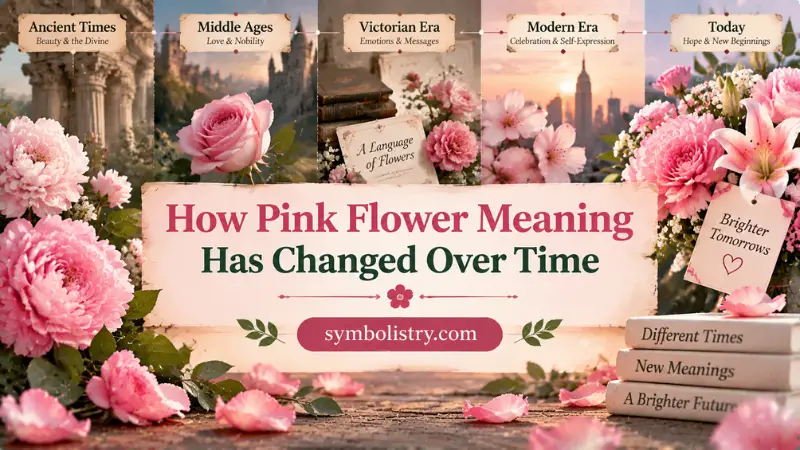
The meaning of pink flowers has shifted as floral communication moved from coded social language toward visual and emotional expression.
During the nineteenth century, people could deliberately construct bouquets as messages. Flower dictionaries provided detailed symbolic systems, and bouquets could communicate feelings indirectly.
Today, most Americans do not consult a flower dictionary before purchasing roses or carnations.
Instead, people rely on broad cultural associations.
Pink often feels affectionate.
Red often feels strongly romantic.
White may feel peaceful or formal.
Yellow often feels cheerful or friendly.
These modern associations are not identical to historical floriography. They are simplified cultural shorthand.
Social media, commercial floral design, wedding trends, and personal aesthetics have continued to make pink flower symbolism more flexible and less dependent on strict rules.
FAQ About Pink Flower Symbolism
What do pink flowers symbolize at a wedding?
At weddings, pink flowers can represent love, affection, elegance, happiness, beauty, and celebration. The specific flower can add another layer of meaning.
Are pink flowers romantic?
Pink flowers can be romantic, but they are not exclusively romantic. They are also commonly used to communicate friendship, family affection, gratitude, congratulations, sympathy, and appreciation.
What do pink roses symbolize?
Pink roses commonly represent admiration, gratitude, appreciation, joy, and affection. They can also express romantic interest, especially when given within an established relationship.
What does pink flower symbolism mean?
Pink flower symbolism commonly represents affection, admiration, tenderness, gratitude, appreciation, joy, and gentle love. The exact meaning depends on the flower species, shade, occasion, and relationship.
Do pink flowers have a religious meaning?
Pink flowers do not have one universal religious meaning. Individual flowers may have religious histories in particular cultures, but modern pink flower symbolism is usually emotional, cultural, seasonal, or personal.
Why do pink flowers symbolize love?
Pink flowers became connected with love through several cultural traditions, including the historical language of flowers. Pink also visually sits between passionate red and softer ne
Why do pink flowers symbolize love?
Pink flowers became connected with love through several cultural traditions, including the historical language of flowers. Pink also visually sits between passionate red and softer neutral colors, making it useful for expressing affection without an intense romantic declaration.
Conclusion
Pink flower symbolism most often communicates affection, admiration, tenderness, gratitude, appreciation, joy, and gentle love, but the exact meaning depends on the flower and situation. Pink roses, carnations, cherry blossoms, peonies, tulips, and lilies each bring their own cultural histories to the color.
Modern American flower culture has also been shaped by older traditions, especially nineteenth-century flower language. At the same time, weddings, holidays, gifts, gardens, home decor, tattoos, and digital culture have expanded the ways pink flowers are understood.
The best way to interpret a pink flower is to consider the whole picture: Which flower is it? What shade is it? Who is giving it? What is the occasion?
Those details usually tell you more than any single flower dictionary. In modern pink flower symbolism, context is what turns a beautiful pink bloom into a meaningful message.

[…] the flower does not automatically mean romance. If someone gives a red lily to a friend, parent, or family member, the meaning may instead […]