Introduction
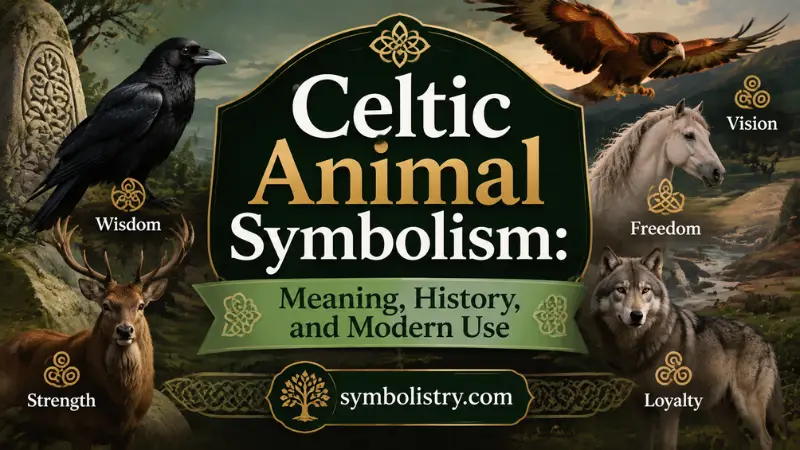
Celtic animal symbolism brings together the meanings that different Celtic cultures attached to animals through mythology, art, religion, folklore, and everyday life. Stags, horses, cattle, boars, hounds, ravens, swans, salmon, and serpents all appear in Celtic traditions, although their meanings were not identical everywhere.
For Americans today, these animals often appear in tattoos, jewelry, family-history designs, artwork, clothing, festivals, and fantasy-inspired imagery. Someone may choose a stag to express strength and renewal, a hound to represent loyalty, or a salmon to symbolize knowledge.
Understanding celtic animal symbolism requires some caution because “Celtic” does not describe one single ancient culture with one fixed belief system. Irish, Welsh, Scottish, Continental European, and other Celtic-speaking communities developed distinct traditions across different periods.
Quick Answer
Celtic animal symbolism commonly represents qualities such as strength, protection, wisdom, loyalty, transformation, sovereignty, and connection with nature. Historically, individual animals could also be associated with specific deities, heroic stories, warfare, fertility, kingship, sacred places, and the supernatural world.
TL;DR
- Stags commonly represent strength, renewal, sovereignty, and wilderness.
- Horses are associated with movement, status, fertility, and power.
- Boars traditionally suggest courage, ferocity, and warrior strength.
- Ravens can represent prophecy, warfare, transformation, and supernatural knowledge.
- Salmon are strongly connected with wisdom and learning.
- Modern Americans often use Celtic animals to express heritage and identity.
What Celtic Animal Symbolism Means
The easiest way to understand celtic animal symbolism is to begin with the animals themselves.
Celtic communities depended on animals for food, transportation, clothing, hunting, farming, and wealth. A horse was not simply an animal; it could represent mobility, status, and military power. Cattle were valuable sources of food and wealth, while hunting animals represented both practical survival and elite activity.
Mythology added another layer.
Animals could appear as companions of heroes, symbols connected with deities, supernatural creatures, or beings capable of transformation. Some animals also occupied a symbolic position between the human world and the Otherworld.
Because of this, celtic animal symbolism is better understood as a collection of meanings than as a fixed list. The same animal might represent different qualities depending on the story, region, period, and artistic context.
Ancient Roots of Celtic Animal Symbols
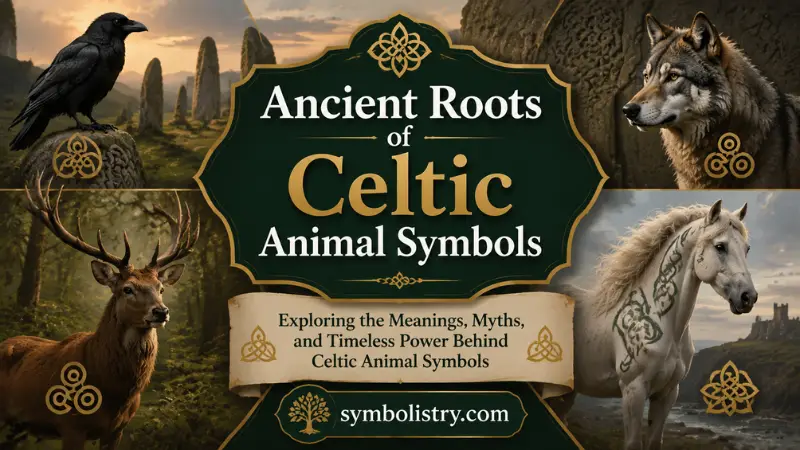
Much of what is called Celtic symbolism today comes from a mixture of archaeological evidence and later written traditions.
Iron Age communities in areas of Europe associated with Celtic languages and cultures produced metalwork, sculptures, coins, weapons, vessels, and other objects decorated with animals. These images sometimes appear alongside abstract patterns, human figures, plants, or supernatural-looking beings.
However, archaeological evidence rarely gives us a simple written explanation saying exactly what each animal meant.
Later Irish and Welsh manuscripts preserve mythology that provides more context. These texts were written down during the medieval period, often after Christianity had become established, so they cannot simply be treated as unchanged records of Iron Age religion.
This is one reason responsible discussions of celtic animal symbolism distinguish between documented imagery, medieval literature, folklore, and modern interpretation.
The Stag as a Celtic Symbol of Renewal
The stag is one of the most recognizable animals associated with celtic animal symbolism.
Its antlers provide an obvious connection with renewal. Antlers grow, mature, fall away, and grow again, making them a natural visual example of regeneration and the cycles of nature.
The stag is also connected with forests and the wild. In Celtic and Celtic-influenced mythology, deer can lead people into unusual or supernatural encounters, creating associations with the Otherworld.
The antlered human figure found in ancient European art is often discussed in connection with Cernunnos, a name known from one inscription but whose broader identity and religious role remain uncertain.
For modern Americans, a Celtic-inspired stag may therefore represent strength, renewal, independence, wilderness, or ancestry. The meaning becomes especially clear when antlers, knotwork, forests, or other heritage imagery are included in the design.
The Horse and Celtic Ideas of Power
The horse has a particularly important place in celtic animal symbolism because of its practical and social importance.
Horses supported travel, transportation, warfare, agriculture, and status. Their speed and strength made them valuable, while their relationship with powerful people gave them an association with prestige.
The Roman-era deity Epona provides one of the clearest historical examples. Epona was associated with horses and was worshiped across parts of the Roman world, including areas connected with Celtic populations.
Irish and Welsh traditions also contain important horse-related figures and stories. These include Macha in Irish mythology and Rhiannon in Welsh literature.
Consequently, the horse can symbolize sovereignty, movement, fertility, status, freedom, and protection. In modern American Celtic-inspired art, a horse may represent heritage or personal independence rather than a specific ancient religious belief.
The Boar and Warrior Courage
The boar represents a tougher side of celtic animal symbolism.
Wild boars were dangerous animals. Hunting one required physical courage and skill, making the creature a natural image for bravery and warrior identity.
Boar imagery appears in archaeological material from Celtic regions, including objects associated with military and elite contexts. Boars also appear in Irish and Welsh stories, where hunts can become major heroic adventures.
Its tusks, strength, and aggressive reputation encouraged associations with determination and ferocity.
Today, a Celtic boar design may symbolize courage, toughness, protection, persistence, or the willingness to confront challenges. It is particularly suited to designs emphasizing warriors, hunting, or physical strength.
The Bull and the Meaning of Wealth
The bull offers an important example of how everyday life shaped celtic animal symbolism.
Cattle were central to the economy of early Irish society. Herds represented wealth, food, social standing, and political power.
This importance appears dramatically in the Irish epic known as the Táin Bó Cúailnge, or Cattle Raid of Cooley. The story revolves around the struggle to acquire the Brown Bull of Cooley, turning an animal associated with wealth into the focus of a major legendary conflict.
The bull can therefore symbolize strength, fertility, abundance, wealth, status, and territorial power.
For modern readers, the bull may also represent determination and physical confidence. But its historical meaning becomes richer when its connection with cattle-based wealth is remembered.
The Raven and Crow in Celtic Tradition
Ravens and crows occupy a more complex place in celtic animal symbolism.
In Irish mythology, crow-like and raven-like birds are connected with warfare, prophecy, transformation, and supernatural events. The Morrígan, a complex figure associated with war and sovereignty, is particularly connected with battlefield bird imagery.
These birds were not simply symbols of death.
Their ability to fly over battlefields and observe events from above made them suitable figures for prophecy and supernatural knowledge. Stories involving transformation also gave them an association with changing identity and movement between different states of existence.
Modern American interpretations often add intelligence, mystery, independence, and remembrance.
A Celtic raven tattoo can therefore communicate a darker aesthetic while still having several possible meanings beyond death.
The Salmon as a Symbol of Wisdom
The salmon is one of the clearest examples of story-based celtic animal symbolism.
In Irish mythology, the Salmon of Knowledge becomes a source of wisdom. The story is connected with Fionn mac Cumhaill, who gains extraordinary knowledge through an accidental encounter with the fish.
Unlike vague claims that assign generic meanings to every Celtic animal, the salmon’s connection with knowledge comes from a specific surviving narrative.
It can therefore represent learning, wisdom, insight, discovery, memory, and intellectual development.
A salmon tattoo or piece of artwork may be especially meaningful to someone who values education, personal growth, or knowledge gained through experience.
The Hound and the Meaning of Loyalty
The hound provides another important example of celtic animal symbolism.
Dogs and hunting hounds appear in Irish and Welsh mythology as companions, protectors, hunters, and heroic animals. Their loyalty and usefulness made them natural symbols of companionship and courage.
The Irish hero Cú Chulainn is one of the best-known examples. His name is associated with the “Hound of Culann,” reflecting the story behind his heroic identity.
A hound can consequently represent loyalty, protection, courage, companionship, devotion, and heroic duty.
For modern Americans, this makes Celtic hound imagery particularly appropriate for family tattoos, memorial artwork, or designs representing loyalty to close friends.
The Swan and Transformation
The swan adds emotional complexity to celtic animal symbolism.
Irish mythology contains several stories in which people are transformed into swans. The most famous is The Children of Lir, in which children endure a prolonged existence as swans following a magical transformation.
The story connects the swan with family, separation, suffering, endurance, transformation, and longing.
Modern interpretations often emphasize grace and beauty, but those qualities alone do not capture the older stories. A swan can also symbolize surviving major change while maintaining emotional ties to one’s past.
For this reason, a Celtic-inspired swan can be meaningful for someone marking a major transition or remembering family members.
The Serpent and Transformation
Serpents occupy a complicated place within celtic animal symbolism.
They appear in ancient European art and in representations connected with supernatural or divine figures. Their physical characteristics naturally lend themselves to associations with regeneration, the earth, hidden spaces, fertility, and transformation.
However, it is important not to claim that all Celtic people believed exactly the same thing about serpents.
Much of the modern interpretation comes from combining archaeological imagery with later folklore and comparisons between different traditions. Evidence varies by region and period.
A contemporary Celtic serpent can therefore represent change, renewal, protection, mystery, or connection with the natural world without claiming that one universal ancient meaning existed.
Celtic Animal Symbolism in the United States
In modern America, celtic animal symbolism is often used as a cultural and personal language.
Irish, Scottish, and Welsh heritage is widely represented through tattoos, jewelry, family events, festivals, clothing, artwork, and genealogy projects. Animal designs frequently appear alongside knotwork, spirals, crosses, weapons, musical imagery, and family symbols.
For some Americans, the animal represents ancestry. A stag may evoke family heritage, while a hound may represent loyalty to relatives or community.
For others, the connection is less genealogical. Someone might choose a salmon because they value learning or a raven because they identify with independence and observation.
This flexibility explains why celtic animal symbolism remains popular even among people who do not practice historical Celtic religions.
Celtic Animal Symbolism in Tattoos and Jewelry
Tattoos are one of the most visible forms of celtic animal symbolism today.
The shapes of animals work particularly well with Celtic-inspired knotwork. A stag’s antlers can become part of an interlaced design, while a serpent can curve naturally around a wrist or arm.
The animal also allows the wearer to personalize the meaning.
A running horse may represent freedom. A stag may represent renewal. A raven may mark transformation. A hound can honor loyalty, while a salmon can represent learning.
Jewelry works similarly. Pendants and rings featuring Celtic-inspired animals can serve as heritage pieces or personal reminders.
However, not every design advertised as “ancient Celtic” has an ancient historical origin. Many contemporary artists combine traditional motifs with modern creative styles.
Emotional and Psychological Meaning
Modern celtic animal symbolism often works because people recognize qualities in animals that they want to express in themselves.
The stag can represent personal growth and renewed strength. The horse can suggest independence and forward movement. The boar may express determination, while the hound emphasizes loyalty.
The raven can appeal to someone who identifies with observation and change. The salmon can represent curiosity and a commitment to learning.
These are modern psychological interpretations rather than fixed ancient rules.
A person may connect with one aspect of a traditional symbol while rejecting another. That personal choice is an important part of how symbolism functions in contemporary culture.
Positive and Negative Meanings Compared
The range of celtic animal symbolism becomes easier to understand when major animals are compared directly.
| Animal | Common Meaning | Historical Association | Modern U.S. Interpretation |
|---|---|---|---|
| Stag | Renewal and strength | Wild landscapes and antlered imagery | Heritage, independence, growth |
| Horse | Power and movement | Epona, sovereignty traditions | Freedom, status, personal strength |
| Boar | Courage and ferocity | Hunting and warrior culture | Toughness, determination |
| Raven/Crow | Prophecy and transformation | Irish warfare mythology | Mystery, intelligence, change |
| Salmon | Wisdom and knowledge | Salmon of Knowledge | Learning, insight, growth |
| Hound | Loyalty and protection | Heroic hunting traditions | Family, devotion, companionship |
Celtic Animal Symbols in Fashion, Decor, and Art
Beyond tattoos, celtic animal symbolism appears in home decor, clothing, jewelry, artwork, wedding designs, and cultural events.
Stags and horses are particularly popular because their silhouettes work well with decorative patterns. Ravens and serpents appeal to people interested in darker or more mysterious imagery.
Celtic-inspired animal designs can also appear in fantasy art and digital culture. Modern fantasy has borrowed heavily from Celtic mythology, although fictional representations frequently combine Celtic ideas with Norse, medieval, or entirely invented elements.
This does not make modern art invalid. It simply means viewers should distinguish historical Celtic traditions from contemporary fantasy.
How Celtic Animal Meanings Evolved
The history of celtic animal symbolism is not a straight line from ancient religion to modern tattoos.
Ancient communities represented animals in art and religious contexts, but much of the original meaning remains uncertain. Medieval Irish and Welsh writers preserved stories involving animals while adapting them to the literary and religious world of their own time.
Later Celtic revival movements brought renewed interest in Celtic art, folklore, language, and mythology. In the United States, immigration, genealogy, festivals, tourism, popular literature, fantasy entertainment, and tattoo culture helped spread these images even further.
Modern meanings are therefore layered.
A contemporary person may combine a historical myth, family heritage, personal experience, and modern artistic style into one animal design. That is a cultural evolution rather than evidence that the modern interpretation was universally held in ancient times.
Common Misunderstandings About Celtic Animal Symbolism
One major misunderstanding is that celtic animal symbolism functions like a fixed ancient dictionary in which every animal has one official meaning.
There is no evidence for such a universal system.
Another issue is treating Irish, Scottish, Welsh, and Continental traditions as identical. They share some cultural and linguistic connections, but their histories and surviving sources differ considerably.
Modern commercial websites sometimes describe animals as ancient “Celtic spirit animals” with precise meanings that are difficult to trace to historical evidence. These claims should be treated as modern spiritual interpretations rather than automatically accepted as ancient tradition.
There is also a tendency to label every knotwork animal design as historically Celtic. Some contemporary designs are modern creations inspired by Celtic aesthetics.
Recognizing these distinctions makes celtic animal symbolism more interesting, not less meaningful.
Why Celtic Animal Symbolism Still Matters Today
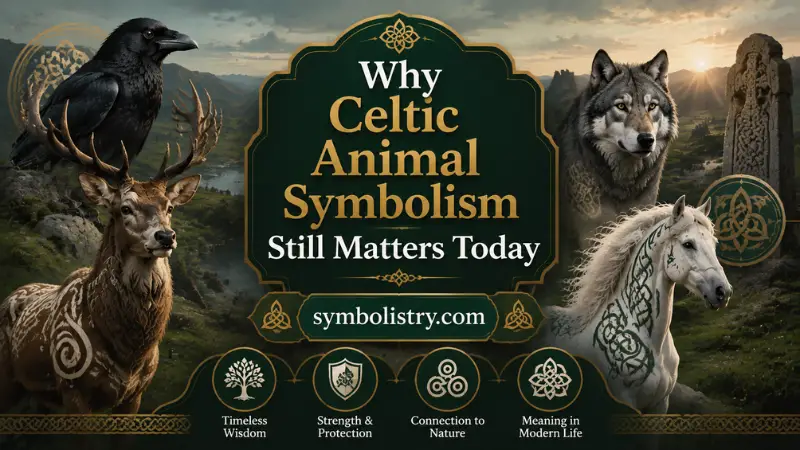
The continuing appeal of celtic animal symbolism comes partly from its ability to combine recognizable animals with stories about human experience.
People understand strength, loyalty, courage, change, knowledge, and freedom. Animals provide a visual way to express those ideas.
The stag’s renewing antlers offer a natural image of growth. The salmon’s mythological story makes it a memorable emblem of knowledge. The hound expresses loyalty through its relationship with humans, while the raven represents a more complicated connection with prophecy and conflict.
For Americans interested in ancestry, mythology, art, or personal symbolism, these associations provide multiple ways to connect with Celtic-inspired imagery.
The strongest interpretations are usually specific. Instead of saying an animal is simply “spiritual,” it is more useful to ask which story, historical tradition, physical characteristic, or personal experience gives that animal meaning.
Frequently Asked Questions
What does a Celtic horse symbolize?
The horse can represent movement, sovereignty, fertility, status, freedom, and protection. Its importance in traditions involving figures such as Epona gives it a strong historical connection with power and horses.
What does a Celtic salmon symbolize?
The salmon is associated with wisdom and knowledge because of the Irish story of the Salmon of Knowledge. A modern salmon design can represent education, insight, curiosity, and personal growth.
What does a Celtic raven symbolize?
A Celtic raven or crow can represent prophecy, warfare, transformation, and supernatural knowledge, especially in Irish traditions. Modern interpretations often add intelligence, independence, mystery, and remembrance.
What does a Celtic stag symbolize?
A Celtic stag can represent strength, renewal, sovereignty, wilderness, and connection with the Otherworld. Its renewing antlers make regeneration an especially common modern interpretation.
What is the most important animal in Celtic symbolism?
There is no single universally important animal across all Celtic cultures. Stags, horses, cattle, boars, ravens, hounds, salmon, swans, and serpents all have important roles in different traditions.
Are Celtic animal meanings the same in Ireland, Scotland, and Wales?
No. Irish, Scottish, Welsh, and Continental traditions developed differently. Similar motifs may occur across regions, but their meanings should be interpreted according to their specific historical and literary contexts.
Are Celtic animal symbols religious?
Some animal imagery was connected with ancient religious practices, deities, or supernatural stories, but not every animal image was religious. Modern Celtic-inspired animal designs are often cultural, decorative, ancestral, or personal.
Conclusion
Celtic animal symbolism is best understood as a collection of traditions rather than a universal system of fixed meanings. Stags, horses, boars, bulls, ravens, salmon, hounds, swans, and serpents each developed associations through mythology, daily life, religious imagery, heroic stories, and relationships with the natural world.
For modern Americans, these animals can represent heritage, courage, wisdom, loyalty, independence, transformation, or personal growth. Their meaning may come from an old story, an ancestral connection, a visual characteristic, or an individual’s own experience.
The most responsible approach is to separate documented history from later interpretation while allowing modern people to create meaningful connections of their own. That balance keeps Celtic-inspired animal imagery culturally respectful while leaving room for personal expression.