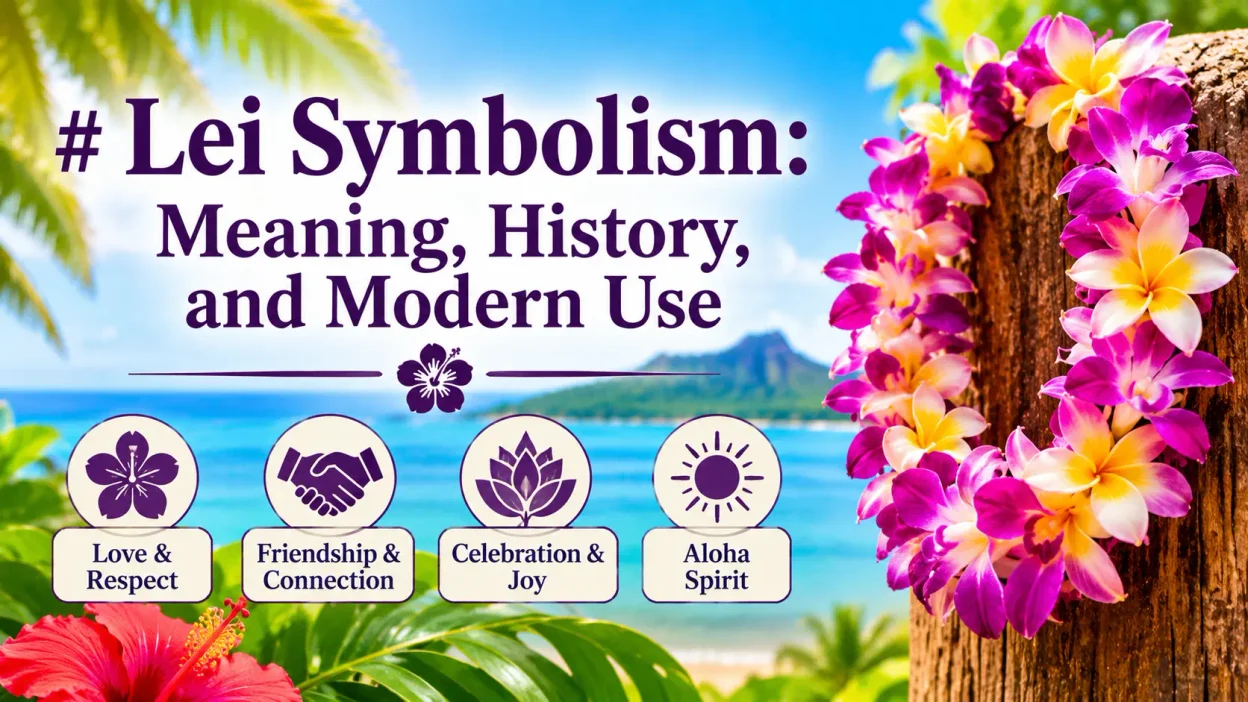
Lei symbolism is closely connected to love, hospitality, respect, celebration, and human connection. A lei is a decorative garland traditionally made from flowers, leaves, shells, seeds, feathers, or other natural materials. Although many Americans recognize it as a necklace of tropical flowers associated with Hawaii, its cultural meaning extends far beyond decoration.
In Hawaiian culture, giving someone a lei is a meaningful gesture. It can welcome a visitor, honor an achievement, express affection, celebrate a relationship, or mark an important farewell. The materials, colors, and methods used to create a lei can also carry personal and cultural significance.
Across the United States, lei appear at graduations, weddings, birthdays, retirement celebrations, cultural festivals, and Hawaiian-themed gatherings. Their familiar circular shape and natural beauty have made them recognizable symbols of generosity and togetherness.
Understanding their origins, however, reveals a tradition rooted in Native Hawaiian history, relationships with the natural world, and the careful practice of giving and receiving.
Quick Answer: What Does Lei Symbolize?
Lei commonly symbolize love, welcome, friendship, respect, and celebration in modern American culture, especially when given as gifts at graduations, weddings, and special occasions. In traditional Hawaiian culture, they also represent spiritual connections, social identity, honor, relationships with nature, and the sharing of aloha.
TL;DR
- Lei symbolize love, hospitality, respect, and appreciation.
- Traditional Hawaiian lei have roots in ancient Polynesian customs.
- Flowers, leaves, shells, and feathers carry different cultural associations.
- Americans commonly give lei at graduations and celebrations.
- Lei Day takes place on May 1 in Hawaii.
- Their circular form can represent connection and continuity.
1. What Is a Lei and What Does It Look Like?
A lei is a decorative garland made by arranging and connecting natural or manufactured materials. It is most commonly worn around the neck, although some styles are designed for the head, shoulders, or other forms of adornment.
The best-known version is the flower lei, which often features colorful blossoms threaded together to create a necklace. Plumeria, orchids, carnations, tuberose, and other flowers are popular materials in contemporary designs.
However, traditional lei are not limited to flowers. Depending on the occasion, location, and cultural tradition, they may contain:
- Fresh flowers and petals
- Green leaves and vines
- Kukui nuts and other seeds
- Seashells and small marine materials
- Bird feathers
- Wood, bone, or other natural materials
- Fabric, ribbon, and contemporary decorative elements
Some lei are simple and lightweight, while others are elaborate creations requiring considerable time and craftsmanship.
Their circular or gently curved form is visually important. It brings separate natural elements together into one continuous arrangement, making the lei a fitting representation of relationships, generosity, and shared experiences.
2. The Core Symbolic Meanings of Lei
Although individual lei can communicate different messages, several meanings appear frequently in Hawaiian traditions and modern American celebrations.
Love and Affection
A lei can express affection without requiring words. Giving someone a carefully prepared garland communicates that the recipient matters and deserves recognition.
Romantic partners may exchange lei, but their meaning is not limited to romantic relationships. Parents, children, friends, teachers, and relatives also give them to express love.
Welcome and Hospitality
Lei are widely associated with welcoming people to Hawaii. Presenting a garland to an arriving guest creates a personal connection and communicates warmth.
This association has become one of the most recognizable meanings of lei in American culture.
Respect and Honor
A lei can recognize someone’s accomplishments, position, contributions, or personal qualities. Its presentation shows that the recipient deserves attention and appreciation.
This meaning is particularly visible at graduations, award ceremonies, and formal cultural events.
Friendship and Connection
When friends exchange lei, the gesture can represent loyalty, shared memories, and continued affection.
The garland becomes a physical reminder of a relationship rather than simply an attractive accessory.
Gratitude and Appreciation
Giving a lei is also a way to say thank you. It acknowledges another person’s kindness, support, effort, or presence.
These meanings overlap, but the occasion and relationship between the giver and recipient usually clarify the intended message.
3. Ancient Polynesian Origins of Lei
The tradition of making and wearing lei predates modern tourism in Hawaii.
Lei-making practices were brought to the Hawaiian Islands by Polynesian voyagers, who carried traditions of creating decorative garlands using materials available in their environments.
Early lei could be made from flowers, leaves, shells, seeds, nuts, feathers, and other natural objects. These materials were not selected only for their appearance. Their availability, cultural associations, craftsmanship, and relationship to particular places could influence their use.
In early Hawaiian society, lei were especially important as forms of adornment and markers of social distinction. Chiefs, known as aliʻi, wore valuable lei that could communicate rank and authority.
Feather lei were particularly prized. Producing them required specialized knowledge and considerable skill, and some elaborate examples were associated with chiefly status.
The practice also developed connections to ceremony, religious traditions, and social relationships.
As Hawaiian communities changed through contact with other peoples, the materials and styles used in lei-making expanded. Nevertheless, the practice of creating and giving lei remained an important expression of Hawaiian identity.
The historical record does not support reducing all early lei to one universal meaning. Their significance depended on the materials, wearer, occasion, and cultural setting.
4. What Lei Represent in Traditional Hawaiian Culture
To understand lei symbolism, it is important to recognize that lei are part of a living cultural tradition rather than simply a decorative item.
One important concept connected to lei is aloha. Although the word is often translated as love or affection, its everyday and cultural meanings include kindness, compassion, respect, and a way of relating to other people.
A lei can make these values visible through the act of giving.
Traditional lei-making also involves a relationship with the natural environment. Gathering, selecting, preparing, and arranging materials requires attention to the plants and other resources used.
In some traditional contexts, specific materials have connections to particular deities, practices, or ceremonies. For example, maile is associated with peace and has important connections to hula traditions.
The person making a lei contributes time, knowledge, and skill to the finished creation. Its value therefore comes not only from the materials but also from the care involved in producing it.
This is why a handmade lei can carry personal meaning that a mass-produced decorative necklace may not communicate in the same way.
5. What Lei Symbolize in the United States
In the United States, lei are strongly associated with Hawaii, hospitality, and joyful celebrations.
Their presence in American life reflects both Hawaiian cultural traditions and the wider popularity of giving symbolic gifts.
Graduation and Achievement
One of the most familiar American uses of lei is at graduation ceremonies.
In Hawaii, graduates often receive multiple lei from family members, friends, teachers, and community members. Some graduates wear so many garlands that they cover much of their upper bodies.
Each lei represents congratulations, pride, affection, and encouragement for the graduate’s next stage of life.
This tradition is especially prominent in Hawaii, where lei-giving is an established part of graduation culture.
Welcome and Farewell
Lei are also associated with welcoming visitors and saying goodbye.
At airports, celebrations, and family gatherings, a lei can make an arrival or departure feel more personal.
The gesture communicates that someone is valued and will be remembered.
Weddings and Anniversaries
At weddings, lei may represent affection, commitment, family relationships, and the joining of two lives.
Couples may exchange lei, while family members may present them as expressions of support and blessing.
Birthdays and Milestones
A lei can recognize birthdays, promotions, retirements, and other important personal achievements.
In these situations, it functions as a gift that communicates appreciation and recognition.
6. The Symbolism of Different Lei Materials
The materials used in a lei can influence its meaning, appearance, and cultural importance.
Not every flower or material has one fixed interpretation. Meanings vary by Hawaiian tradition, the particular plant, the occasion, and the person giving the lei.
| Lei Material | Common Associations | Symbolic Context |
|---|---|---|
| Plumeria | Beauty, affection, hospitality | Popular in welcoming gifts |
| Maile | Peace, respect, connection | Important in Hawaiian ceremonies |
| Kukui nuts | Knowledge, illumination, heritage | Traditional adornment |
| Orchids | Beauty, elegance, appreciation | Common in modern celebrations |
| Feathers | Prestige, authority, craftsmanship | Historically important chiefly adornment |
Flower Lei
Flower lei are among the most recognizable designs. Their colors, fragrance, and freshness make them suitable for welcoming guests and celebrating personal milestones.
Different flowers may also carry individual meanings depending on local traditions.
Maile Lei
Maile lei are made using the leaves and vines of the maile plant. They have longstanding cultural associations with peace, respect, and ceremonial occasions.
They are particularly significant in certain Hawaiian celebrations and traditional practices.
Kukui Nut Lei
Kukui nuts are polished and strung together to create durable lei.
The kukui tree is also known as the candlenut tree because its nuts were traditionally used as a source of light. Consequently, kukui has associations with illumination and knowledge.
Kukui nut lei are also valued as traditional Hawaiian adornments.
Feather Lei
Feather lei are among the most historically significant forms of Hawaiian adornment.
Their production requires specialized knowledge and careful craftsmanship. Historically, particular feather colors and designs were associated with chiefly status and prestige.
These examples show why lei should not be understood as interchangeable flower necklaces. Their materials can communicate different histories and relationships.
7. What the Circular Shape of a Lei Symbolizes
The shape of a lei contributes to its modern symbolic interpretation.
A traditional necklace-style lei forms a circle or near-circle around the wearer. Because a circle has no obvious beginning or ending, it is often interpreted as a representation of continuity, unity, and lasting connection.
This interpretation is especially common in modern decorative and personal symbolism.
In relationships, the circular form can suggest an ongoing bond between two people. At a wedding, it may be understood as an expression of togetherness. At a graduation, it can represent the connection between past accomplishments and future possibilities.
However, it is useful to distinguish modern interpretations from established historical Hawaiian meanings.
The circle is a familiar symbol of continuity in many cultures, but not every traditional lei was created specifically to communicate an abstract concept of eternity.
Its meaning is better understood through the combination of shape, materials, cultural context, and the act of giving.
8. Lei Day: The American Celebration of Hawaiian Culture
Lei Day is celebrated on May 1 and is one of Hawaii’s best-known cultural observances.
The first Lei Day celebration took place in Honolulu in 1927. The event encouraged residents to wear lei and recognize the importance of Hawaiian lei-making traditions.
The celebration expanded over time, becoming associated with the phrase “May Day is Lei Day in Hawaiʻi.”
Today, Lei Day activities can include:
- Traditional lei-making demonstrations
- Lei competitions and exhibitions
- Cultural performances
- Hula and music
- Educational programs
- Community celebrations
Lei Day is more than an opportunity to display beautiful flowers. It recognizes the people, craftsmanship, cultural knowledge, and natural resources connected to the tradition.
The celebration also helps younger generations learn about Hawaiian heritage and the importance of preserving traditional practices.
For Americans outside Hawaii, Lei Day offers an opportunity to understand the lei as a cultural expression rather than simply a tropical decoration.
9. Lei Symbolism in Other Cultures
Garlands and decorative wreaths appear in many cultures, although their meanings and traditions differ.
Comparing these practices helps explain why lei are widely recognizable while also showing why Hawaiian traditions should be understood on their own terms.
Polynesian Traditions
Garlands and body adornments made from natural materials have longstanding histories across Polynesia.
Different island communities have their own materials, techniques, names, and cultural meanings. Hawaiian lei are part of this wider Pacific tradition but have developed distinctive local forms.
Ancient Greek Traditions
In ancient Greece, wreaths made from leaves and flowers were associated with honor, religious ceremonies, athletic achievements, and public recognition.
Laurel wreaths, for example, became familiar symbols of victory and accomplishment.
This resembles the modern use of lei at graduation ceremonies, although the historical traditions are different.
Roman Traditions
Romans also used wreaths to communicate military achievement, civic recognition, and social status.
Some wreaths were awarded as public honors, making plant-based adornment a visible sign of distinction.
Indian Garland Traditions
In India, flower garlands are widely used in religious ceremonies, weddings, festivals, and acts of hospitality.
They may represent devotion, respect, blessing, and celebration.
Although these traditions share the practice of giving and wearing floral adornments, they should not be treated as identical to Hawaiian lei customs.
10. The Emotional and Psychological Meaning of Receiving a Lei
Receiving a lei can create an emotional response because it combines physical affection, recognition, and a personal gift.
Unlike an ordinary object purchased for everyday use, a lei is often presented directly to someone during a meaningful moment.
The giver places time and attention into selecting or creating it. The recipient then wears the result, making the gesture visible to everyone present.
Several emotional associations help explain its appeal.
Feeling welcomed: A lei can make someone feel included in a new environment or community.
Being appreciated: Receiving one at graduation or a workplace celebration communicates that others recognize an accomplishment.
Belonging: Wearing a lei at a family or cultural gathering can create a visible connection with the people participating.
Remembering relationships: A lei received from someone important can become a reminder of a particular event or shared experience.
Expressing affection: Its presentation can communicate feelings that might otherwise be difficult to express verbally.
The emotional meaning also depends on the relationship between the people involved. A lei from a parent at graduation may represent years of encouragement, while one given to a visiting friend may simply communicate a warm welcome.
11. Lei in Tattoos, Jewelry, Fashion, and Home Decor
Lei-inspired designs have moved beyond traditional celebrations and appear in contemporary American fashion and personal expression.
Lei Tattoos
A lei tattoo may represent a connection to Hawaii, affection for family, personal memories, or appreciation for Hawaiian culture.
Some people choose a floral garland to remember a trip, honor a loved one, or express their relationship with the islands.
For Native Hawaiians, however, lei imagery may carry connections to cultural identity and heritage that go beyond a general appreciation of tropical flowers.
People considering such tattoos should understand the cultural context and avoid treating specific ceremonial designs as generic decoration.
Jewelry
Modern jewelry sometimes incorporates flowers, shells, seeds, and other elements inspired by traditional lei.
Kukui nut necklaces are a recognizable example of Hawaiian-inspired adornment.
Some contemporary pieces use precious metals or manufactured materials while retaining the visual arrangement of a traditional garland.
Fashion
Lei-inspired accessories are frequently used in tropical-themed clothing, summer celebrations, photography, and festival outfits.
Floral garlands can create an atmosphere of relaxation, celebration, and island-inspired style.
However, Hawaiian cultural symbols should be approached with respect rather than reduced to costumes or stereotypes.
Home Decor
Artificial lei and floral garlands appear in party decorations, themed interiors, and seasonal displays.
They may be used to communicate hospitality, tropical beauty, or a connection to Hawaii.
Fresh lei can also be displayed temporarily as part of a celebration, although they require appropriate care.
12. Common Misunderstandings About Lei Symbolism
Because lei are so widely recognized, their cultural significance is sometimes simplified.
One common misunderstanding is that every lei is simply a Hawaiian welcome necklace.
Welcoming visitors is an important modern association, but lei have many other uses, including honoring individuals, expressing affection, marking achievements, and participating in cultural ceremonies.
Another misconception is that only flower lei are traditional. Historical Hawaiian lei have included leaves, feathers, shells, nuts, seeds, and other materials.
There is also a tendency to treat every lei as carrying the same meaning. In reality, the materials, construction, occasion, and cultural background can change its significance.
Cultural Appropriation and Respectful Use
Commercial tourism has helped introduce lei to people around the world. However, the popularity of Hawaiian imagery can sometimes separate cultural objects from the communities and traditions that give them meaning.
Using a flower lei at a celebration is not automatically disrespectful. The important distinction is between appreciating a cultural practice and presenting it inaccurately or using sacred or culturally specific designs without understanding their significance.
Respectful participation includes learning about Hawaiian traditions, recognizing Native Hawaiian cultural contributions, and supporting skilled local lei makers.
A lei is not merely a costume accessory. It belongs to a living cultural practice.
13. How to Give, Receive, and Care for a Lei Respectfully
Understanding lei symbolism also means knowing how to participate in the tradition appropriately.
In Hawaii, giving a lei is generally considered a generous and welcoming gesture. Receiving one graciously acknowledges the giver’s thoughtfulness.
A few customary practices are worth understanding.
Accept a lei graciously. When someone offers you a lei, acknowledge the gesture with appreciation.
Wear it appropriately. A flower lei is traditionally worn around the neck, while other styles may be designed for the head or shoulders.
Avoid casually removing it in front of the giver. This can be considered discourteous in customary settings.
Treat it with care. A lei should not be thrown carelessly onto the floor or into the trash.
Return natural materials to the environment appropriately. When a fresh lei has finished serving its purpose, some people remove the flowers and return them to the land or compost them. Follow local guidance and avoid leaving materials where they could harm wildlife or marine environments.
There are also specific customs involving pregnant women. In some Hawaiian traditions, a closed lei is avoided because the circle is associated with the umbilical cord. An open-ended lei may be given instead.
Customs can vary between families and communities, so it is always appropriate to follow the guidance of the person presenting the lei.
14. How Lei Symbolism Has Evolved Over Time
The meaning of lei has changed as Hawaiian society and its relationship with the wider world have evolved.
In earlier periods, lei were important forms of adornment, status, and cultural expression. Particular materials could communicate social position, ceremonial importance, or connections with traditional practices.
Over time, lei became increasingly associated with everyday gift-giving and public celebrations.
The development of commercial lei-making during the late nineteenth and early twentieth centuries helped make them more accessible. Lei sellers became an important part of Hawaii’s cultural and economic life.
Tourism further increased their visibility. Visitors began encountering lei as recognizable symbols of Hawaiian hospitality, and the practice of welcoming travelers with flowers became internationally familiar.
Modern use has expanded into graduations, weddings, community events, and personal celebrations.
At the same time, Hawaiian cultural practitioners continue to emphasize the importance of traditional knowledge, responsible gathering, and the relationship between lei and the natural environment.
The tradition has adapted, but its central emphasis on human relationships and meaningful giving remains important.
Frequently Asked Questions
1. What does a lei symbolize spiritually?
In traditional Hawaiian contexts, lei can express relationships between people, the natural environment, and spiritual traditions. Certain materials and designs have specific ceremonial or religious associations, so their meaning depends on the particular lei and cultural practice.
2. What does giving someone a lei mean?
Giving someone a lei generally communicates love, appreciation, respect, welcome, or congratulations. The intended message depends on the relationship and occasion.
3. What does a lei symbolize at graduation?
At graduation, a lei represents pride, recognition, affection, and encouragement. Receiving several lei can reflect the support of family members, friends, teachers, and the wider community.
4. Is a lei a symbol of love?
Yes. Lei frequently express affection and appreciation in Hawaiian and modern American gift-giving traditions. They can represent romantic love, family bonds, friendship, and respect.
5. What does a white flower lei symbolize?
A white flower lei may be associated with beauty, sincerity, elegance, or remembrance, depending on the flower and occasion. There is no single universal Hawaiian meaning for every white lei.
6. Why is it considered disrespectful to throw away a lei?
A lei represents the time, care, and natural materials contributed by its maker. Discarding it casually can disregard the gesture behind the gift, so many Hawaiian customs encourage returning natural materials to the environment respectfully.
7. What is the difference between a lei and a flower wreath?
A lei is a Hawaiian and broader Polynesian form of garland traditionally made from flowers and other materials. A flower wreath is a more general term for an arrangement of plants or flowers, often designed as a circular decoration or headpiece.
Conclusion
Lei represent love, hospitality, respect, appreciation, and connection. Their familiar appearance makes them recognizable throughout the United States, but their significance comes from a much longer history of Hawaiian craftsmanship, cultural identity, and relationships with the natural world.
From ancient adornments and ceremonial traditions to modern graduations and family celebrations, lei have adapted to different settings without losing their association with thoughtful giving. Their materials, construction, and presentation can communicate messages that ordinary decorative objects cannot.
Understanding lei symbolism means recognizing more than a beautiful arrangement of flowers. It means appreciating the people, traditions, and care behind the gesture—and remembering that the most meaningful part of a lei is often the connection it creates between the giver and the recipient.