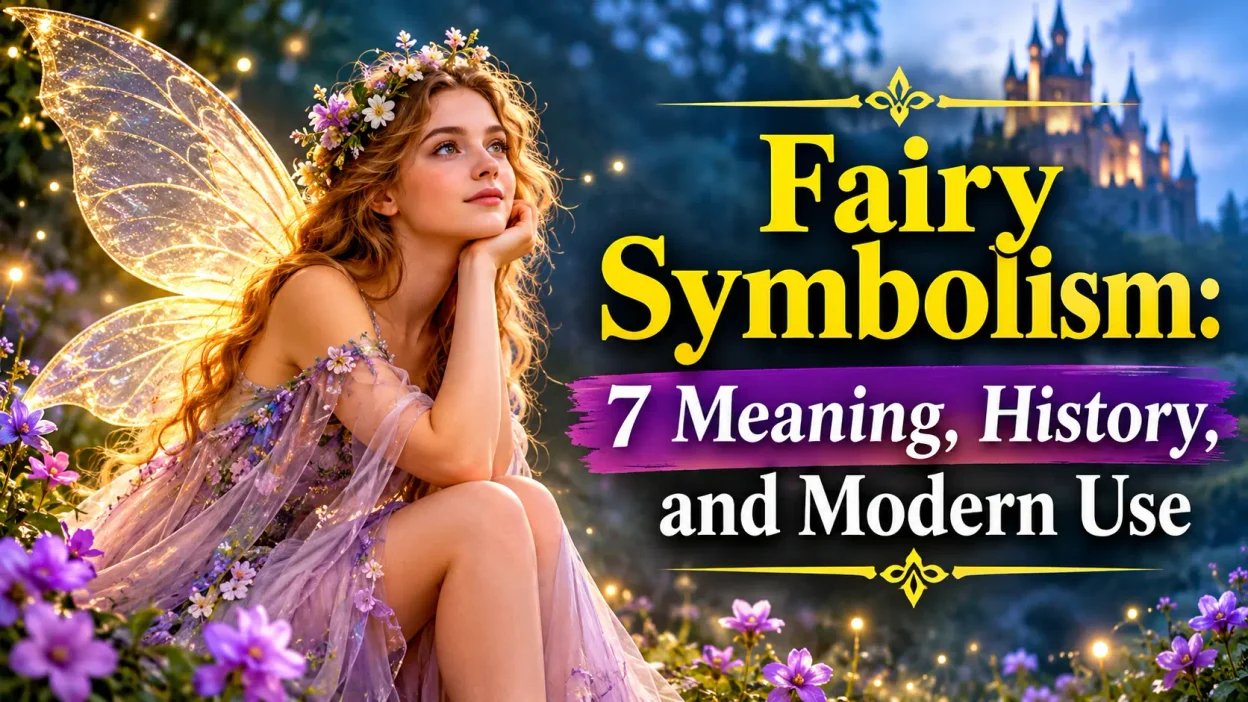
Fairies occupy a curious place in the human imagination. They appear in children’s stories, ancient folklore, garden decorations, fantasy films, jewelry, tattoos, and illustrations of enchanted forests. Some are imagined as tiny winged creatures with delicate features, while others are powerful supernatural beings capable of helping, deceiving, or frightening humans. Fairy symbolism reflects this variety, connecting fairies with magic, nature, imagination, freedom, transformation, and the unseen forces of life.
In the United States, fairies are often associated with childhood wonder, fantasy, creativity, and the beauty of the natural world. Images of fairies appear in birthday celebrations, garden art, children’s books, fantasy entertainment, and personal accessories. However, older folklore presents a more complicated picture. Traditional fairies were not always sweet, harmless creatures. They could be unpredictable, protective, dangerous, or difficult to understand.
Understanding fairy symbolism means looking beyond the familiar image of a small creature with butterfly wings. Fairies represent the boundary between ordinary reality and the extraordinary, offering a way to explore human imagination, cultural beliefs, and the mysteries people have historically associated with nature.
Quick Answer
Fairies commonly symbolize magic, imagination, nature, innocence, freedom, transformation, and the possibility of extraordinary experiences in modern American culture. Historically, fairy folklore also connected these beings with supernatural forces, protection, danger, fertility, and the mysterious world beyond ordinary human understanding.
TL;DR
- Fairies symbolize imagination, magic, creativity, and wonder.
- Traditional folklore portrays fairies as unpredictable supernatural beings.
- Modern American culture associates fairies with childhood, fantasy, and nature.
- Wings symbolize freedom, transformation, and movement between worlds.
- Fairy imagery appears in tattoos, jewelry, gardens, fashion, and entertainment.
- Fairy stories explore curiosity, temptation, consequences, and the unknown.
1. What Fairies Represent in Symbolism
Fairies are supernatural beings found in numerous European folk traditions, particularly those associated with Ireland, Scotland, England, Wales, France, and other parts of Europe. Their appearances and characteristics vary considerably. Some are small and winged, while others resemble ordinary people or possess unusual powers.
As symbols, fairies represent the possibility that reality contains more than what people can see or explain. Their association with magic suggests extraordinary abilities, hidden knowledge, and the ability to change circumstances in unexpected ways.
Fairies also represent the imagination. They inhabit a world where flowers can become homes, ordinary objects can possess magical properties, and natural environments can hold secret inhabitants. This makes them especially relevant to artistic expression, storytelling, and creative thinking.
Their symbolic meanings often include:
- Magic and enchantment
- Nature and environmental connection
- Imagination and creativity
- Innocence and childhood
- Freedom and independence
- Transformation and personal growth
- Mystery and the supernatural
- Protection and good fortune
Not every fairy carries all these meanings. A fairy in a children’s illustration may represent innocence, while a fairy in an old folktale may symbolize temptation, danger, or the consequences of entering an unfamiliar world.
2. The Historical Origins of Fairy Folklore
Fairy traditions developed over centuries through oral storytelling, religious beliefs, local customs, literature, and regional mythology. There is no single historical origin that explains every fairy tradition.
The English word fairy developed from medieval French terminology connected with enchantment and fate, ultimately linked to the Latin word fata, meaning fate. Over time, the word became associated with supernatural beings believed to influence human experiences.
In medieval European folklore, fairies could be connected with mysterious landscapes, supernatural encounters, unusual illnesses, missing time, unexpected luck, and unexplained events. Stories often described them living in hills, forests, caves, meadows, or other places considered separate from everyday human life.
These beings were not necessarily small. Earlier folklore included fairies who appeared human-sized, beautiful, frightening, or physically unusual. The familiar image of tiny winged fairies became especially popular through later literature, illustration, and Victorian-era artistic representations.
The historical fairy was therefore much more complicated than the modern decorative figure. Fairy stories could be entertaining, but they also reflected anxieties about the natural world, social customs, illness, death, and the unpredictable circumstances of life.
3. Fairies and Nature Symbolism
Nature is one of the strongest associations of fairy symbolism. Fairies are commonly imagined living among trees, flowers, mushrooms, rivers, mountains, and meadows. Their presence suggests that natural places possess beauty, mystery, and qualities that people may not fully understand.
A fairy sitting on a flower can symbolize the delicate relationship between living things. A fairy in a forest may represent the imagination that develops when people spend time in quiet natural environments. Fairies near water can suggest emotional depth, renewal, or the changing nature of life.
In modern American culture, fairy imagery often appears in environmentally themed art and garden design. Fairy gardens, miniature houses, tiny doors attached to tree trunks, and decorative woodland figures encourage people to view gardens as imaginative spaces rather than simply landscaped areas.
This symbolism can also communicate appreciation for biodiversity and the small details of the natural world. Flowers, insects, moss, leaves, and mushrooms become part of an imagined ecosystem where every element has a place.
Fairies are particularly connected with:
- Forests and woodland environments
- Flowers and blooming plants
- Mushrooms and moss
- Streams and waterfalls
- Moonlight and nighttime landscapes
- Gardens and natural habitats
Their association with nature encourages people to see beauty in small, overlooked places.
4. Fairy Symbolism in American Culture
Fairies are not native to traditional Indigenous American folklore as a single universal category. However, fairy traditions from Europe traveled to North America through immigration, literature, theater, and storytelling. These traditions eventually became part of American popular culture.
Today, American interpretations of fairies are heavily influenced by children’s entertainment, fantasy literature, animation, films, seasonal decorations, and contemporary spiritual practices.
In the United States, fairies frequently represent:
| Context | Meaning in the USA | Common Associations |
|---|---|---|
| Children’s stories | Wonder and imagination | Magic, adventure, innocence |
| Garden decorations | Nature and creativity | Flowers, mushrooms, miniature houses |
| Fantasy entertainment | Extraordinary possibilities | Magical worlds, transformation |
| Personal accessories | Individuality | Freedom, beauty, self-expression |
| Spiritual practices | Connection with nature | Energy, intuition, earth spirits |
| Art and fashion | Dreamlike creativity | Whimsy, femininity, fantasy |
The fairy has become a recognizable cultural figure that can communicate fantasy without requiring a particular religious belief. Someone wearing a fairy necklace may simply enjoy the design, while another person may associate it with nature, spirituality, or personal transformation.
American fairy imagery often emphasizes beauty, gentleness, and positivity. This contrasts with older stories in which fairies could be unpredictable or threatening.
5. The Symbolism of Fairy Wings
Fairy wings are among the most recognizable features of modern fairy imagery. They are often modeled after butterfly wings, dragonfly wings, or delicate translucent shapes.
Wings symbolize freedom, movement, and the ability to rise above ordinary limitations. In fairy symbolism, they suggest access to another world and the ability to move between physical and imaginative spaces.
The shape and color of the wings can influence the meaning of a fairy image.
Butterfly-like wings often suggest transformation, beauty, and personal growth. Their association with butterflies strengthens the connection between fairies and the process of becoming something new.
Dragonfly-like wings may represent adaptability, lightness, and emotional clarity.
Transparent wings can suggest delicacy, vulnerability, and the fleeting nature of beauty.
Large, colorful wings often communicate individuality, confidence, and expressive creativity.
In tattoos and artwork, wings may represent the desire to escape restrictions, pursue personal dreams, or experience a life that feels more imaginative and meaningful.
6. Fairies as Symbols of Innocence and Childhood
Modern fairy imagery is strongly connected with childhood. Fairy tales introduce young readers to magical worlds where impossible things happen and ordinary characters discover extraordinary abilities.
Fairies can represent a child’s curiosity, willingness to believe in possibilities, and ability to imagine worlds beyond everyday experience. They encourage playful thinking and help children explore concepts such as kindness, courage, generosity, jealousy, and responsibility through fictional characters.
The fairy godmother is an especially important example. In stories such as Cinderella, the fairy godmother represents assistance arriving when a person needs it most. She may symbolize kindness, guidance, hope, and the possibility of a positive change in circumstances.
In American culture, fairy imagery appears in:
- Children’s birthday parties
- Dress-up costumes
- Picture books
- Toy collections
- Fantasy-themed bedrooms
- Fairy gardens
- Preschool activities
- Animated movies
However, innocence is not the only meaning fairies carry. Traditional stories often portray fairies as beings who punish careless behavior, test human character, or require people to respect boundaries.
7. Fairies as Symbols of Magic and the Unknown
Fairies often represent the unknown because their stories involve encounters with worlds that humans cannot fully understand. Their powers may include invisibility, shapeshifting, healing, enchantment, or the ability to manipulate time and perception.
This connection makes fairies symbols of mystery and supernatural possibility.
In folklore, entering a fairy realm could involve unusual rules. A person might lose track of time, encounter strange customs, or discover that ordinary behavior no longer applies. Such stories symbolically explore what happens when people enter unfamiliar environments.
Modern fantasy continues to use fairies in this way. Fairy characters may possess magical abilities that humans lack, creating tension between different forms of power and knowledge.
Symbolically, fairy magic can represent:
- Hidden abilities
- Unexplored potential
- Unexpected opportunities
- Imagination beyond practical limitations
- The unknown aspects of human experience
Fairies may also represent the desire to believe that life contains surprises beyond routine and predictable outcomes.
8. Fairy Symbolism in Celtic and European Traditions
Fairy folklore is particularly prominent in Irish, Scottish, Welsh, and English traditions, although the beliefs differ between regions and communities.
In Irish folklore, supernatural beings associated with the Sidhe are often connected with ancient mounds, hills, and other places believed to belong to a hidden world. These beings were sometimes treated with respect or caution because encounters with them could bring good fortune or trouble.
Scottish traditions include various fairy beings, some associated with natural landscapes and others with household environments. English folklore includes pixies, brownies, and other supernatural figures with different personalities and behaviors.
Fairies in these traditions were not always benevolent. Some helped humans, while others tricked travelers, interfered with households, or punished disrespectful behavior.
The idea of the “Fair Folk” reflects the use of respectful or indirect language when discussing supernatural beings that people feared or wished to avoid offending.
These traditions contribute several symbolic meanings:
- Respect for unseen forces
- The importance of local landscapes
- Protection against misfortune
- Caution around unfamiliar situations
- The connection between folklore and community identity
The cultural history of fairies shows that their symbolism is not limited to beauty or fantasy. They also represent the complicated relationship between people and the forces they cannot control.
9. Fairy Symbolism in Literature and Popular Entertainment
Fairies have been central to literature, theater, and popular entertainment for centuries. Their presence in stories allows writers to explore love, power, deception, transformation, and the difference between appearance and reality.
William Shakespeare’s A Midsummer Night’s Dream is one of the best-known literary works featuring fairies. Its fairy characters create confusion, romantic complications, and magical transformations, demonstrating how supernatural forces can disrupt ordinary human relationships.
Later fairy stories and fantasy literature developed the idea of magical beings who inhabit separate worlds with their own rules.
In American entertainment, fairy imagery became particularly influential through animated films, children’s books, fantasy movies, television programs, and illustrated stories. Characters such as Tinker Bell helped popularize the tiny, winged fairy as a recognizable modern figure.
Fairies in popular culture can symbolize:
- Escapism
- Magical adventure
- Romantic fantasy
- Emotional transformation
- The struggle between good and evil
- The power of imagination
Their popularity continues because they allow stories to explore extraordinary experiences while maintaining recognizable human emotions.
10. Fairy Symbolism in Tattoos and Personal Style
Fairy tattoos are popular among people who appreciate fantasy imagery, nature-inspired artwork, delicate designs, and symbolic representations of individuality.
A fairy tattoo may represent a personal connection to childhood memories, creativity, freedom, or a belief in the beauty of the unseen world. Some people choose fairy imagery because it reflects a playful or imaginative personality, while others use it to represent a period of personal change.
Common fairy tattoo designs include:
- Small winged fairies
- Fairies surrounded by flowers
- Fairy silhouettes
- Moon and star fairies
- Woodland fairies
- Dark or gothic fairies
- Fairies with butterfly wings
The style can significantly change the meaning.
A soft, pastel fairy may symbolize innocence, gentleness, and imagination. A dark fairy with sharp wings or dramatic clothing may represent independence, rebellion, mystery, or the acceptance of a more complicated personality.
Fairy tattoos can also serve as memorial designs. A fairy connected with flowers, stars, or a name may represent a loved one, a cherished memory, or a desire to preserve the sense of wonder associated with someone who has passed away.
11. Fairy Symbolism in Gardens, Jewelry, and Home Decor
Fairies are frequently used in decorative objects because their imagery creates a sense of fantasy without requiring a specific cultural or religious interpretation.
Fairy gardens are particularly popular in American gardening and craft culture. These miniature landscapes may contain small houses, bridges, figurines, stones, flowers, and tiny pathways. They transform ordinary garden spaces into imaginative environments.
Fairy garden symbolism often includes:
- Creativity and playful imagination
- Appreciation of nature
- Peace and relaxation
- Childhood nostalgia
- A sense of hidden beauty
Fairy jewelry can communicate similar meanings. A fairy pendant may represent freedom, personal expression, hope, or an interest in fantasy.
Home decorations featuring fairies often appear in bedrooms, gardens, nurseries, craft spaces, and outdoor areas. Their presence creates a gentle, whimsical atmosphere.
Some people use fairy objects as spiritual decorations, while others simply enjoy the artistic style. The meaning depends on the owner’s intentions and the context in which the object is displayed.
12. Emotional and Psychological Meaning of Fairies
Fairies can represent emotional experiences that are difficult to express through ordinary language. Their connection with imagination allows people to explore hope, freedom, curiosity, and the desire for change.
A fairy image may remind someone of a childhood period when the world seemed full of possibilities. It can also represent a desire to reconnect with creativity after becoming overwhelmed by responsibilities.
Fairies sometimes symbolize the feeling that life should contain more than practical routines. Their magical qualities encourage people to imagine different possibilities, develop artistic interests, and approach problems with flexibility.
Psychologically, fairy imagery may communicate:
- Curiosity about the world
- A desire for emotional freedom
- Hope during difficult periods
- Creativity and self-expression
- Comfort through nostalgia
- A need for playfulness and relaxation
These meanings are personal rather than universal. A fairy may represent a comforting childhood memory for one person and a symbol of independence or rebellion for another.
13. Fairy Symbolism in Spirituality and Contemporary Beliefs
Some contemporary spiritual traditions incorporate fairies into beliefs about nature spirits, elemental beings, or spiritual forces associated with the environment.
In these settings, fairies may be understood as symbolic or spiritual representations of natural processes. Their association with flowers, forests, water, and the changing seasons can encourage people to develop a stronger connection with the environment.
Some modern practitioners use fairy imagery in meditation, seasonal rituals, nature-based practices, or decorative spiritual spaces.
However, fairy beliefs vary considerably. Some people treat fairies as literal supernatural beings, while others view them as metaphorical representations of creativity, nature, or the human imagination.
Fairy symbolism should not be confused with a universal religious tradition. Fairy folklore developed across different regions and historical periods, and contemporary spiritual interpretations are often influenced by modern movements rather than a single ancient belief system.
For many Americans, fairy imagery remains entirely secular and is simply associated with fantasy, beauty, or artistic expression.
14. Positive and Negative Meanings of Fairies
Fairies are often portrayed positively in modern culture, but traditional folklore gives them a more complicated symbolic character.
| Positive symbolism | Negative symbolism |
|---|---|
| Imagination and creativity | Deception and trickery |
| Freedom and independence | Unpredictability |
| Nature and beauty | Fear of the unknown |
| Hope and transformation | Temptation and distraction |
| Protection and assistance | Danger or misfortune |
| Innocence and wonder | Illusion and false appearances |
Positive meanings are particularly common in children’s stories, decorative art, and modern fantasy. Fairies are often portrayed as helpful, beautiful, and capable of making dreams come true.
Negative meanings are more common in traditional folklore, where fairies could mislead people, steal objects, interfere with human life, or impose unusual consequences on those who violated their rules.
This duality is important because fairy symbolism does not always suggest that something is harmless simply because it looks beautiful. Fairies can represent the difference between appearance and reality, reminding people that attractive opportunities may still require judgment and caution.
15. How Fairy Symbolism Has Changed Over Time
Fairy symbolism has evolved significantly.
In older European folklore, fairies could be powerful supernatural beings associated with landscapes, fate, protection, danger, and unexplained events. They were often treated with caution rather than affection.
During the medieval and early modern periods, literary works helped develop more elaborate fairy worlds. Fairies became important characters in romance, theater, poetry, and imaginative storytelling.
The Victorian period helped popularize the small, delicate, winged fairy through illustrations, children’s literature, decorative art, and fantasy imagery. This transformation made fairies increasingly associated with beauty, innocence, flowers, and childhood.
In the twentieth and twenty-first centuries, films, animation, television, fantasy novels, and commercial art reinforced the modern fairy image. American popular culture especially embraced fairies as symbols of magical adventure, creativity, and playful fantasy.
Today, fairies can mean several different things depending on context:
- In folklore, they may represent supernatural forces.
- In children’s entertainment, they symbolize magic and wonder.
- In fantasy literature, they represent extraordinary worlds.
- In garden design, they communicate creativity and natural beauty.
- In personal style, they represent individuality and imagination.
- In contemporary spirituality, they may represent nature spirits or symbolic forces.
The modern fairy is therefore not a replacement for the traditional fairy. It is an evolved cultural image shaped by centuries of storytelling and changing attitudes toward the supernatural.
Frequently Asked Questions
What do fairies symbolize spiritually?
Fairies may symbolize nature, creativity, intuition, transformation, and the unseen aspects of existence in contemporary spiritual interpretations. Their meaning varies between individuals and traditions, and there is no single universal spiritual interpretation.
Are fairies symbols of good luck?
Fairies are sometimes associated with good luck, blessings, protection, and unexpected opportunities. However, traditional folklore also portrays them as unpredictable beings, so their association with luck is not always positive.
What does a fairy tattoo symbolize?
A fairy tattoo often symbolizes imagination, freedom, creativity, innocence, transformation, or individuality. The design can influence its meaning, with delicate fairies suggesting gentleness and darker designs representing independence or mystery.
What do fairies symbolize in American culture?
In the United States, fairies commonly symbolize fantasy, childhood wonder, nature, creativity, and magical possibilities. They are especially popular in children’s entertainment, garden decorations, fantasy media, jewelry, and personal artwork.
Are fairies associated with nature?
Yes. Fairies are frequently connected with forests, flowers, mushrooms, rivers, gardens, and other natural environments. Their imagery often encourages appreciation for nature and the beauty of small or overlooked details.
What does a fairy godmother symbolize?
A fairy godmother symbolizes guidance, kindness, protection, hope, and assistance during difficult circumstances. In fairy tales, she often represents the unexpected support that helps a person overcome obstacles or begin a new chapter.
Do fairies have negative symbolism?
Traditional fairy folklore sometimes associates fairies with deception, danger, misfortune, temptation, or unpredictable supernatural behavior. Modern popular culture generally presents them more positively, although dark fantasy continues to explore their frightening or morally complicated qualities.
Conclusion
Fairies symbolize imagination, magic, nature, freedom, transformation, and the mysterious possibilities of life. Their meaning has developed from complex European folklore into a familiar modern image associated with childhood wonder, fantasy entertainment, creative expression, and natural beauty.
In American culture, fairies are often gentle and decorative figures, but their historical traditions reveal a more unpredictable character. They can represent both the beauty of the unknown and the uncertainty that comes with encountering something beyond ordinary experience.
Fairy symbolism ultimately reflects humanity’s desire to imagine worlds beyond everyday reality. Whether found in a folktale, a garden, a tattoo, or a fantasy film, fairies remind people that imagination can transform how they see the world around them.