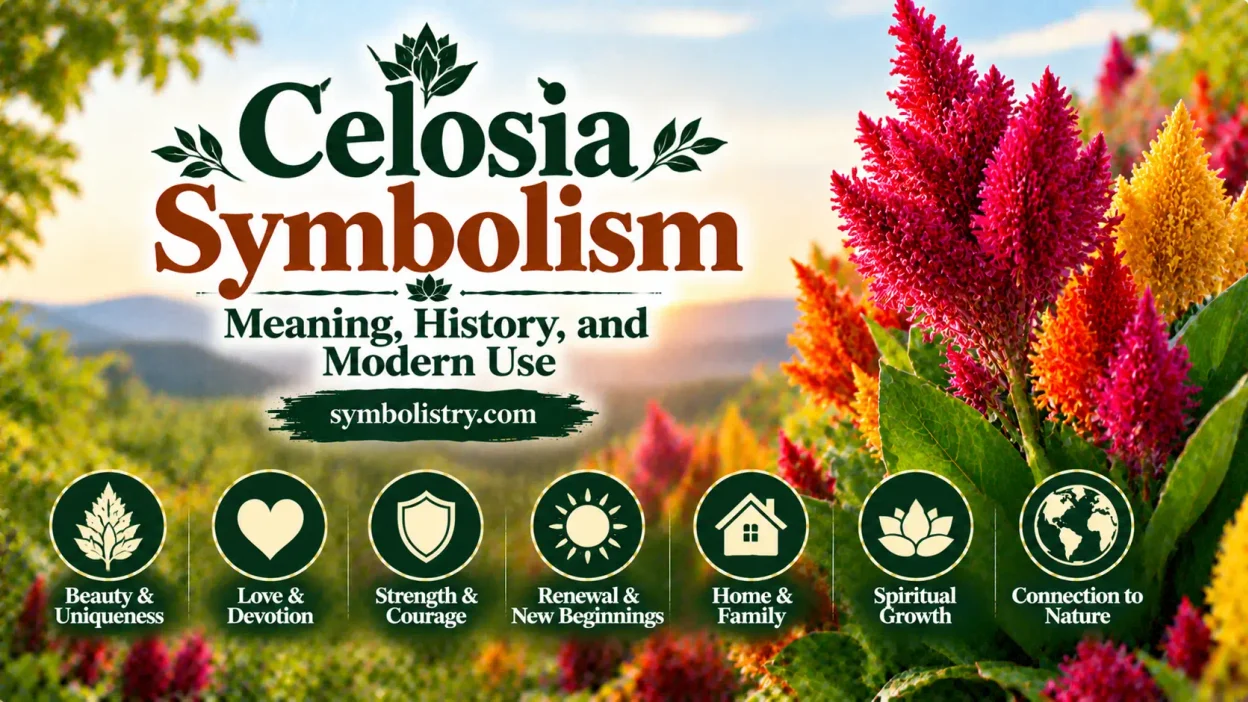
Celosia is an eye-catching flower known for its fiery colors, unusual textures, and distinctive flower heads. Often called cockscomb or woolflower, it grows in shapes that resemble flames, soft feathers, or the rippled comb of a rooster. Celosia symbolism draws on these striking features, connecting the flower with individuality, warmth, humor, affection, and the ability to stand out.
In American gardens, celosia is a familiar summer and fall annual, appearing in flower beds, containers, bouquets, and dried arrangements. Its bright red, orange, yellow, pink, and purple blooms bring color to spaces that might otherwise feel ordinary. Yet its appeal goes beyond appearance: the flower’s unusual form has inspired interpretations ranging from playful confidence to excessive pride.
The meaning also changes with cultural context. In some traditions, celosia appears in religious celebrations or remembrance practices, while historical European flower language associated cockscomb with vanity and silliness. Understanding these different interpretations helps explain why this distinctive plant can communicate several seemingly contradictory messages.
Quick Answer
Celosia symbolism commonly represents individuality, warmth, confidence, humor, and vibrant self-expression in modern American culture. Historically, its unusual shape inspired associations with vanity and playful eccentricity, while its lasting color and use in particular cultural traditions have connected it with remembrance and enduring affection.
TL;DR
- Celosia symbolizes individuality, confidence, warmth, and creative expression.
- Its flame-like blooms suggest energy, vitality, and enthusiasm.
- Victorian flower language sometimes associated cockscomb with vanity and silliness.
- Dried celosia can represent lasting memories and enduring affection.
- Cultural traditions give the flower meanings beyond its ornamental appearance.
- Modern Americans use celosia in gardens, bouquets, seasonal displays, and creative designs.
What Celosia Looks Like and Why Its Shape Matters
Celosia belongs to the amaranth family, Amaranthaceae. It includes several ornamental forms, each with a different appearance that can influence how people interpret the flower.
Crested celosia, commonly called cockscomb, develops a broad, folded flower head that resembles a rooster’s comb or a piece of velvety coral. Some varieties have elaborate ridges and waves, giving them an almost sculptural appearance. Their unusual structure makes them natural focal points in floral arrangements.
Plume celosia looks different. Its upright, feathery flower heads resemble flames rising from the stems. Wheat celosia produces narrower, more compact spikes that look like small ears of grain.
These differences create distinct visual associations. Crested varieties may suggest boldness, individuality, or theatrical flair, while plume varieties more readily evoke fire, movement, and enthusiasm. Wheat-like forms can suggest abundance or the simple beauty of a cultivated garden, although these are interpretive associations rather than universally established meanings.
The flower’s vivid colors strengthen its visual impact. Deep red and magenta attract attention, orange and gold create a warm impression, and purple introduces a more dramatic note. Celosia does not disappear quietly into a bouquet; its shape and color encourage the viewer to notice it.
The Core Symbolism of Celosia
Celosia has no single meaning accepted by every culture. Its symbolism develops from its appearance, its behavior as a cut flower, and the traditions in which people encounter it.
Individuality and self-expression
Celosia’s unusual form makes it a natural emblem of individuality. Unlike familiar rose-shaped blooms, its crests and plumes look unconventional. In contemporary floral design, this quality can represent someone who values originality and feels comfortable expressing a distinctive personality.
A celosia arrangement may therefore suit a creative workspace, an artistic celebration, or a gift for someone whose character is difficult to describe with an ordinary bouquet.
Warmth and enthusiasm
The flower’s saturated colors resemble fire, glowing embers, and late-summer sunlight. These visual connections encourage associations with enthusiasm, friendliness, and an energetic approach to life.
Red and orange celosia can brighten a gathering or communicate excitement without relying on the more familiar romantic symbolism of red roses.
Humor and playfulness
Cockscomb’s resemblance to a rooster’s crest gives it a slightly comical quality. Its rippled, sometimes brain-like form can make people smile because it looks unlike a conventional flower.
This unusual appearance helps explain its association with humor, silliness, and lightheartedness in some flower-language traditions. Celosia can represent the ability to enjoy something eccentric rather than insisting that every beautiful object look elegant or restrained.
Confidence and pride
A large celosia bloom stands upright and demands attention. It can be interpreted as a visual expression of confidence, self-assurance, or pride in one’s individuality.
There is a second side to this meaning, however. The same conspicuous appearance can suggest vanity when confidence becomes excessive. Celosia’s symbolism is especially interesting because it can celebrate standing out while also gently questioning the desire to attract attention.
Ancient Roots and the Origins of Its Name
Celosia’s botanical name provides an important clue to its modern associations. The name is derived from an ancient Greek word meaning burning, a reference to the fiery appearance of its brightly colored flower heads.
This connection between the flower and flame is especially easy to see in plume varieties. Their narrow, upright blooms resemble flickering fire, making vitality, energy, and intensity natural interpretations of their appearance.
The common name cockscomb comes from the resemblance between the crested flower and a rooster’s comb. That comparison links the plant visually with a familiar bird associated in many settings with display, alertness, and assertive behavior. These associations help explain the flower’s later connections with pride and flamboyance, but they should not be mistaken for proof that every culture assigns the plant those meanings.
Celosia species have a broad geographical history, with plants native to tropical and subtropical regions of Africa and the Americas and a long history of cultivation across parts of Asia. The genus has served different purposes in different communities, including ornamental gardening and, for some varieties, food.
Its history is therefore not simply a story of a decorative flower acquiring a universal meaning. Celosia’s significance has developed through cultivation, practical use, local customs, and the visual qualities that make it recognizable.
Celosia in American Culture and Garden Traditions
In the United States, celosia is best known as an ornamental plant rather than a flower with one established national meaning. Its symbolism often develops through the setting in which it appears: a colorful backyard garden, a wedding centerpiece, a fall bouquet, or a carefully arranged display honoring someone who has died.
American gardening traditions value plants that provide strong color during the hottest months of the year. Celosia fits that role particularly well, producing vivid blooms through summer and into fall in suitable conditions. Its presence in seasonal displays can therefore suggest vitality, abundance, and the enjoyment of late-season color.
The flower also has a place in American horticultural history. Thomas Jefferson recorded planting cockscomb seeds in his garden in 1767, demonstrating that the unusual bloom was cultivated in early American gardening. Today, celosia remains popular with gardeners and floral designers who want texture and color beyond conventional flowers.
Its meaning in the United States is consequently flexible. A gardener may appreciate it for its unusual appearance, a florist may use it to express warmth, and a family may include it in a remembrance arrangement because of its connection to a particular cultural tradition.
Victorian Flower Language and the Shadow of Vanity
During the nineteenth century, flower dictionaries became popular in Britain and North America. People used bouquets to communicate feelings, flirtation, affection, and social messages that might have been uncomfortable to express directly.
Celosia’s crested appearance gave it a less sentimental role in some of these traditions. Cockscomb was associated with vanity, affectation, and excessive attention to appearance. The flower’s extravagant shape made it an apt visual comparison for someone who dressed or behaved to attract admiration.
This interpretation differs from the positive modern association with confidence. Both meanings begin with the same characteristic: celosia is difficult to overlook. Whether that visibility represents admirable individuality or self-importance depends on the observer.
Victorian flower dictionaries did not offer one universal code, and interpretations could differ between publications. The association with vanity is best understood as one historical reading rather than the definitive meaning of the plant.
In modern use, most people do not treat a celosia bouquet as a coded criticism. Still, its playful appearance makes it a useful reminder that standing out and showing off are not always the same thing.
Celosia Across Cultures and Religious Traditions
Celosia’s cultural significance extends beyond American ornamental gardening, although its meanings should be connected to specific communities rather than generalized across entire continents.
Mexico and Día de Muertos
In parts of Mexico, the crested celosia known as flor de terciopelo, or velvet flower, is used to decorate graves and offerings for Día de Muertos, the Day of the Dead. Its rich color and velvety texture make it a recognizable part of some seasonal displays honoring deceased loved ones.
In this context, the flower participates in remembrance and family observance. Its role is shaped by the purpose of the offering and the wider tradition, not simply by a universal belief that celosia represents death.
For Americans encountering the flower in Mexican or Mexican American Día de Muertos displays, it is important to recognize the celebration as an occasion for honoring the dead and maintaining family connections, rather than reducing it to Halloween-style decoration.
South and Southeast Asian traditions
Celosia is cultivated in parts of South and Southeast Asia for ornamental, culinary, and other practical purposes. In some communities, flowers are used in religious offerings or festival garlands, but customs vary by location and tradition.
The plant’s value as food is also important. In parts of Africa and Asia, certain celosia varieties are grown as leafy vegetables. This practical role illustrates why the flower cannot be understood only through the symbolic meanings assigned to ornamental blooms in Western flower dictionaries.
The Philippines and festival identity
Celosia has a visible local connection with Cebu in the Philippines, where its red and yellow varieties have been associated with the Sinulog Festival. This is a regional cultural association, not a universal meaning shared by every community that grows the plant.
Together, these examples show that celosia may function as a decorative flower, a ceremonial element, or a useful crop. The meaning depends on how people use it and the traditions they maintain.
What Celosia’s Colors Can Communicate
Color can shape the impression of a celosia arrangement, particularly in American floral design. However, there is no single authoritative color code that applies to every culture or occasion.
| Color | Common modern association | Possible use |
|---|---|---|
| Red | Passion, vitality, confidence | Celebrations and expressive bouquets |
| Orange | Enthusiasm, creativity, warmth | Autumn arrangements and lively interiors |
| Yellow or gold | Cheerfulness, optimism, brightness | Thank-you gifts and seasonal displays |
| Pink or magenta | Affection, playfulness, individuality | Friendly gifts and contemporary floral designs |
| Purple | Distinction, originality, dignity | Artistic arrangements and dramatic displays |
| White or pale shades | Simplicity, calm, understated elegance | Minimalist arrangements and mixed bouquets |
These associations are interpretive, not fixed rules. Red celosia does not automatically declare romantic love, and purple blooms do not carry one agreed spiritual meaning.
The surrounding flowers, the occasion, and the recipient’s own preferences all influence how a bouquet is understood. A thoughtful arrangement communicates most clearly when color choices support the message the giver actually intends.
Emotional and Psychological Meaning
Celosia can evoke an immediate emotional response because its appearance differs so sharply from familiar garden flowers. Its dense crests and upright plumes attract attention, while its saturated colors can make an arrangement feel lively and expressive.
One useful interpretation is the freedom to be different. The flower’s unusual shape offers a visual parallel for people who value originality or resist conventional expectations. It can suit an artist, a performer, or anyone whose personality is difficult to capture with a traditional floral gift.
Celosia can also suggest playfulness. Its resemblance to a rooster’s comb or a folded piece of velvet gives it a slightly whimsical character. This makes it appropriate for celebrations where humor and personality matter more than formal elegance.
Its color and form can create a sense of warmth, but these reactions are not universal psychological laws. A person’s memories, cultural background, and personal taste influence whether celosia feels cheerful, strange, dramatic, or even unsettling.
The most reliable emotional interpretation comes from the relationship between the flower and the person receiving it, rather than an assumption that every viewer experiences the same response.
Why Celosia Appears in Weddings, Bouquets, and Home Decor
Celosia has become a useful element in contemporary floral design because it adds structure that softer flowers may lack. Its distinctive shape creates contrast with rounded blooms, delicate foliage, and trailing greenery.
In weddings, celosia can contribute a modern, garden-inspired look. Red, burgundy, orange, and pink varieties work particularly well in late-summer and autumn palettes. Depending on the arrangement, the flower may suggest individuality, lively affection, or a willingness to move beyond traditional wedding flowers.
For everyday bouquets, celosia adds texture and personality. It pairs well with flowers such as dahlias, zinnias, chrysanthemums, and roses, although the overall message depends on the combination rather than celosia alone.
At home, dried celosia offers a practical advantage. Its flower heads can retain much of their color and shape after drying, making them useful for long-lasting arrangements. That durability can encourage a personal association with memories, continuity, or affection that remains after a special occasion has passed.
These are modern design interpretations, not promises that the flower will communicate a precise message to everyone who sees it.
Celosia in Tattoos, Fashion, and Creative Expression
Although celosia is less conventional as a tattoo motif than roses, lilies, or sunflowers, its unusual outline gives it potential for distinctive floral artwork. A tattoo featuring the crested variety can represent individuality, self-acceptance, or a taste for unconventional beauty.
A plume-shaped design may be interpreted as fire, enthusiasm, or creative energy. A richly colored cockscomb can emphasize confidence and expressive personality, while a fine-line design may focus more on the flower’s intricate structure.
Some people may also choose celosia to remember a family member, celebrate a cultural connection, or recall a meaningful garden. In such cases, personal experience matters more than a standardized list of flower meanings.
In fashion and visual art, celosia’s unusual texture can inspire patterns, textile designs, jewelry motifs, and decorative prints. Its resemblance to flames, feathers, or coral allows artists to explore themes of movement and organic complexity.
There is no established universal tattoo meaning for celosia. Anyone choosing it for a permanent design should decide which association matters personally and communicate that intention to the artist.
Celosia and the Idea of Enduring Affection
Celosia is sometimes associated with lasting affection because its flower heads can preserve their appearance after cutting and drying. A dried arrangement can remain attractive long after fresh flowers would have faded, providing a concrete reason for connecting the plant with continuity and remembrance.
This is especially relevant when a bouquet marks an anniversary, a family milestone, or a meaningful friendship. The preserved flower can serve as a physical reminder of the event and the people involved.
However, claims that celosia has always symbolized immortality or eternal love need to be treated cautiously. The wider amaranth family includes plants associated with unfading qualities, but that does not mean every member of the family shares identical symbolism.
For celosia, lasting affection is best presented as a reasonable contemporary interpretation supported by the flower’s durability, rather than a universally established ancient belief.
Common Misunderstandings About Celosia Symbolism
Several assumptions can make celosia’s meaning seem more definite than it really is.
First, celosia does not have one universal symbolic meaning. Confidence, humor, remembrance, and vanity arise from different contexts. No single interpretation overrides all the others.
Second, the flower is not inherently a sign of death. Its use in some Día de Muertos observances reflects a particular cultural practice. In an American summer garden, it is more likely to be appreciated as an ornamental annual.
Third, color meanings are not universal. Floral traditions vary, and modern color associations are often shaped by design conventions rather than a fixed historical system.
Fourth, the plant’s unusual crest is a natural horticultural characteristic. Its folded, brain-like shape does not mean the flower is diseased or damaged. Gardeners cultivate these forms specifically for their distinctive appearance.
Finally, celosia has no single, universally accepted biblical meaning. Interpretations involving flames, roosters, or remembrance should not be presented as established religious doctrine simply because similar imagery appears in religious art or storytelling.
Understanding these distinctions makes the flower’s symbolism more useful. Rather than searching for one hidden definition, consider its appearance, cultural setting, and intended purpose.
How Celosia’s Meaning Has Evolved
Celosia’s symbolic history reflects changing relationships between plants and the people who grow them. Its botanical name emphasizes a resemblance to fire, while its common name highlights the crested form’s similarity to a rooster’s comb.
In nineteenth-century flower language, the same unusual appearance could attract criticism for vanity or excessive display. In modern floral design, those qualities are more often treated as opportunities for self-expression, bold color, and creative arrangements.
Cultural practices add another dimension. In parts of Mexico, celosia is used in remembrance displays for Día de Muertos, giving it a ceremonial role distinct from its everyday use in gardens and bouquets. Elsewhere, it may be valued for festival decorations, religious offerings, or food.
Modern interpretations continue to develop as people encounter the flower through gardening, weddings, art, and social media. An image of a vivid celosia bloom may now communicate originality or dramatic beauty without any awareness of Victorian flower dictionaries.
The flower’s meaning has not followed a single straight path. It has accumulated interpretations through appearance, cultivation, tradition, and individual experience.
How to Choose Celosia for a Meaningful Gift
If you want to give celosia with a particular message in mind, start with the relationship and occasion rather than relying on a strict symbolic code.
- For a creative friend: Choose a striking crested variety that celebrates originality and personal style.
- For a celebration: Use bright orange, yellow, or red blooms to create an energetic arrangement.
- For a thoughtful keepsake: Consider dried celosia as a lasting reminder of an occasion or shared memory.
- For a seasonal gathering: Pair celosia with autumn flowers and foliage for a warm, textured display.
- For a culturally meaningful occasion: Learn how the flower is used in that specific community, and respect the practice’s purpose.
You can also explain your intention in a short note. A few personal words make the gift’s meaning clearer than relying on a flower dictionary that the recipient may never have encountered.
Celosia is especially suitable when you want a bouquet that feels distinctive rather than conventional. Its value lies in its visual character and the meaning you choose to give it.
Frequently Asked Questions
What does celosia symbolize spiritually?
Celosia may represent vitality, individuality, warmth, and enduring remembrance in personal or spiritual interpretations. These meanings depend on the person and tradition involved; there is no single spiritual definition recognized across all religions.
Is celosia a symbol of good luck?
Celosia can be used in celebratory displays, and its bright colors may suggest optimism and abundance. However, it is not universally established as a good-luck flower, so that meaning should be understood as a personal or cultural association rather than a universal rule.
What does a celosia tattoo mean?
A celosia tattoo can express individuality, creativity, confidence, or appreciation for unconventional beauty. Someone may also choose the flower for its connection to family memories, cultural heritage, or a meaningful occasion.
Does celosia symbolize love?
Celosia can be used to express affection, particularly when its vivid colors and lasting appearance suit the intended message. Its association with enduring love is not universal, so it should not be treated as having the same established romantic meaning as a traditional red rose.
Why is celosia used for Día de Muertos?
In parts of Mexico, velvet flower, or flor de terciopelo, is used to decorate graves and offerings honoring deceased loved ones. Its rich color and soft texture make it a valued decorative element within particular local observances of Día de Muertos.
What does red celosia mean?
Red celosia can suggest vitality, passion, confidence, or bold self-expression in modern floral design. The meaning depends on the occasion and the person giving or receiving the flowers rather than on a universal color code.
Does celosia have a negative meaning?
Some Victorian flower dictionaries associated cockscomb with vanity, affectation, or silliness. Modern gardeners and florists are more likely to appreciate its unusual appearance, so the older negative interpretation is only one part of its symbolic history.
Conclusion
Celosia is a flower whose unusual shape and vivid colors make it an expressive symbol of individuality, warmth, enthusiasm, and playful confidence. Its historical associations with vanity reveal another side of the same appearance, while its role in specific cultural traditions demonstrates how flowers can acquire meanings through remembrance, ceremony, and everyday use.
Understanding celosia symbolism means looking beyond a fixed list of definitions. The flower can be a striking garden accent, an unconventional gift, a lasting keepsake, or a meaningful part of a cultural observance, depending on the context.
Its most distinctive quality is also its clearest symbolic invitation: beauty does not have to follow a familiar pattern to be noticed, appreciated, or remembered.