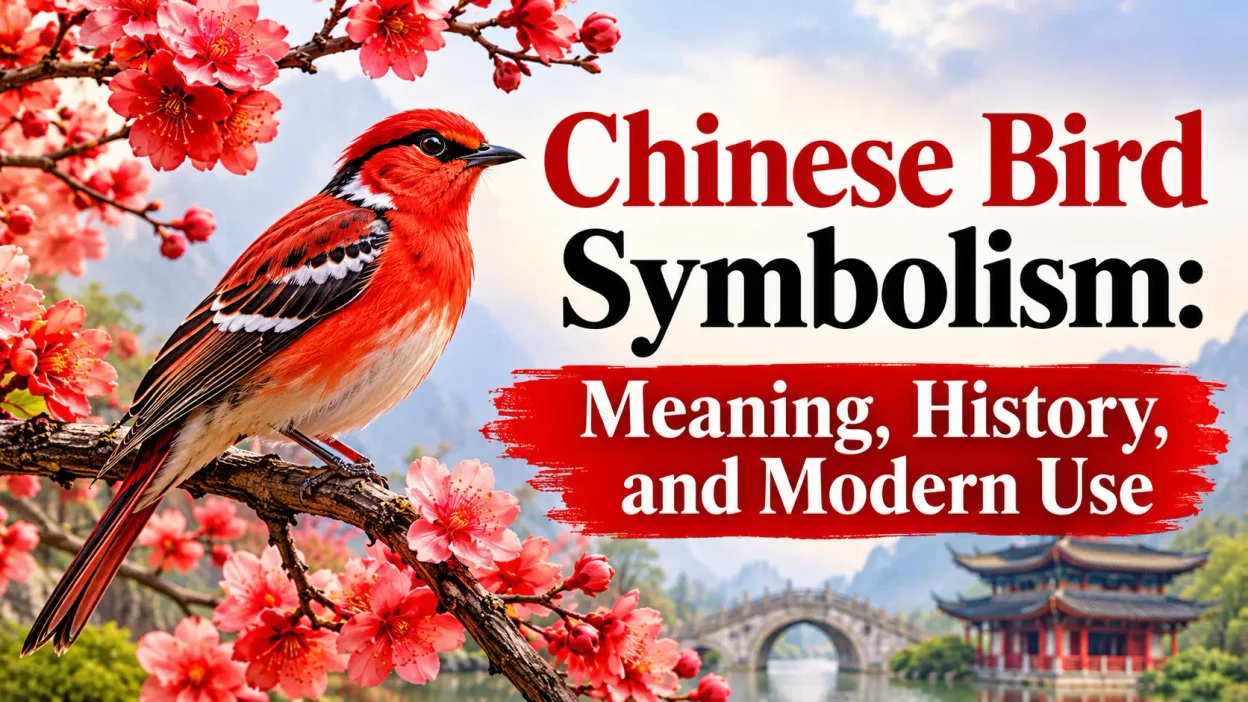
Birds have held an important place in Chinese art, mythology, literature, and traditional beliefs for thousands of years. In Chinese bird symbolism, different species communicate ideas about happiness, prosperity, longevity, loyalty, wisdom, social status, and spiritual transformation. Their meanings often come from their physical characteristics, behavior, colors, names, and connections to ancient stories.
Unlike a single universal symbol, Chinese bird imagery includes many different creatures, each carrying its own associations. A crane may represent a long life, a magpie may announce good news, a phoenix may signify harmony and noble virtue, and a pair of mandarin ducks may express romantic devotion.
These images appear throughout traditional Chinese paintings, embroidered clothing, ceramics, wedding decorations, architectural ornamentation, poetry, and celebrations. Their symbolism continues to influence Chinese communities around the world, including the United States, where Chinese-inspired artwork, jewelry, tattoos, and decorative objects are often chosen for their cultural meanings.
Understanding these birds requires looking beyond their appearance. Their symbolic importance is closely connected to Chinese language, mythology, family values, philosophical traditions, and centuries of artistic interpretation.
Quick Answer
Chinese bird symbolism commonly represents good fortune, happiness, longevity, love, prosperity, wisdom, and harmony. Historically, birds were also associated with imperial authority, spiritual immortality, moral virtues, social status, and the relationship between humans and the natural world.
TL;DR
- Cranes symbolize longevity, wisdom, nobility, and spiritual transcendence.
- Phoenixes represent harmony, virtue, prosperity, and auspicious renewal.
- Magpies traditionally announce happiness, good news, and favorable events.
- Mandarin ducks symbolize romantic devotion, marriage, and partnership.
- Birds in Chinese art express moral values, social status, and natural harmony.
- Modern bird imagery appears in jewelry, paintings, weddings, tattoos, and home decor.
What Birds Represent in Chinese Culture
Birds are often associated with qualities that humans admire or aspire to possess. Their ability to fly creates a natural connection with freedom, elevation, and the heavens. Their songs suggest communication, celebration, and the arrival of favorable circumstances.
In traditional Chinese culture, birds can also serve as messengers between different realms. Some are connected to immortals, celestial beings, ancestors, or supernatural events. Others represent ordinary human concerns such as marriage, family prosperity, professional advancement, and happiness.
The symbolic meaning of a bird frequently depends on its species and the surrounding imagery. A bird standing beside a pine tree may communicate longevity, while two birds appearing together may represent companionship. A bird flying toward the sun can suggest ambition, success, or spiritual elevation.
Bird imagery also connects with the Chinese understanding of harmony between humanity and nature. Rather than treating animals as decorative subjects alone, traditional artists frequently used them to communicate ideas about how people should live, how relationships should function, and what qualities deserve respect.
The Historical Origins of Chinese Bird Symbolism
Bird symbolism in China developed through ancient religious beliefs, folklore, philosophical traditions, court culture, poetry, and observation of the natural world.
Birds appeared in early Chinese decorative arts, including pottery, bronze objects, textiles, and paintings. Over time, certain species acquired associations that became recognizable across generations.
The phoenix, for example, developed into an important symbol of auspiciousness, virtue, and harmonious rule. The crane became associated with longevity and spiritual elevation. The rooster was connected with dawn, protection, and masculine vitality.
During imperial periods, bird imagery became especially important in clothing and official decoration. Rank badges worn by government officials featured specific birds that identified the wearer’s position within the imperial bureaucracy. These images were not merely decorative; they communicated authority and social hierarchy.
Bird symbolism also developed through Chinese literature and language. Because many Chinese words contain homophones, the name of a bird could carry additional meaning. A magpie, for instance, became associated with happiness partly through linguistic and cultural connections.
These traditions gradually created a rich symbolic vocabulary that artists, families, and communities could understand without needing written explanations.
The Chinese Phoenix and Its Symbolism
The Chinese phoenix, known as the fenghuang (凤凰), is one of the most recognizable birds in Chinese symbolism. Although it is often compared with the Western phoenix, the two creatures have different traditional meanings and mythological histories.
The fenghuang is associated with virtue, peace, prosperity, harmony, nobility, and auspicious beginnings. In traditional beliefs, its appearance could signal a period of peaceful and well-ordered government or the arrival of an unusually virtuous ruler.
Unlike the Western phoenix, which is famously connected with death and rebirth through fire, the Chinese fenghuang is not primarily a symbol of resurrection. Its symbolism centers more strongly on harmony, moral excellence, beauty, and favorable circumstances.
Its imagery traditionally combines characteristics of several birds. Artists have depicted it with elaborate feathers, a graceful body, colorful plumage, and a distinctive flowing tail.
The fenghuang also carries associations with yin, the feminine principle, and historically became connected with empresses. When paired with a dragon, it can represent complementary forces, marital harmony, or the union of imperial masculine and feminine symbolism.
Today, Chinese phoenix imagery is common in wedding decorations, ceremonial clothing, jewelry, architecture, paintings, and decorative art. It is often chosen to express a wish for happiness, prosperity, and a harmonious future.
Crane Symbolism: Longevity, Wisdom, and Spiritual Elevation
The crane is one of the most important birds in Chinese symbolism. It commonly represents longevity, wisdom, nobility, purity, and spiritual transcendence.
Its tall body, elegant posture, white feathers, and long life in popular understanding made it an ideal symbol of old age and dignity. Traditional paintings frequently depict cranes beside pine trees, rocks, clouds, or other symbols associated with endurance and longevity.
In Daoist traditions, cranes are connected with immortals and spiritual journeys. They sometimes appear as companions or transportation for celestial beings, making them symbols of movement between earthly life and the spiritual realm.
Crane imagery also carried social meaning during imperial China. Certain cranes appeared on official rank badges, connecting the bird with government authority, distinction, and high status.
In modern Chinese-inspired art, a crane can communicate a wish for a long, healthy life. It is particularly appropriate in birthday gifts, paintings for older family members, decorative scrolls, and objects intended to express respect.
A crane flying among clouds may symbolize spiritual freedom or elevation, while a crane standing beside a pine tree emphasizes endurance and longevity.
Magpie Symbolism: Happiness and Good News
The magpie, known in Chinese as xique (喜鹊), is strongly associated with happiness, good news, and auspicious events.
Its Chinese name contains the character xi, meaning happiness or joy. This linguistic association helped establish the bird as a favorable sign in traditional culture.
Magpies are often depicted perched on branches, especially flowering plum trees. Their presence in a painting can suggest the arrival of good fortune, a joyful announcement, a successful marriage, or a welcome change in circumstances.
In traditional decorative art, magpies may appear in compositions designed to communicate wishes for prosperity and happiness. Two magpies can strengthen the association with double happiness or shared joy.
In the United States, magpie imagery may be appreciated for its striking black-and-white appearance or its connection with Chinese decorative traditions. When used in culturally inspired designs, it often communicates optimism and the hope that positive news will arrive.
Mandarin Ducks and Romantic Love
Mandarin ducks are among the most recognizable symbols of romantic devotion and marital harmony in Chinese culture.
They are frequently depicted in pairs because traditional interpretations associate them with loyalty, companionship, and the ideal of a loving relationship. Their colorful appearance and tendency to be represented as male-and-female pairs have helped make them popular in wedding art and decorative objects.
Mandarin ducks often appear near water, lotus flowers, or other symbols of fertility and abundance. In wedding imagery, they can communicate a wish for lasting love, mutual affection, and a peaceful household.
Their symbolism is particularly relevant to traditional Chinese wedding decorations, embroidered garments, jewelry, paintings, and gifts presented to newly married couples.
In contemporary settings, mandarin duck imagery is sometimes used in romantic artwork or tattoos to represent a committed relationship. However, the meaning is more culturally specific than the generic idea of birds representing love.
Rooster Symbolism: Protection, Confidence, and Achievement
The rooster has an important place in Chinese folklore and traditional symbolism. Its crowing announces the morning, making it associated with dawn, new beginnings, vigilance, and the triumph of light over darkness.
In some traditional beliefs, the rooster was considered capable of warding off harmful spirits. Its loud call and confident posture made it a natural symbol of protection and alertness.
The rooster also has connections with achievement and official success. Traditional word associations involving its comb and Chinese terminology for official status contributed to associations with advancement and recognition.
As one of the animals in the Chinese zodiac, the rooster is associated with people born in rooster years. Zodiac interpretations commonly emphasize confidence, diligence, observant behavior, organization, and self-assurance, although these personality descriptions are cultural beliefs rather than scientific assessments.
Roosters appear in folk paintings, New Year decorations, textiles, ceramics, and household ornaments. Their imagery can express the desire for a productive year, protection, and success in personal or professional life.
Swallows and the Symbolism of Home
Swallows are often associated with spring, renewal, returning home, family happiness, and prosperity.
Their seasonal migration makes them symbols of changing seasons and the return of favorable conditions. In traditional Chinese poetry and art, swallows can evoke warmth, domestic life, and the comfort of familiar surroundings.
Because swallows often build nests near human dwellings, they have also been connected with household prosperity and the happiness of family life.
In literature, the appearance or departure of swallows can communicate the passage of time, separation, reunion, or nostalgia. Their movements make them especially suitable for expressing emotional transitions.
A pair of swallows may suggest marital companionship or a peaceful household, while a swallow returning to a nest can symbolize belonging and homecoming.
Peacock Symbolism: Beauty, Status, and Recognition
The peacock represents beauty, elegance, dignity, prosperity, and social distinction in Chinese decorative traditions.
Its colorful feathers and elaborate tail make it an attractive subject for textiles, paintings, furnishings, and ornamental objects. Historically, peacock imagery was also associated with rank and prestige.
The bird’s striking appearance lends itself to symbolic interpretations involving admiration, recognition, and refined beauty. In some traditional contexts, peacock imagery was connected with official status or elite culture.
In modern decorative settings, peacocks can represent confidence, individuality, luxury, and artistic expression. Their elaborate feathers make them popular in fashion, jewelry, interior design, and tattoo art.
However, the peacock’s meaning is not always limited to positive qualities. Depending on the context, its beauty can also be interpreted as vanity, excessive pride, or a desire for attention.
The Sparrow and Everyday Life
Sparrows represent the ordinary world of everyday life, community, vitality, and the natural environment.
Compared with the phoenix or crane, the sparrow is a humble bird. It does not carry the same associations with imperial authority or spiritual immortality. Instead, its presence in art can communicate familiarity, simplicity, and the beauty of ordinary surroundings.
Small birds are often included in traditional Chinese paintings alongside branches, flowers, fruit, and seasonal plants. These compositions celebrate the rhythms of nature and the interconnectedness of living things.
Sparrows may also be associated with resourcefulness and adaptability because they survive close to human settlements. Their symbolic meaning can therefore reflect resilience and the ability to thrive in modest circumstances.
In modern artwork, sparrows are often chosen to express freedom, simplicity, modesty, or appreciation for everyday life.
Chinese Bird Symbolism at a Glance
Different birds communicate different wishes and values. The following table summarizes some of the most recognizable bird symbols in Chinese culture.
| Bird | Traditional Meaning | Common Associations | Typical Context |
|---|---|---|---|
| Phoenix (Fenghuang) | Harmony, virtue, prosperity | Nobility, auspiciousness, peace | Weddings, imperial art, celebrations |
| Crane | Longevity, wisdom, spiritual elevation | Dignity, immortality, health | Birthday gifts, paintings, decor |
| Magpie | Happiness, good news | Joy, favorable events, good fortune | Decorative art, gifts, celebrations |
| Mandarin duck | Romantic devotion | Marriage, loyalty, companionship | Weddings, romantic gifts |
| Rooster | Protection, achievement | Dawn, vigilance, confidence | New Year art, folk decorations |
| Swallow | Homecoming, renewal | Spring, family, prosperity | Paintings, poetry, household decor |
Birds in Chinese Art, Textiles, and Decorative Objects
Birds are frequently featured in traditional Chinese art, particularly in bird-and-flower painting, a genre known as huaniao hua (花鸟画).
These paintings often combine birds with plants, rocks, water, and seasonal landscapes. Each element contributes to the composition’s meaning. A crane beside a pine tree may suggest longevity, while a magpie among flowering branches may express happiness and favorable news.
Traditional Chinese decorative art also uses bird imagery in:
- Silk embroidery and ceremonial clothing
- Porcelain plates, vases, and bowls
- Screens and wall paintings
- Furniture and carved wooden ornaments
- Jewelry and decorative accessories
- Wedding gifts and household objects
The placement of birds matters. A single bird may represent independence, distinction, or a particular virtue. A pair can emphasize partnership. A group of birds gathered around a phoenix may communicate hierarchy, harmony, or the gathering of people around a respected leader.
Bird imagery can also appear alongside flowers whose names or characteristics carry symbolic meanings. The combination creates a more complete message than either image would communicate alone.
Birds and Chinese Philosophical Traditions
Chinese bird symbolism developed alongside philosophical and spiritual traditions, particularly Confucianism, Daoism, and folk religion.
Confucian values emphasized moral character, social responsibility, family relationships, and proper conduct. Birds could serve as visual representations of these principles. For example, traditional bird compositions sometimes expressed relationships between parents and children, rulers and subjects, or friends.
Daoist traditions placed greater emphasis on spiritual transformation, immortality, natural harmony, and freedom from ordinary limitations. The crane became particularly connected with these ideas because it was associated with immortals and celestial journeys.
Folk religion incorporated birds into beliefs about luck, protection, omens, and communication between the earthly and spiritual worlds. Certain birds were considered favorable visitors, while others could be interpreted as warnings depending on local traditions and circumstances.
These philosophical and religious associations were not always separate. A single image could communicate moral virtue, spiritual aspiration, and a wish for good fortune simultaneously.
Chinese Bird Symbolism in the United States
In the United States, Chinese bird symbolism appears in Chinese American communities, cultural celebrations, museum collections, Asian-inspired home decor, jewelry, tattoos, and wedding traditions.
Chinese phoenixes are especially recognizable in celebrations associated with weddings, prosperity, and cultural heritage. Cranes may be chosen for their association with longevity and peacefulness. Mandarin ducks are commonly used in romantic imagery, while magpies can represent happiness and good news.
For many Americans encountering these symbols outside their original cultural context, the birds may also represent broader ideas such as:
- Asian cultural heritage and identity
- Peace and harmony
- Respect for family and tradition
- Spiritual growth
- Beauty and artistic expression
- Hope for a prosperous future
Chinese bird imagery is also visible in museums and decorative arts collections throughout the United States. These objects allow people to encounter traditional symbolism through painting, ceramics, sculpture, and textiles.
However, an image’s cultural meaning may not be immediately obvious to every viewer. A Chinese phoenix, for example, may be mistaken for a Western phoenix associated with resurrection. Although the creatures share similarities, their traditional symbolic roles differ.
Understanding these distinctions helps preserve the meaning of the original imagery while allowing people to appreciate its beauty.
The Emotional and Psychological Meaning of Birds
Birds naturally evoke feelings of freedom, movement, hope, and perspective. Their ability to fly makes them particularly effective symbols of escaping limitations or seeing life from a different viewpoint.
In Chinese symbolism, these emotional associations are often combined with cultural values.
A crane may remind someone of an elderly relative and represent respect, gratitude, and the wish for a long life. Mandarin ducks may evoke the comfort of a romantic partnership. Swallows may communicate nostalgia for home or the joy of returning to familiar surroundings.
Bird imagery can also represent personal ambitions. A bird rising into the sky may suggest a desire to improve one’s circumstances, pursue education, achieve professional goals, or move beyond a difficult period.
The emotional meaning depends on the viewer’s experiences as much as the traditional symbol. Someone who chooses a crane tattoo may be interested in longevity, spirituality, family, or simply the bird’s graceful appearance.
In this sense, Chinese bird symbolism provides a vocabulary through which people express their hopes and values.
Chinese Birds in Weddings, Festivals, and Celebrations
Birds appear in many Chinese celebrations because their symbolism aligns with wishes for happiness, prosperity, family harmony, and favorable beginnings.
Weddings
The phoenix and mandarin duck are particularly important in traditional wedding imagery. The phoenix can represent noble harmony and auspiciousness, while mandarin ducks symbolize romantic devotion and partnership.
These birds may appear on wedding garments, embroidered decorations, gifts, ornaments, and ceremonial objects.
Lunar New Year
Bird imagery may be used in New Year decorations to express wishes for happiness, success, protection, and prosperity. Magpies are especially suitable because of their association with joyful news.
Roosters can also appear in festive imagery, representing vigilance, renewal, and the arrival of a new day.
Birthdays and longevity celebrations
Cranes are frequently associated with wishes for a long life. Their images may be presented as gifts to older family members or included in decorations for milestone birthdays.
Family celebrations
Pairs of birds may communicate family unity, companionship, and the hope that relationships remain harmonious. Birds nesting or returning home can evoke stability and the importance of family connections.
These meanings are not rigid rules. The choice of bird often depends on the specific celebration, artistic style, family tradition, and personal preference.
Chinese Bird Symbolism in Tattoos, Jewelry, and Modern Design
Chinese bird symbolism continues to influence contemporary personal style and decorative design.
Tattoos
Crane tattoos are often chosen to represent longevity, wisdom, spirituality, peace, or personal growth. Phoenix tattoos may symbolize harmony, beauty, success, or a connection to Chinese heritage.
Mandarin duck tattoos can represent commitment and love, while magpie tattoos may express optimism and the expectation of happiness.
The meaning of a tattoo depends on its design. A crane flying through clouds communicates something different from a crane standing beside a pine tree. Colors, surrounding flowers, and additional symbols can further change its interpretation.
Jewelry
Bird-shaped pendants, earrings, and bracelets may be selected as gifts that communicate wishes for happiness, health, love, or prosperity.
A crane pendant is often appropriate for someone who values longevity or wisdom, while a pair of birds can serve as a romantic gift.
Home decor
Bird paintings, ceramic ornaments, embroidered cushions, and decorative screens remain popular ways to incorporate traditional Chinese symbolism into interior spaces.
People may choose these objects for cultural reasons or because they appreciate their aesthetic qualities. A crane painting in a home, for example, may be intended to create a peaceful atmosphere while expressing a wish for health and longevity.
Fashion and contemporary art
Bird motifs are frequently reinterpreted in modern clothing, graphic design, illustrations, and accessories. Traditional imagery may be combined with minimalist designs, contemporary colors, or abstract forms.
This allows symbolic traditions to remain visible without requiring artists to reproduce historical styles exactly.
Cross-Cultural Comparisons: What Chinese Bird Meanings Have in Common With Other Traditions
Bird symbolism appears in cultures around the world, although individual meanings differ.
The idea of birds representing freedom is widespread because flight creates a visual connection with movement beyond earthly boundaries. Birds also appear in religious stories, mythology, folklore, and traditions involving the soul or the afterlife.
The phoenix is an especially interesting example. The Chinese fenghuang and the Western phoenix are often treated as equivalent in modern popular culture, but their histories and symbolism are not identical.
In Western traditions, the phoenix is frequently associated with death, rebirth, renewal, and rising from destruction. The Chinese fenghuang more strongly represents harmony, virtue, auspiciousness, and noble qualities.
The crane also appears in multiple cultures as a symbol of longevity, grace, or spiritual importance. However, its specific associations in Chinese art and Daoist traditions differ from meanings found in Japanese, Korean, European, or other cultural contexts.
Similarly, birds associated with love in one tradition may represent entirely different qualities elsewhere.
These comparisons demonstrate that bird symbolism is shaped by local history, language, religion, and artistic practices rather than by universal rules.
Common Misunderstandings About Chinese Bird Symbols
Chinese bird symbolism is sometimes simplified in modern interpretations, particularly when traditional images are used outside their original cultural context.
One common misunderstanding is that every Chinese bird represents good luck. Although many birds carry auspicious associations, others may communicate mourning, warnings, loneliness, or different emotional experiences depending on the story or setting.
Another misconception is that the Chinese phoenix is simply the same creature as the Western phoenix. Both are legendary birds, but their traditional meanings developed differently.
Bird symbolism can also be oversimplified when people assume that a single species has one fixed meaning. The crane, for example, can symbolize longevity, wisdom, spiritual elevation, social status, or ambition depending on how it appears in a composition.
The number of birds, their colors, their position, and the objects surrounding them may change the message. A pair of birds may suggest partnership, while a solitary bird may communicate independence or distinction.
Modern interpretations should also be distinguished from historical traditions. Some meanings commonly promoted in contemporary tattoo culture or spiritual content may reflect recent personal interpretations rather than established Chinese beliefs.
Recognizing these differences makes it possible to appreciate the symbolism without treating every image as a universal cultural code.
How Chinese Bird Symbolism Has Evolved Over Time
Chinese bird symbolism has changed as artistic styles, religious beliefs, social structures, and everyday life have evolved.
In early traditions, birds were connected with nature, supernatural forces, spiritual beliefs, and the observation of seasonal changes. As Chinese art developed, bird imagery became more sophisticated and increasingly associated with moral virtues, social relationships, political authority, and personal aspirations.
During imperial periods, birds were incorporated into official clothing and court decoration, where they could communicate rank and status. Artists also developed symbolic compositions involving birds, flowers, trees, and landscapes.
Over time, these images moved beyond the imperial court into domestic decoration, popular art, ceremonial gifts, and everyday objects. Their meanings became accessible to a wider audience.
In modern China and Chinese communities abroad, traditional bird imagery continues to appear in weddings, celebrations, artwork, jewelry, and commercial design. Some people preserve historical interpretations, while others use the images primarily for their aesthetic appeal or personal significance.
The symbolism has therefore remained recognizable while becoming more flexible. A traditional crane may still represent longevity, but it may also express environmental appreciation, artistic elegance, cultural identity, or an individual’s personal connection with nature.
Why Birds Remain Important in Chinese Symbolism
Birds remain meaningful because they connect familiar experiences of nature with ideas about human life. Their flight, songs, colors, seasonal movements, and relationships provide artists and storytellers with ways to express values that are difficult to communicate through words alone.
A crane can represent a wish for a long and healthy life. A magpie can communicate the hope of receiving good news. A pair of mandarin ducks can express devotion and companionship. A phoenix can suggest harmony, virtue, and auspicious beginnings.
These symbols continue to appear in traditional artwork and contemporary culture because they are visually recognizable and emotionally accessible.
For people in the United States, Chinese bird imagery can serve as a connection to cultural heritage, a source of artistic inspiration, or a way to express personal hopes. Its meaning becomes richer when the viewer understands the historical traditions behind the image.
Chinese bird symbolism is not simply a collection of lucky animals. It is a visual language shaped by centuries of storytelling, philosophical thought, artistic expression, and human relationships with the natural world.
Frequently Asked Questions
What is the most auspicious bird in Chinese culture?
The Chinese phoenix, or fenghuang, is among the most auspicious birds in Chinese culture. It represents harmony, virtue, prosperity, noble qualities, and favorable circumstances, particularly in traditional ceremonial and decorative art.
What does a crane symbolize in Chinese culture?
A crane traditionally symbolizes longevity, wisdom, nobility, purity, and spiritual elevation. It is often depicted beside pine trees or among clouds to communicate a wish for a long life or a connection with the spiritual realm.
What does a magpie symbolize in China?
A magpie represents happiness, good news, and favorable events. Its Chinese name is associated with joy, which helped establish it as a positive symbol in traditional paintings and decorative art.
What do mandarin ducks symbolize in Chinese culture?
Mandarin ducks symbolize romantic love, loyalty, companionship, and marital harmony. They are traditionally depicted in pairs and frequently appear in wedding decorations, gifts, and artwork associated with relationships.
What does a Chinese phoenix tattoo mean?
A Chinese phoenix tattoo may represent harmony, virtue, prosperity, beauty, nobility, or a connection to Chinese cultural heritage. Its meaning differs from the Western phoenix, which is more commonly associated with rebirth and renewal.
Are birds considered good luck in Chinese culture?
Many birds are considered auspicious, particularly phoenixes, magpies, cranes, and mandarin ducks. However, not every bird has an exclusively positive meaning, and interpretations depend on the species, folklore, setting, and local traditions.
What does two birds symbolize in Chinese art?
Two birds often represent partnership, harmony, companionship, or romantic love. The specific meaning depends on the species; mandarin ducks are particularly associated with marital devotion, while other paired birds may communicate happiness or family unity.
Conclusion
Chinese bird symbolism represents a wide range of human values, from happiness and romantic devotion to longevity, wisdom, prosperity, and spiritual harmony. The phoenix, crane, magpie, mandarin duck, rooster, and swallow each carry distinctive meanings shaped by mythology, language, history, and artistic tradition.
In modern American culture, these birds continue to appear in jewelry, tattoos, home decor, celebrations, and personal artwork. Their traditional meanings remain meaningful to many people, while contemporary interpretations also reflect individual experiences and cultural identity.
Understanding Chinese bird symbolism reveals how animals can communicate hopes for a good life, strong relationships, personal achievement, and harmony with nature. A bird in traditional Chinese art is often more than a decorative figure; it is an expression of the values and aspirations of the person who created it or chose to display it.