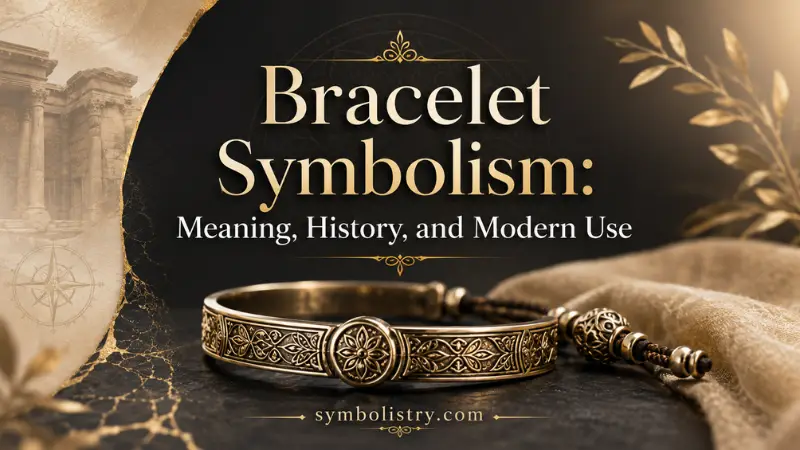
Bracelet symbolism is shaped by one simple fact: a bracelet stays physically close to the body. Worn around the wrist, it can mark a relationship, preserve a memory, express faith, signal identity, or simply carry a personal reminder wherever someone goes.
Unlike symbols with one established definition, bracelets do not have a single universal meaning. Their significance depends on the material, color, charms, religious imagery, cultural tradition, occasion, and relationship between the giver and wearer.
A gold bangle may communicate celebration or status, while a handmade friendship bracelet can represent loyalty and affection. A rosary-style bracelet can be connected with prayer, while a memorial bracelet may keep the memory of someone who has died close at hand.
In the United States, bracelets occupy an interesting space between fashion and personal meaning. They appear at weddings, birthdays, graduations, religious ceremonies, concerts, charity events, and everyday life. The object may look decorative, but the story attached to it often matters more than its appearance.
Quick Answer
Bracelet symbolism commonly represents love, friendship, personal identity, protection, remembrance, and commitment in modern American culture, especially when a bracelet is given as a gift or worn for a personal reason. Historically, bracelets have also served as status markers, religious objects, protective amulets, memorial pieces, and signs of belonging across different cultures.
TL;DR
Bracelets commonly symbolize connection, affection, identity, and personal commitment.
Ancient bracelets served decorative, religious, protective, and status-related purposes.
Friendship bracelets became popular symbols of loyalty and lasting connection.
Religious bracelets can represent prayer, devotion, faith, or spiritual identity.
Memorial bracelets turn jewelry into a portable reminder of someone remembered.
Modern wearers often create personal meanings rather than following fixed rules.
What a Bracelet Is and Why Its Shape Matters
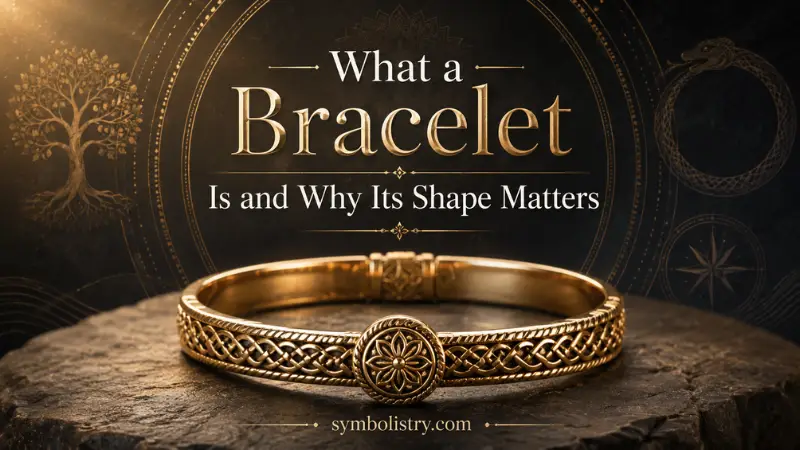
A bracelet is a piece of jewelry or adornment worn around the wrist or lower arm. It can be made from metal, beads, leather, fabric, shells, stone, wood, plastic, thread, or combinations of materials.
The shape itself contributes to its symbolism.
A bracelet forms a continuous circle or near-circle around the wrist. Circular forms have long been associated in many traditions with continuity, repetition, completeness, and cycles. But it is important not to assume that every bracelet was historically intended to symbolize eternity simply because it is circular.
Sometimes the shape was practical.
Sometimes it was decorative.
Sometimes the circular form became meaningful because of the object attached to it or the relationship represented by the gift.
The wrist also matters. Unlike a necklace that sits near the chest or a ring that remains closely associated with the finger, a bracelet is highly visible during ordinary activities. The wearer sees it while writing, working, eating, driving, or reaching for something.
That makes a bracelet particularly effective as a personal reminder.
Someone may wear a bracelet because another person gave it to them, because it represents a promise, or because its inscription reminds them of a goal. Its meaning can therefore continue through ordinary daily actions.
Ancient Roots of Wrist Adornment
Bracelets are far older than modern fashion.
Archaeological evidence shows that humans have worn forms of wrist and arm adornment for thousands of years. Ancient examples were made from materials including shells, stone, bone, copper, bronze, silver, and gold.
In early societies, jewelry could communicate several things at once. It could indicate wealth, social position, religious affiliation, beauty, or access to particular materials.
Ancient Egyptian jewelry offers some of the clearest examples of bracelets carrying both decorative and symbolic elements. Bracelets and armlets could feature scarabs, protective symbols, animal imagery, divine figures, and precious materials.
A bracelet could therefore function as more than decoration. It could place a particular image directly on the body.
This helps explain the long relationship between bracelets and protection. An image worn on the wrist could serve as a visible reminder of a deity, protective force, family connection, or personal belief.
The meaning was not necessarily identical for every wearer. Ancient jewelry was used across different social settings, and modern interpretations should avoid turning diverse archaeological evidence into one universal definition.
Why Bracelets Became Associated With Connection
One of the strongest meanings associated with bracelets today is connection between people.
The reason is partly practical. Bracelets are easy to exchange as gifts and can remain on the recipient for years.
A bracelet can therefore become a physical representation of a relationship.
A parent may give one to a child. Friends may exchange matching bracelets. Partners may choose coordinated pieces. Family members may wear bracelets containing initials or birthstones.
The object becomes meaningful because it represents a relationship that exists outside the object itself.
This is particularly clear with personalized jewelry.
An engraved date can represent a wedding or anniversary. Initials can identify two people. A charm can refer to a shared experience. A birthstone can represent a particular family member.
In each case, the bracelet functions almost like a portable memory.
Friendship Bracelets and the Symbolism of Loyalty
Friendship bracelets are one of the clearest modern American examples of jewelry being used to express a relationship.
Typically made from woven thread, cord, beads, or other inexpensive materials, they do not require precious materials to carry emotional value. Their significance comes from who made them, who received them, and what the design represents.
The handmade quality is important.
A person who spends time creating a bracelet for a friend is giving more than an object. They are giving evidence of time, attention, and effort.
That is why these bracelets often symbolize:
friendship
loyalty
affection
shared memories
belonging
appreciation
continuity
Friendship bracelets are especially associated with childhood and adolescence, but their meaning is not limited to those age groups. Adults also exchange handmade bracelets as keepsakes or wear them to represent friendships formed through travel, work, music, sports, or shared experiences.
The bracelet becomes a small physical reminder that someone matters.
The Role of Jewelry in American Identity
In modern American culture, bracelets can be used to communicate identity without requiring words.
A person might wear a bracelet connected to a favorite cause, organization, sports team, profession, religious community, family tradition, or cultural background.
This makes wrist jewelry part of identity signaling.
Unlike a private object kept in a drawer, a bracelet is normally visible to other people. The wearer controls whether it is subtle or attention-grabbing.
A simple leather band can create a casual or rugged appearance. A stack of colorful bracelets can communicate creativity and personal style. A religious bracelet can make faith part of a person’s visible identity.
The meaning can also change depending on the setting.
A bracelet worn at home might be emotionally important but visually unremarkable. The same bracelet worn at a ceremony may become part of a deliberate statement about belonging or remembrance.
Religious Bracelets and Devotional Meaning
Bracelets have also been used in religious and devotional contexts.
Prayer beads are one important example, although the traditions surrounding them vary considerably. Beaded objects can be used in Catholic, Orthodox Christian, Islamic, Hindu, Buddhist, and other religious settings, with different practices and meanings.
In the United States, religious jewelry can function both as a devotional object and as an expression of identity.
A bracelet carrying a cross may remind a Christian wearer of faith. A bracelet containing a religious inscription may serve as a daily prompt for prayer or ethical conduct. Beaded prayer objects can help structure repetitive devotional practices.
Some historical bracelets have combined jewelry with explicit religious imagery. An early medieval bracelet found in Egypt, for example, incorporated holy figures and was understood as an object associated with protection.
This illustrates an important distinction: religious jewelry should be interpreted within its particular tradition.
A bracelet with a cross, prayer beads, or another sacred image does not have one generic “spiritual” meaning. Its significance depends on the beliefs and practices of the people who use it.
Protective Bracelets and Amulet Traditions
Another longstanding association is protection.
Across different cultures, people have worn objects on the body because they believed particular materials, colors, inscriptions, symbols, or images could protect the wearer.
Bracelets are especially suitable for this purpose because they remain attached to the body while allowing the symbolic object to stay visible.
Protective bracelets have appeared in many forms. Some have contained religious imagery, engraved words, colored threads, stones, beads, or animal motifs.
In modern America, the idea continues in less formal ways.
Someone may wear a bracelet containing a meaningful religious verse because it makes them feel spiritually grounded. Another person may wear a bracelet associated with a personal belief or cultural tradition.
There is a difference, however, between symbolic protection and proven physical protection.
A bracelet can remind someone to feel safe, confident, or connected without providing a measurable supernatural shield. That distinction helps separate cultural symbolism from claims that cannot be demonstrated.
Color and Material Change the Message
The same bracelet design can communicate very different ideas depending on its material and color.
Gold is often associated with celebration, success, wealth, and status. Silver tends to suggest elegance, simplicity, reflection, or refinement. Leather can create associations with ruggedness, independence, or casual style.
Beads introduce even more possibilities.
A bracelet made from natural wood may suggest connection with nature. Brightly colored thread may feel playful or youthful. Black materials can communicate sophistication, mourning, protection, or personal style depending on the context.
Color symbolism is equally flexible.
Red can be associated with love, passion, courage, or intensity. Blue often suggests calmness, loyalty, or trust. Green may evoke nature, renewal, or prosperity. Black can suggest grief, elegance, strength, or rebellion.
These associations are cultural rather than universal laws.
A person may choose a blue bracelet simply because blue is their favorite color. Symbolic interpretation becomes more reliable when the object is considered alongside the reason it was chosen.
Bracelets in Weddings and Romantic Relationships
Bracelets can carry romantic meaning, especially when they are exchanged as personal gifts.
A bracelet can represent affection without carrying the formal symbolism of an engagement ring. Couples may exchange matching pieces, engraved bracelets, charm bracelets, or designs incorporating dates and initials.
For weddings, bracelets can also serve as gifts for members of the wedding party.
Their symbolism often centers on connection and shared history rather than a universal rule about marriage.
A personalized bracelet might carry the couple’s wedding date. A charm could represent where they met. A gemstone could connect the piece to a family tradition.
The object becomes meaningful because it contains a detail that outsiders may not immediately understand.
That private quality is one reason bracelets can be particularly effective relationship symbols.
Memorial and Mourning Bracelets
Jewelry has long been used to remember people who have died.
During the Victorian period, mourning jewelry became especially prominent in Britain. Bracelets, rings, brooches, necklaces, and other pieces could incorporate dark materials, inscriptions, symbolic imagery, or even the hair of the deceased.
The purpose was not simply decoration. Jewelry allowed grief and remembrance to become physically visible.
Common mourning imagery included weeping willows, urns, angels, flowers, tombs, and other references to death and memory.
The practice eventually changed as mourning customs changed.
Today, Americans may wear memorial bracelets in much simpler forms. A bracelet might display a person’s name, initials, birth date, death date, handwriting, or a small charm associated with them.
Modern memorial jewelry often feels less formal than Victorian mourning jewelry, but the basic idea remains familiar: keep a person’s memory physically close.
This is one of the strongest examples of how jewelry can become part of emotional memory rather than merely personal style.
Charm Bracelets and Personal Storytelling
Charm bracelets turn jewelry into a collection of symbols.
Each charm can represent a person, place, event, interest, achievement, or memory. Over time, the bracelet becomes a visual record of the wearer’s experiences.
One charm might represent a graduation. Another might commemorate a vacation. A family member might be represented by a birthstone. A hobby could appear as a miniature object.
This makes the bracelet function almost like a three-dimensional diary.
The symbolism also evolves.
A newly purchased bracelet may have only one or two charms. Years later, it may contain dozens of small references to different stages of someone’s life.
That gradual development gives charm bracelets a meaning that differs from a single pendant or ring. Instead of communicating one idea, they can tell a series of stories.
The wearer does not necessarily expect everyone else to understand each charm. Some meanings may be deliberately private.
Bracelets and Milestones
Bracelets are frequently used to mark life transitions.
A graduation bracelet can represent the completion of education. A new-job gift can recognize professional change. A birthday bracelet can mark a particular age. A bracelet exchanged during a trip can preserve the memory of a place.
These objects can help make an abstract event tangible.
A date exists as an idea. A photograph records an event visually. A bracelet combines memory with physical presence because the person can continue wearing it.
This makes bracelets particularly suitable for moments when someone wants a reminder of where they have been or what they have accomplished.
The meaning may become stronger years later. What initially feels like a simple gift can eventually become a keepsake because it is connected with a specific period of life.
Bracelets in Fashion and Modern Personal Style
Not every bracelet has a symbolic meaning beyond fashion.
This point is easy to overlook because symbolism-focused discussions sometimes assume that every decorative object contains a hidden message.
In reality, many people wear bracelets because they like the design.
Modern fashion has made bracelets available in an enormous range of forms, from delicate chains to cuffs, bangles, leather bands, bead stacks, woven designs, and minimalist metal pieces.
Stacking several bracelets can also become a style statement.
Someone may combine different textures and materials simply to create a particular look. Another person may deliberately mix meaningful pieces with purely decorative ones.
This creates an important modern distinction:
A bracelet can be symbolic, fashionable, or both.
There is no need to invent a hidden meaning when the wearer has not assigned one.
Bracelets in Music, Sports, and Popular Culture
Bracelets also appear in American popular culture as markers of participation and belonging.
Fans may wear bracelets connected to concerts, artists, sports teams, or special events. Handmade exchange bracelets became especially visible in concert culture, where exchanging them can turn a large event into a network of personal connections between strangers.
Sports and charity events use wristbands in a similar way.
A wristband can indicate entry, participation, support, fundraising, or membership. Although these objects may not be traditional jewelry, they use the same basic principle: something worn on the wrist becomes a visible sign of association.
The wearer communicates, “I was there,” “I support this,” or “I belong to this group.”
This is one reason wrist-worn objects remain effective in a digital age.
What Different Bracelet Styles Can Suggest
There is no universal dictionary for bracelet styles, but certain associations are common enough to provide useful starting points.
Bracelet Style Common U.S. Association Typical Meaning Important Context
Friendship bracelet Friendship and loyalty Personal connection Often handmade or exchanged
Gold bracelet Wealth and celebration Success or affection Material contributes strongly
Charm bracelet Memory and identity Personal life story Charms create individual meanings
Religious bracelet Faith and devotion Prayer or belief Meaning depends on tradition
Memorial bracelet Remembrance Connection with someone lost Often personalized
Leather bracelet Individuality and casual style Independence or ruggedness Often primarily fashion-oriented
These interpretations should be treated as common associations rather than fixed definitions. The same bracelet may mean something completely different to another wearer.
Emotional and Psychological Meaning
The emotional appeal of a bracelet often comes from proximity.
A framed photograph stays in one place. A bracelet travels with the wearer.
That makes it useful as a reminder.
Someone recovering from a difficult period might wear a bracelet containing an encouraging word. A person separated from family may wear a bracelet given by a loved one. Someone honoring a deceased relative may choose a memorial piece.
The object becomes a small physical cue connected to an internal thought.
There is also a sense of continuity in wearing something repeatedly. Each day the bracelet is put on, the wearer encounters the same symbol again.
This repetition can strengthen its personal significance even when the original meaning was simple.
A bracelet can therefore function as a wearable reminder of a relationship, value, memory, or personal goal.
Positive and Negative Bracelet Associations
Most modern bracelet symbolism is positive, but not every bracelet carries a pleasant meaning.
A bracelet can represent grief, separation, religious obligation, political disagreement, social pressure, or an unwanted relationship.
Historical mourning jewelry demonstrates this clearly. The bracelet could be beautiful while simultaneously representing profound loss.
Certain bracelets may also carry meanings that are specific to particular groups. A design that feels harmless to one person could have religious, cultural, political, or historical significance to another.
This is why identifying a bracelet’s symbolism requires context.
The material alone is rarely enough.
A black bracelet could be a fashion accessory, a memorial piece, a religious object, or simply part of someone’s preferred wardrobe. The meaning comes from the combination of design, wearer, occasion, and cultural setting.
Common Misunderstandings About Bracelet Meaning
One common misconception is that wearing a bracelet always signals a specific spiritual message.
It does not.
Many bracelets are chosen for fashion, comfort, sentimental value, or personal taste rather than spiritual reasons.
Another misunderstanding is that a particular wrist automatically has one universal symbolic meaning. Online traditions sometimes claim that wearing a bracelet on the left or right wrist always represents a specific emotional or spiritual condition.
Such interpretations vary considerably between modern spiritual communities and cultural traditions. They should not be presented as universal historical facts.
There is also a tendency to assume that every gemstone bracelet has one ancient meaning.
Gemstones have their own histories, but modern commercial descriptions often simplify complicated traditions into short lists of supposed properties.
A more reliable interpretation asks who assigned the meaning, when, and in what cultural context.
How Bracelet Meaning Has Evolved
Bracelets have moved through several overlapping roles.
Early examples could communicate social position, wealth, religious affiliation, protection, or personal adornment. As jewelry production became more widespread, bracelets became increasingly accessible to people outside elite groups.
The rise of mass manufacturing changed jewelry again.
People could buy affordable pieces that looked elaborate without owning rare materials. Personalized jewelry also became easier to produce, allowing names, dates, symbols, and photographs to become part of wearable objects.
In the twentieth and twenty-first centuries, bracelets increasingly became tools of personal storytelling.
Friendship bracelets, charm bracelets, memorial jewelry, awareness wristbands, religious jewelry, and fashion bracelets all demonstrate the same broader change: the wearer has more freedom to determine what the object means.
Today, the meaning of a bracelet is often less about a universally recognized code and more about personal association.
How to Interpret a Bracelet’s Meaning Today
If you are trying to understand what a particular bracelet symbolizes, begin with the simplest questions.
Who gave it to the wearer?
A gift from a partner may have a different meaning from one purchased independently.
What does it contain?
Look at the material, charms, colors, inscriptions, religious symbols, photographs, or gemstones.
When was it given or worn?
A graduation bracelet may relate to achievement, while a memorial bracelet may relate to loss.
Is there a cultural or religious tradition behind it?
Some designs have meanings that cannot be understood accurately without knowing their cultural background.
What does the wearer say it means?
This may be the most important question of all.
Symbolism is not a code that exists independently of people. Objects gain meaning through the stories, beliefs, memories, and practices attached to them.
FAQ About Bracelet Symbolism
What does a memorial bracelet symbolize?
A memorial bracelet symbolizes remembrance and an ongoing emotional connection with someone who has died. Names, dates, handwriting, photographs, or meaningful charms can turn the piece into a personalized keepsake.
Does wearing a bracelet on the left or right wrist have a meaning?
Some spiritual and cultural traditions assign different meanings to the two wrists, but these interpretations are not universal. In everyday American culture, people usually choose a wrist based on comfort, habit, style, or practicality.
What does a black bracelet symbolize?
A black bracelet can represent mourning, remembrance, elegance, strength, protection, or personal style. The meaning depends heavily on why the bracelet is being worn and what other symbols it contains.
What does a bracelet symbolize in a relationship?
A bracelet can represent love, commitment, shared history, or a private connection between two people. Unlike an engagement ring, however, it does not have one standardized relationship meaning.
What does a friendship bracelet mean?
A friendship bracelet usually represents loyalty, affection, shared memories, and a continuing bond between friends. Its handmade nature can add meaning because the time spent making it becomes part of the gift.
What does a bracelet symbolize when someone gives it to you?
A gifted bracelet often represents affection, friendship, appreciation, commitment, or remembrance. Personalized details such as initials, dates, charms, or colors can make the message more specific.
What does a bracelet symbolize spiritually?
A bracelet can symbolize protection, devotion, remembrance, connection, or a personal spiritual commitment. Its meaning depends on the religious tradition, symbols, and beliefs of the wearer rather than on the bracelet shape alone.
Conclusion
Bracelet symbolism is ultimately about what people choose to keep close. A bracelet can represent friendship, love, faith, protection, achievement, identity, remembrance, or simply personal style, and its meaning often comes from the story attached to it rather than from the object alone.
The history of bracelets shows why they remain such flexible symbols. Ancient wearers used them for adornment, status, religious expression, and protection, while modern Americans use them for friendship gifts, memorial jewelry, wedding accessories, fashion, religious devotion, and personal reminders.
The most accurate interpretation is therefore not to ask what every bracelet means, but to ask what this bracelet means to this person in this particular context. That question leaves room for history, culture, personal experience, and the private stories that make an ordinary piece of jewelry worth wearing.