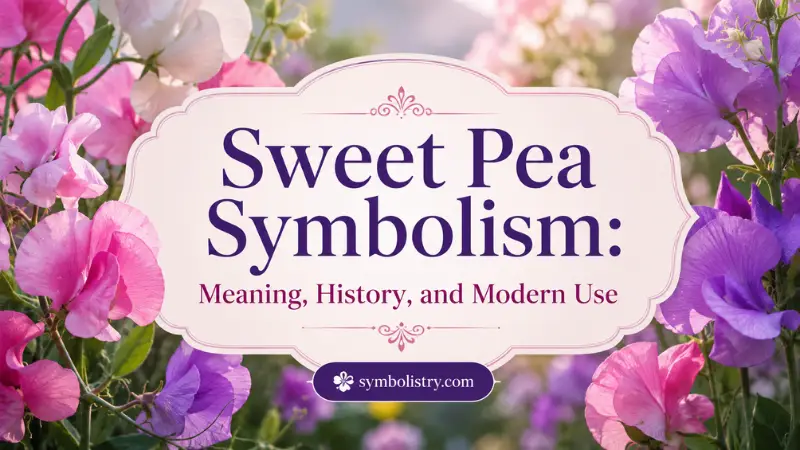
Sweet peas are fragrant climbing flowers known for their soft, folded petals and colors ranging from white and pink to lavender, purple, blue, and deep red. Sweet pea symbolism is most often connected with gratitude, pleasant memories, gentle affection, enjoyment, and saying goodbye on good terms.
Those meanings are not simply modern inventions. Sweet peas became part of the nineteenth-century language of flowers, when particular blooms were assigned emotional messages. They later became especially popular in British and American gardens, helping their older meanings survive in bouquets, weddings, birthday gifts, tattoos, and floral design.
Today, the flower works especially well when someone wants to express appreciation without making a dramatic romantic statement. It can say, in effect, “I enjoyed this,” “thank you,” or “I will remember this fondly.”
Quick Answer
Sweet pea symbolism commonly represents gratitude, pleasant memories, gentle affection, happiness, and gracious farewells in modern American culture. Historically, nineteenth-century flower-language traditions associated sweet peas with “delicate pleasures” and departure, giving the flower its lasting connection with enjoyable experiences and goodbyes.
TL;DR
- Sweet peas commonly represent gratitude, pleasure, affection, and farewell.
- Victorian flower language connected them with delicate pleasures and departure.
- Americans often use them in spring bouquets and weddings.
- Sweet peas are commonly associated with April birthdays.
- Their fragrance strengthens associations with pleasant memories and enjoyment.
- They are ornamental flowers, not edible garden peas.
What Sweet Peas Look Like and Why Their Appearance Matters
The sweet pea is Lathyrus odoratus, an annual member of the legume family. Its natural range is centered in southern Italy and Sicily, although cultivated varieties are now grown much more widely.
Sweet pea flowers have a light, ruffled appearance. Their petals often look almost like small butterflies or folded fabric, while thin tendrils allow the plant to climb supports. Many varieties are also strongly fragrant.
Those physical traits help explain why the flower became associated with pleasant experiences rather than strength, grief, or solemnity. A scented cluster of pastel blooms naturally suggests softness, hospitality, springtime, and enjoyment.
The climbing habit can also lend itself to modern interpretations involving connection and attachment, although that meaning is more interpretive than historically fixed.
The Core Meanings of Sweet Peas
Sweet peas carry several related meanings rather than one universal message.
| Context | Common U.S. Meaning | Typical Association | Notes |
| Thank-you gift | Gratitude | Appreciation and kindness | Appropriate for hosts and friends |
| Farewell bouquet | Gentle goodbye | Departure and fond memories | Usually positive rather than mournful |
| Wedding flowers | Happiness and affection | Romance and celebration | Often chosen for softness and fragrance |
| April birthday | Joy and graciousness | Spring and personal identity | Commonly treated as an April birth flower |
| Personal keepsake | Pleasant memories | Nostalgia and meaningful experiences | Common in art and tattoos |
| Garden planting | Beauty and enjoyment | Cottage gardens and spring | Meaning often comes from personal experience |
The meanings overlap because many grow from the same basic idea: enjoying something beautiful while recognizing that it may not last forever.
That combination explains why sweet peas can fit both celebrations and departures without seeming contradictory.
Victorian Flower Language Shaped the Traditional Meaning
The strongest historical foundation for the flower’s symbolism comes from nineteenth-century floriography, commonly called the language of flowers.
Flower dictionaries assigned plants specific messages that could be used in bouquets, poems, albums, and sentimental gifts. These systems were never completely standardized; different books sometimes gave the same flower different meanings.
Sweet peas repeatedly appeared with associations such as departure and delicate pleasures. A nineteenth-century flower-language volume, for example, listed the sweet pea under departure while another entry connected it with delicate pleasures.
That distinction matters. The traditional meaning was not simply sadness over someone leaving. It suggested appreciation for an enjoyable experience that was coming to an end.
In modern terms, the flower is closer to “thank you for a wonderful time” than “I am devastated that you are leaving.”
How Sweet Peas Became Popular in American Gardens
Sweet peas were native to Mediterranean Europe, but selective breeding transformed them into major ornamental flowers.
By the late nineteenth and early twentieth centuries, breeders had produced many varieties with larger blooms and a broad range of colors. Scottish horticulturist Henry Eckford became particularly influential in their development.
The flower also became a genuine gardening craze on both sides of the Atlantic. In the United States, the Burpee seed company promoted extensive sweet pea collections and worked closely with Eckford. Historic American seed catalogs featured the flowers prominently, demonstrating how familiar they had become to home gardeners.
This gardening history helped transfer European flower-language associations into American culture.
Sweet peas were no longer obscure flowers carrying meanings from old books. They became flowers Americans could plant by a fence, cut for the kitchen table, give to a friend, or use for a spring celebration.
What Sweet Peas Commonly Mean in the United States
In present-day American use, sweet peas usually communicate a light, positive emotion.
Their strongest associations include:
- gratitude
- enjoyment
- tenderness
- affection
- pleasant memories
- springtime happiness
- graceful departure
The flower usually feels less intense than a red rose and less solemn than a lily associated with funerals. That emotional middle ground is useful.
A sweet pea bouquet can be appropriate for a friend, teacher, host, family member, romantic partner, or someone leaving a workplace. The meaning depends largely on the occasion and the relationship.
Americans may also choose the flowers simply because they look romantic or old-fashioned. Not everyone who uses them knows the Victorian meanings, so context remains more important than symbolic rules.
Why Sweet Peas Represent Gratitude
Gratitude is one of the most useful modern meanings attached to sweet peas.
The connection develops naturally from the older idea of pleasurable experiences. When someone has provided hospitality, companionship, support, or a memorable experience, sweet peas can represent appreciation for that time.
Imagine giving them after staying at a friend’s home. The message is not necessarily romantic. Instead, the flowers can suggest:
“Thank you for making me feel welcome.”
That makes sweet peas suitable for thank-you arrangements, hostess gifts, teacher appreciation, and informal celebrations.
Modern wedding culture also uses them in ways connected with gratitude, happiness, and contentment, extending the flower’s older emphasis on pleasure into present-day floral design.
Farewell and Departure Do Not Necessarily Mean Sadness
The association with departure sometimes causes confusion because it can sound negative.
Traditionally, however, the sweet pea is better understood as a gracious farewell.
It can mark the end of a visit, school year, job, season, journey, or shared experience. The emphasis is on remembering the good part rather than mourning the separation.
For that reason, sweet peas may suit:
- a coworker’s last day
- a graduation
- a friend moving away
- the end of a visit
- a retirement
- a closing celebration
They are usually less appropriate when someone wants to communicate severe grief or permanent loss. Other flowers have stronger established associations with mourning.
The sweet pea’s farewell is gentler: something enjoyable happened, and now it is time to move forward.
Pleasure, Joy, and Enjoying the Present
“Delicate pleasures” sounds distinctly Victorian, but the idea behind it remains easy to understand.
Sweet peas bloom beautifully, smell pleasant, and work well as cut flowers, yet individual blooms are temporary. Their appeal encourages enjoyment of a moment while it is available.
That makes pleasure one of the flower’s most interesting meanings.
It is not usually the symbolism of wild excitement or luxury. Instead, sweet peas fit ordinary forms of happiness: a fragrant garden, a spring afternoon, good company, a thoughtful gift, or a peaceful celebration.
This interpretation also explains why the flower often feels nostalgic. Smell in particular can become closely tied to personal memories, so fragrant garden flowers may remind people of childhood homes, grandparents, weddings, or earlier seasons of life.
Sweet Peas as an April Birth Flower
Sweet peas are widely treated as one of the birth flowers associated with April, commonly alongside the daisy.
In contemporary birth-flower traditions, their meanings often include pleasure, gratitude, and graciousness. The connection also makes seasonal sense because sweet peas are strongly associated with spring and cool-season flowering. Current gardening and lifestyle references continue to identify sweet peas with April.
An April birthday bouquet containing sweet peas can therefore carry two messages at once: recognition of the birth month and appreciation for the person.
Birth-flower systems should not be treated as ancient universal rules. Lists can vary among publishers and cultures. Their importance today comes mainly from modern gifting traditions.
Sweet Peas in Weddings and Romantic Relationships
Sweet peas work well in weddings because their appearance fits romantic garden-style arrangements.
Their fluttering petals can add softness and movement to bouquets, while their traditional associations with pleasure and gratitude fit a celebration built around shared happiness. Sweet pea flowers and tendrils are also used in contemporary wedding arrangements.
However, they do not carry the same direct romantic message as a red rose.
For couples, their symbolism can suggest:
- happiness in one another’s company
- appreciation for the relationship
- gratitude toward wedding guests
- enjoyment of a meaningful day
- tenderness rather than intense passion
This makes them especially suitable for weddings with a spring, cottage-garden, vintage, or natural floral style.
They can also appear in anniversary bouquets when a couple wants something personal and understated.
Do Sweet Pea Colors Have Different Meanings?
People frequently assign separate meanings to different flower colors, but sweet pea color symbolism should be treated as flexible rather than historically fixed.
There is no single authoritative system used by all florists or cultures.
In modern arrangements, color may influence the emotional tone:
Pink sweet peas often feel affectionate, warm, and romantic.
White sweet peas can suggest simplicity, freshness, weddings, or graceful appreciation.
Purple sweet peas may create an elegant, artistic, or refined impression.
Blue or lavender shades often feel calm, gentle, or reflective.
Red and deep burgundy varieties can give the flower a more dramatic or romantic appearance.
These meanings mostly draw from broader modern color associations. The occasion, card message, and recipient matter more than an assumed floral code.
Emotional and Psychological Meaning
Symbolically, sweet peas work particularly well for people who want to acknowledge happiness without pretending that every good experience lasts forever.
The flower combines two emotional ideas that often occur together: enjoyment and transition.
A person may be grateful for a friendship while moving to another city. A graduate may be excited about the future while missing school friends. A family may remember a relative through flowers associated with that person’s garden.
In each case, pleasure and separation can exist at the same time.
This is why sweet peas can represent nostalgia without automatically becoming symbols of grief. Their emotional tone usually looks backward with affection while still allowing movement forward.
They may also appeal to people who value gentleness, kindness, sensitivity, or small everyday pleasures.
Sweet Pea Tattoos and Personal Symbolism
Sweet peas appear in floral tattoos, especially in birth-flower designs.
Someone born in April may choose the flower as a straightforward reference to their birth month. Others may use it to commemorate a person, place, relationship, or happy period of life.
A tattoo can therefore represent:
- gratitude for an important person
- an April birthday
- a positive goodbye
- memories of home
- a meaningful transition
- appreciation of ordinary happiness
Sweet pea tattoos often feature winding stems and tendrils, which make them suitable for flowing designs along the arm, shoulder, ribs, or ankle.
Personal symbolism can also override traditional flower language. If sweet peas grew in someone’s childhood garden, that memory may matter more than any nineteenth-century definition.
Sweet Peas in Jewelry, Decor, and Digital Culture
Modern symbolic use extends beyond fresh flowers.
Sweet pea illustrations appear on jewelry, stationery, greeting cards, botanical prints, birth-flower necklaces, embroidered clothing, ceramics, and home decor.
In these settings, the flower often communicates softness, spring, femininity, nostalgia, or botanical beauty even when no specific historical meaning is intended.
On social media, sweet pea imagery can accompany birthday posts, gardening photographs, wedding inspiration, floral art, or memorial posts. The meaning therefore depends strongly on captions and personal context.
Vintage-style illustrations may emphasize the flower’s nineteenth-century associations, while minimalist birth-flower designs usually focus on identity and month of birth.
This flexibility keeps the flower relevant even among people who have never studied floriography.
Cross-Cultural and Religious Interpretations
Sweet pea symbolism is primarily rooted in Western horticultural and flower-language traditions rather than in a major ancient religious system.
The plant originated in the Mediterranean region, but that botanical origin should not be confused with evidence of a specific ancient symbolic tradition. Its best-documented symbolic associations developed much later through European floral culture.
Sweet peas also do not have a universally recognized biblical or Christian meaning.
Modern religious writers may personally connect flowers with gratitude, beauty, creation, or blessings, but those interpretations are devotional rather than established meanings specific to Lathyrus odoratus.
The same caution applies to claims about spiritual protection, supernatural messages, or fixed meanings in dreams. Such interpretations may be meaningful to individuals, but they should not be presented as historical facts.
Common Misunderstandings and Misuse
One common mistake is treating every symbolism website’s interpretation as an ancient tradition.
Meanings such as “soulmate connection,” “divine protection,” or highly specific personality traits may be modern additions without clear historical support. The better-documented traditional ideas are pleasure and departure, with gratitude becoming prominent in contemporary use.
Another important misunderstanding concerns the name “pea.”
Ornamental sweet peas are not the same plant as edible garden peas. North Carolina State University’s plant database classifies Lathyrus odoratus as poisonous and specifically warns against planting it near edible peas because of possible confusion.
The nickname “sweet pea” can also be used as an affectionate term for a person. That everyday expression may suggest tenderness, but it should not automatically be used as evidence for the flower’s historical symbolism.
Keeping these meanings separate prevents modern associations from being mistaken for documented tradition.
How the Meaning Has Changed Over Time
The sweet pea’s symbolism has evolved without completely losing its original character.
Nineteenth-century flower dictionaries gave it formal messages such as departure and delicate pleasures. Late nineteenth- and early twentieth-century horticultural enthusiasm then turned the flower into a garden favorite, including in the United States. Smithsonian garden records document the scale of that American enthusiasm and the role of major seed companies in promoting the flower.
Modern culture softened the old floral vocabulary.
Few Americans today would hand someone a sweet pea and expect them to decode a strict Victorian message. Instead, the traditional ideas survive in broader forms: gratitude, enjoying life’s pleasant moments, remembering happy experiences, and saying goodbye gracefully.
Birth-flower culture, wedding design, tattoos, and personalized gifts have added new uses as well.
The result is a symbol that still carries historical meaning while remaining flexible enough for personal interpretation.
FAQs
What do sweet peas symbolize most commonly?
Sweet peas most commonly represent gratitude, pleasurable experiences, gentle affection, and gracious goodbyes. Their modern meanings developed partly from nineteenth-century flower-language associations with delicate pleasure and departure.
Are sweet peas a symbol of love?
They can express affection, but they are not traditionally as direct a declaration of romantic love as red roses. In relationships, they more often suggest tenderness, gratitude, happiness, and enjoying someone’s company.
What does a sweet pea tattoo mean?
A sweet pea tattoo can represent an April birthday, gratitude, fond memories, a meaningful farewell, or appreciation for a happy period of life. Personal experiences often determine the tattoo’s meaning more strongly than traditional flower language.
What do sweet peas symbolize most commonly?
Sweet peas most commonly represent gratitude, pleasurable experiences, gentle affection, and gracious goodbyes. Their modern meanings developed partly from nineteenth-century flower-language associations with delicate pleasure and departure.
What does a sweet pea tattoo mean?
A sweet pea tattoo can represent an April birthday, gratitude, fond memories, a meaningful farewell, or appreciation for a happy period of life. Personal experiences often determine the tattoo’s meaning more strongly than traditional flower language.
Do different sweet pea colors have different meanings?
Colors can change the mood of an arrangement, but sweet pea color meanings are not governed by a single historical system. Pink may feel affectionate, white fresh or bridal, and purple elegant, but personal and cultural context matters more.
Are sweet peas edible?
No. Ornamental sweet peas, Lathyrus odoratus, should not be confused with edible garden peas. Their seeds and other plant material are not intended for eating, so they should be treated as ornamental flowers rather than food.
Conclusion
Sweet peas carry an unusual combination of happiness and transition. Their traditional associations with delicate pleasures and departure developed into modern meanings centered on gratitude, affection, fond memories, spring celebrations, and graceful goodbyes.
In American culture today, sweet pea symbolism works especially well when the message is warm but understated: appreciation for a person, happiness about a shared experience, or acknowledgment that a meaningful moment is ending.
That balance is what gives the flower its character. Sweet peas do not ask people to ignore change; they suggest appreciating something good while it is here and remembering it kindly afterward.